AI estimate as of September 11, 2025 · verify with a professional before acting
AI-Generated · Verify before acting
Everything on this page is generated by AI for informational purposes only. AI can make mistakes — the AI may misidentify items or misattribute them (artist, maker, brand, designer, origin, era). This is not an official valuation and should not be used for insurance, sale, tax, estate, legal, or lending purposes — or any decision requiring a certified appraisal. It is not an authoritative claim about any person, brand, or rights holder — do not share or rely on it as a factual statement about a third party. Always consult qualified professionals before making financial decisions.
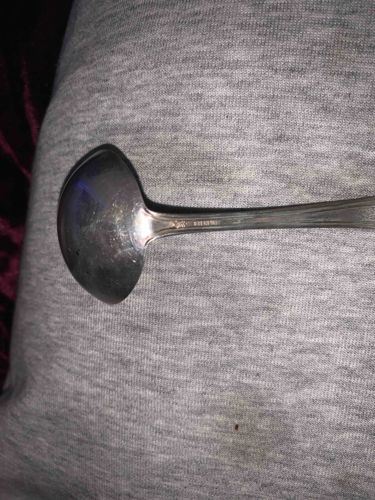
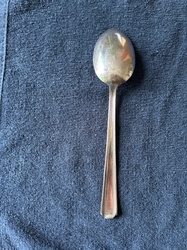
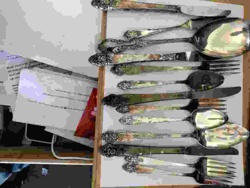
The item is a small silver-colored ladle, likely used for cream or sauces. Its physical characteristics indicate it is made of a polished metal, possibly sterling silver or silver plate, given the visible sheen and the 'STERLING' mark on the handle. The ladle features a shallow, ovular bowl, approximately 1.5 to 2 inches in length at its widest point. The handle is slender and appears to widen slightly towards the base, exhibiting a subtle decorative element near the point where it joins the bowl. The most prominent distinguishing feature is the 'STERLING' mark impressed into the handle, confirming its material composition as sterling silver (92.5% pure silver). There also appears to be a manufacturer's mark, though it is not clearly legible from the provided image. The surface of the ladle shows some visible wear, including minor scratches and scuffs consistent with age and use. There are also what appear to be some dark spots or pitting within the bowl, and a general dullness that suggests tarnish, indicating a need for polishing. Despite these condition issues, the overall construction appears solid, pointing to good craftsmanship. Without additional context or clearer markings, a precise age is difficult to ascertain, but silverware of this style often dates from the late 19th to mid-20th century. The elegant, yet understated, design suggests a functional piece with a touch of classic refinement.
AI Appraisal Report
Upon my virtual examination of this silver-colored ladle, clearly marked 'STERLING', I can confirm its authenticity as sterling silver, a significant factor in its value. The design suggests a cream or sauce ladle, a common and functional piece of flatware. The overall form is elegant and understated, typical of late 19th to mid-20th century production.
However, the ladle's condition presents some challenges. I observe visible wear, including minor scratches and scuffs, consistent with regular use. More concerning are the dark spots or pitting within the bowl, which may indicate more than just tarnish. The general dullness confirms a need for thorough cleaning and polishing. These condition issues, particularly potential pitting, will negatively impact its market value. While 'STERLING' flatware generally holds its value due to the intrinsic silver content, single, common-form ladles like this are not rare and do not command premium prices unless they possess exceptional design, historical provenance, or are part of a complete, pristine set.
Market conditions for individual sterling silver serving pieces are moderate; demand exists, but supply often meets it. Comparable sales of similar sterling cream ladles in good condition typically range from $30-$70. Given the visible condition issues, I would place this ladle at the lower end of that spectrum. The inability to fully assess the pitting and ascertain the exact manufacturer's mark (which could denote a prestigious maker) limits a higher valuation.
For full authentication and a definitive assessment, an in-person examination is crucial. This would allow me to physically inspect the pitting for its severity, determine if it's surface-level tarnish or actual metal loss, and to clearly identify the manufacturer's mark. Additionally, examining the piece with a loupe would reveal finer details of wear and craftsmanship. Provenance documentation, if available, could also enhance its value.