AI identification & appraisal estimate

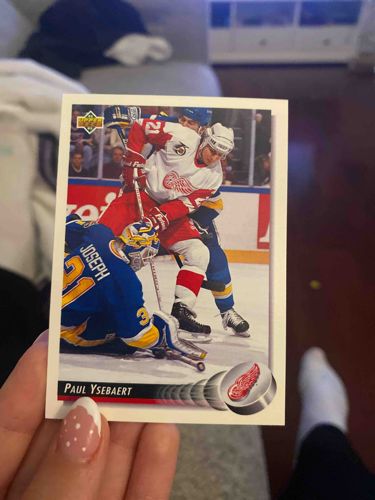
Paul Ysebaert 1992-93 Upper Deck Hockey Card

Submitted photo of Paul Ysebaert 1992-93 Upper Deck Hockey Card
Photo submitted by the user — not generated by AI

AI Estimated Value

Not an official valuation

$0.50 - $2.00

AI estimate as of December 8, 2025 · verify with a professional before acting

AI-Generated · Verify before acting

Everything on this page is generated by AI for informational purposes only. AI can make mistakes — the AI may misidentify items or misattribute them (artist, maker, brand, designer, origin, era). This is not an official valuation and should not be used for insurance, sale, tax, estate, legal, or lending purposes — or any decision requiring a certified appraisal. It is not an authoritative claim about any person, brand, or rights holder — do not share or rely on it as a factual statement about a third party. Always consult qualified professionals before making financial decisions.

Read the full disclaimer

AI Item Analysis

This item is a 1992-93 Upper Deck hockey trading card featuring player Paul Ysebaert. The card is standard trading card size, typically around 2.5 by 3.5 inches, and is made of cardstock paper with a glossy finish on the front. The primary image on the card depicts an action shot from a hockey game. Paul Ysebaert, identifiable by the name printed at the bottom, is wearing a red and white Detroit Red Wings jersey with the number '21' visible on his sleeve and the team's winged wheel logo on his chest. He appears to be engaged in a play, possibly making a shot or passing, while being defended by a player in a blue jersey with 'JOSEPH' and the number '31' (likely a goalie) visible on their back, who is on the ice. The background shows parts of the rink and spectators, suggesting an indoor arena setting. The top left corner of the card features the 'Upper Deck' logo. The bottom left area has a black bar with 'PAUL YSEBAERT' printed in white text. To the right of the player's name, there is a prominent silver-colored circular emblem with a red winged wheel logo, adding a notable design element. The card appears to be in good observational condition based on the image, with crisp edges and no apparent creases, tears, or significant surface wear. The colors are vibrant and the image is clear. This card belongs to a typical sports trading card series from the early 1990s, characterized by action photography and brand-specific design elements.

AI Appraisal Report

I have visually examined the provided image of the 1992-93 Upper Deck Hockey Card featuring Paul Ysebaert. Based on the imagery, the card presents in excellent observational condition, with sharp corners, clean edges, and good color vibrancy, indicating a high grade, potentially Near Mint to Mint. The image clarity and lack of apparent surface wear are positive indicators. Authenticity, based solely on this image, appears consistent with genuine Upper Deck cards from the era, showing the correct logos and design elements. However, without a physical inspection, I cannot verify print quality details, micro-perforations, or detect subtle reprints or complete counterfeits. Market conditions for early 1990s common hockey cards are generally low. Paul Ysebaert was a solid NHL player but not considered a Hall of Famer or a high-demand star whose cards command significant value. This particular card is a base card from a mass-produced set, which means rarity is not a factor. Comparables for similar common base cards from the 1992-93 Upper Deck set, even in high-grade condition, typically range from a few cents to a couple of dollars. Factors significantly impacting value here are mainly the mass production of the set and the player's status as a journeyman rather than a superstar. Even a perfect gem-mint grade would not elevate its value substantially due to these factors. For full authentication and a definitive condition assessment, an in-person examination by a professional grading service like PSA or Beckett would be required to meticulously check for surface imperfections, centering, and corner sharpness that are not fully discernible from an image alone. Provenance documentation is not typically relevant for common cards of this type.

Keep exploring

More sports trading card appraisals

Get your items appraised

Instant AI-powered appraisal estimates from a photo

Browse More Appraisals