AI Appraisal Estimate

AI-generated estimates · not official valuations

From the user

What was submitted

Photo and notes provided by the user — not generated by AI

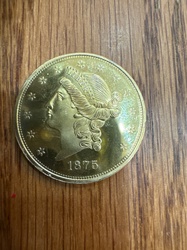
Submitted item photo
Submitted photo · June 14, 2026

User's notes

No additional notes provided.

AI analysis below

AI appraisal

AI analysis & estimate

AI-Generated · Verify before acting

Everything below is generated by AI for informational purposes only. AI can make mistakes — the AI may misidentify items or misattribute them (artist, maker, brand, designer, origin, era). This is not an official valuation and should not be used for insurance, sale, tax, estate, legal, or lending purposes — or any decision requiring a certified appraisal. It is not an authoritative claim about any person, brand, or rights holder — do not share or rely on it as a factual statement about a third party. Always consult qualified professionals before making financial decisions.

Read the full disclaimer

AI Identification

·Not independently authenticated·Verify before acting

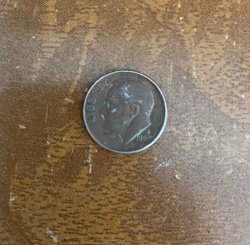
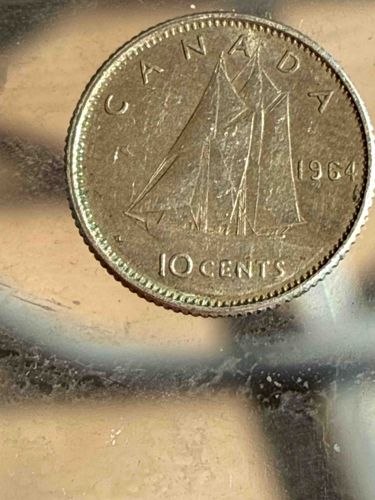
1964 Canadian 10 Cents Coin (Dime)

Coinage

AI Estimated Value

·Not an official valuation·Verify before acting

$1.50 - $3.00

As of June 14, 2026

AI Item Analysis

·AI can make mistakes·Verify before acting
This item is a 1964 Canadian 10 Cents coin, commonly known as a dime. The primary material is likely 80% silver and 20% copper, as was standard for Canadian dimes minted in 1964, giving it a silver-grey metallic color with some observable tarnishing and a slightly dulled luster. The coin is circular with a reeded edge, which is clearly visible around the circumference. The obverse side, which is visible in the image, features a depiction of the famous Canadian sailing ship, the Bluenose schooner, sailing towards the right. Above the ship, the word "CANADA" is inscribed along the top rim, and to the right of the ship's mast, the year "1964" is clearly legible. Below the ship, the denomination "10 CENTS" is indicated. The overall condition of the coin shows evidence of circulation; there are numerous fine scratches and scuffs across the surface, particularly noticeable in the fields around the ship and lettering. The raised details of the ship and lettering appear somewhat worn but are still largely distinct. There is no major damage such as significant dents or deep gouges. The patina is uneven, with some darker areas suggesting accumulated dirt or oxidation, especially along the rim and within the recessed areas of the design. No specific mint marks are visible in this image to indicate the mint location, though Canadian coins are typically minted in Ottawa. This coin represents a standard circulating currency item from the mid-20th century, retaining its characteristic design elements and indicating an average circulated quality.
AI Appraisal Report

·AI can make mistakes·Verify before acting
I have examined the provided image of this 1964 Canadian 10 Cents coin. Based on its appearance, it is consistent with an authentic Canadian dime from that year, featuring the Bluenose schooner design. The primary material is expected to be 80% silver and 20% copper. The condition, as observed, indicates heavy circulation. There are numerous fine scratches, scuffs, and a general loss of original luster. Details on the Bluenose and lettering show noticeable wear but remain largely distinct. The tarnishing is uneven, consistent with an older coin that has been handled. This coin falls into the 'Good' to 'Very Good' circulated grades, possibly Fine, but not higher due to the surface abrasions and dulled fields. Market conditions for 1964 Canadian dimes are largely driven by their silver content for common circulated examples. Comparables in similar circulated grades typically sell for a modest premium over their intrinsic melt value. There is no significant rarity for a standard 1964 dime in this condition; these were widely minted and circulated. Factors impacting value are primarily the silver content and the coin's historical appeal as a circulated piece of Canadian currency. Higher grades (Uncirculated or AU) would command significantly higher premiums, but this is not the case here. It is important to state that authenticity and precise grading cannot be definitively determined from images alone. A physical examination would allow me to assess the true luster, feel the surface texture, accurately determine the depth of wear, and verify the reeded edge for any irregularities. Without in-person inspection, I cannot rule out potential environmental damage or subtle alterations that might not be visible in the photograph. Chemical testing could confirm the silver composition, though this is rarely done for common issues like this unless authenticity is strongly doubted. Provenance documentation is not typically sought for such a common circulating coin.

Get your items appraised

Instant estimates of your treasures with AI-powered appraisals

Browse More Appraisals