These notes were written by the person who submitted this item. Appraiser.AI has not verified them, and the AI's identification and estimate may rely on them.
AI Estimated Value
Not an official valuation
$75-125
AI estimate as of November 18, 2025 · verify with a professional before acting
AI-Generated · Verify before acting
Everything on this page is generated by AI for informational purposes only. AI can make mistakes — the AI may misidentify items or misattribute them (artist, maker, brand, designer, origin, era). This is not an official valuation and should not be used for insurance, sale, tax, estate, legal, or lending purposes — or any decision requiring a certified appraisal. It is not an authoritative claim about any person, brand, or rights holder — do not share or rely on it as a factual statement about a third party. Always consult qualified professionals before making financial decisions.
This analysis also relies on unverified notes provided by the user, which may be incomplete or inaccurate and could affect the result.
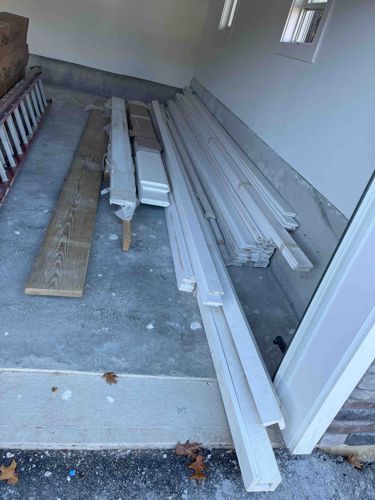
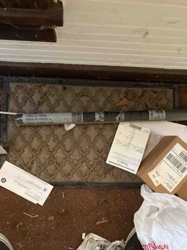
This item consists of a collection of various lengths of PVC interior trim, specifically baseboards and casing, intended for architectural finishing. The trim pieces are predominantly white, suggesting they are either pre-primed or finished in a standard white color, common for modern interior design. Several pieces exhibit classic profiles such as colonial or federal styles, characterized by gentle curves and stepped edges, designed to cover unsightly gaps between walls and floors or around door and window frames. The material, identified as PVC (Polyvinyl Chloride) from the additional context, indicates a durable, moisture-resistant, and low-maintenance product, often preferred over traditional wood for its stability and resistance to rot, warping, and insect damage. The lengths appear varied, with some pieces bundled together, suggesting they are new stock or leftover materials from a construction project. Some bundles are wrapped in thin plastic, indicating they are still in their original packaging or have been protected during transit or storage. The physical condition appears generally new, with no visible signs of significant wear, damage, or repairs, though some dust or minor scuffs from storage on a concrete floor are possible. There are no discernible maker's marks or signatures visible in the provided image. The approximate age is contemporary, consistent with current construction and renovation materials. The absence of heavy patina or aging reinforces the new or near-new condition. The craftsmanship appears standard for mass-produced PVC trim, with clean lines and consistent profiles, free from major manufacturing defects.
AI Appraisal Report
I have examined the provided image of the PVC Interior Trim Assortment. Visually, the trim pieces, consisting of assorted lengths of white PVC baseboards and casing, appear to be in new or near-new condition. The presence of plastic wrapping on some bundles suggests they are either new stock or have been well-preserved. The profiles are consistent with common colonial or federal styles, typical for modern interior finishing. Authenticity, in the sense of verifying it as PVC, is based on the provided information and visual consistency with PVC products I've encountered. Without a physical inspection, however, I cannot definitively confirm the material composition, nor rule out minor surface imperfections, factory seconds, or variations in quality that might not be visible in the image.
Market conditions for PVC trim are generally stable. This product is widely used for its durability, moisture resistance, and low maintenance. Comparables are readily available from major home improvement retailers. Demand for such basic building materials is consistent, driven by new construction and renovation projects. However, the 'assortment' nature, implying various lengths and potentially leftover stock, reduces its value compared to purchasing full, consistent bundles or specific lengths. Rarity is not a factor here; PVC trim is a mass-produced commodity.
The primary factors impacting value are the quantity, specific profiles, and the condition as 'new' material. The assorted lengths, while usable, might lead to more waste for a specific project, hence the lower per-foot valuation compared to retail pricing for full lengths.
For a full authentication and precise valuation, an in-person examination would be crucial to confirm material (PVC vs. composite or painted wood), exact dimensions, the quantity of each specific profile, and to thoroughly assess for any unseen damage, blemishes, or manufacturing defects not apparent from the image. Provenance documentation, such as purchase receipts, would also confirm its new status.