Faceted Pressed Glass Flare Vase
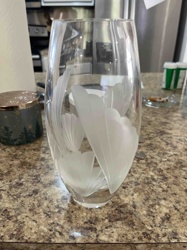
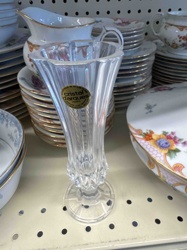
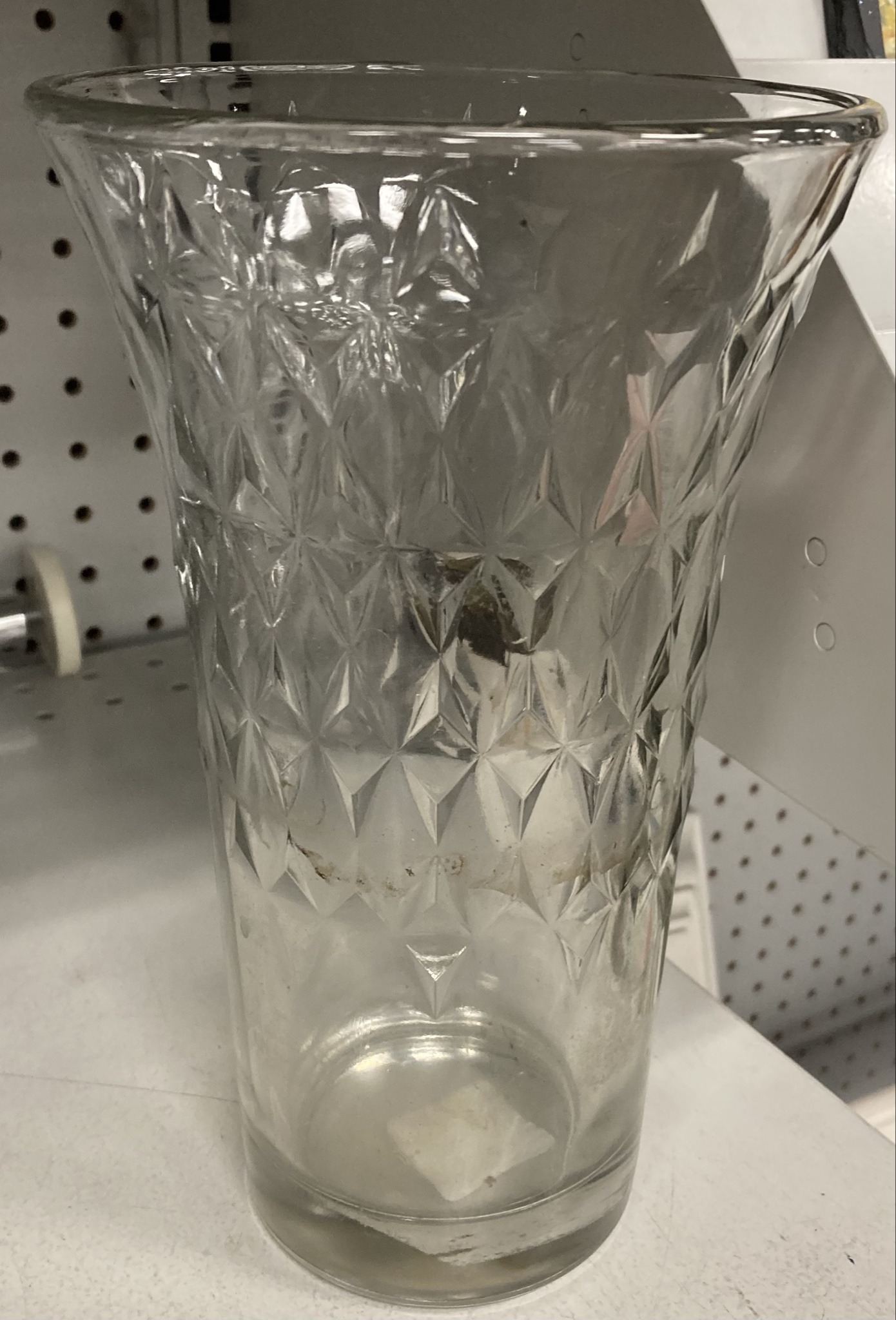
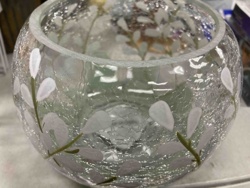
This item is a clear pressed glass vase characterized by a tapered cylindrical form that flares significantly toward the rim. The primary decorative element is a repeating geometric diamond-point or harlequin pattern that covers the upper two-thirds of the vessel's exterior. These faceted projections are designed to catch and refract light, a hallmark of mass-produced pressed glass from the mid-to-late 20th century. The base is smooth, thick, and weighted for stability, transitioning into a plain lower section before the textured pattern begins. The rim features a smooth, rounded fire-polished edge. In terms of condition, the glass shows visible signs of use, including internal cloudiness or mineral deposits (often called "sick glass"), surface grime, and some dark residue trapped within the textured facets. There are no visible large chips or cracks, but fine surface scratches are likely present consistent with its presentation on a retail shelf. The lack of a visible pontil mark on the base confirms it was formed in a mold rather than hand-blown, indicating it is likely a utilitarian florist's vase or a mid-century decorative piece intended for domestic use.
AI-Generated Appraisal Disclaimer
Estimated Value
$10.00 - $18.00
Basic Information
Category
Glassware / Home Decor
Appraised On
May 2, 2026
Estimated Value
$10.00 - $18.00
Item Description
This item is a clear pressed glass vase characterized by a tapered cylindrical form that flares significantly toward the rim. The primary decorative element is a repeating geometric diamond-point or harlequin pattern that covers the upper two-thirds of the vessel's exterior. These faceted projections are designed to catch and refract light, a hallmark of mass-produced pressed glass from the mid-to-late 20th century. The base is smooth, thick, and weighted for stability, transitioning into a plain lower section before the textured pattern begins. The rim features a smooth, rounded fire-polished edge. In terms of condition, the glass shows visible signs of use, including internal cloudiness or mineral deposits (often called "sick glass"), surface grime, and some dark residue trapped within the textured facets. There are no visible large chips or cracks, but fine surface scratches are likely present consistent with its presentation on a retail shelf. The lack of a visible pontil mark on the base confirms it was formed in a mold rather than hand-blown, indicating it is likely a utilitarian florist's vase or a mid-century decorative piece intended for domestic use.
Get Your Items Appraised
Instant estimates of your treasures with AI-powered instant appraisals