AI Appraisal Estimate

AI-generated estimates · not official valuations

From the user

What was submitted

Photo and notes provided by the user — not generated by AI

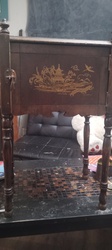
Submitted item photo
Submitted photo · June 23, 2026

User's notes

No additional notes provided.

AI analysis below

AI appraisal

AI analysis & estimate

AI-Generated · Verify before acting

Everything below is generated by AI for informational purposes only. AI can make mistakes — the AI may misidentify items or misattribute them (artist, maker, brand, designer, origin, era). This is not an official valuation and should not be used for insurance, sale, tax, estate, legal, or lending purposes — or any decision requiring a certified appraisal. It is not an authoritative claim about any person, brand, or rights holder — do not share or rely on it as a factual statement about a third party. Always consult qualified professionals before making financial decisions.

Read the full disclaimer

AI Identification

·Not independently authenticated·Verify before acting

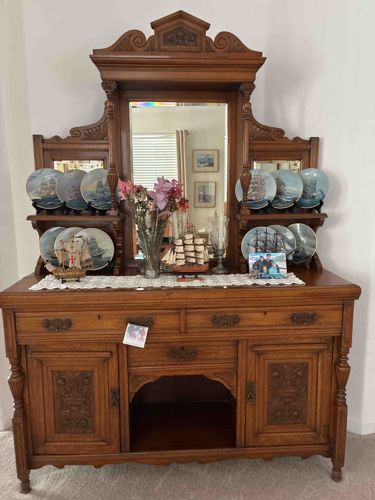
Victorian Eastlake Style Carved Oak Buffet with Mirrored Back

Antique Furniture

AI Estimated Value

·Not an official valuation·Verify before acting

$2,200 - $3,500

As of June 23, 2026

AI Item Analysis

·AI can make mistakes·Verify before acting
This is a large, ornate Victorian-era side buffet, likely dating from the late 19th century (circa 1880-1890) and crafted in the Eastlake or Aesthetic Movement style. The piece is constructed from solid oak with high-relief carvings throughout. The upper section features a tiered mirrored back with a central rectangular beveled mirror flanked by two smaller mirrors. It is crowned by a dramatic swan-neck pediment with a central carved cartouche and scrolled finials. Two small display shelves on either side are supported by slender turned spindles. The base unit consists of three drawers over a lower cabinet section. The two outer cabinet doors feature deeply carved floral or acanthus motifs inside recessed panels. A central arched open cubby sits below a smaller third drawer. Notable features include original brass bale hardware with decorative escutcheons, turned pilasters on the outer edges, and a scalloped bottom apron. The wood shows a rich honey-oak patina with some minor scuffing and professional wear consistent with age, particularly around the feet and drawer edges. The mirrors appear to have slight desilvering or foxing, which is typical for antique mercury glass. No visible maker's marks are discernible from the primary photograph, but the high level of joinery and detailed spindle work indicates superior American or British craftsmanship.
AI Appraisal Report

·AI can make mistakes·Verify before acting
Upon my visual examination of this Victorian Eastlake Sideboard, I find it to be a superior specimen of late 19th-century cabinetry, likely produced between 1885 and 1895. The use of high-relief carved oak and the sophisticated architectural silhouette, featuring a swan-neck pediment and beveled tiered mirrors, suggests a high-end manufacturer such as Berkey & Gay or a comparable American workshop. The patina is consistent with age, and the presence of original brass hardware significantly preserves its integrity. While the foxing on the mirrors and minor scuffing on the apron are noted, these are considered 'honest wear' and do not detract from the piece's desirability. The market for large-scale brown furniture has stabilized, with a distinct premium currently placed on 'statement pieces' like this one that offer functional storage and high-quality craftsmanship. Comparables for standard Eastlake dressers range lower, but tiered buffets with intact architectural tops regularly command higher prices in the current antique market due to their rarity and the Aesthetic Movement's enduring appeal. Limitations: My assessment is based solely on high-resolution imagery. A definitive appraisal requires an in-person inspection to verify joinery techniques (such as Knapp joints or hand-cut dovetails), identify potential wood species variations (secondary woods), and check for hidden maker’s marks. I would also need to examine the underside and back panels to ensure the tiered top is original to the base and not a 'marriage' of two different pieces. Scientific testing of the mirror backing would be required to confirm the presence of mercury, further solidifying its late-Victorian dating.

Get your items appraised

Instant estimates of your treasures with AI-powered appraisals

Browse More Appraisals