AI estimate as of October 7, 2025 · verify with a professional before acting
AI-Generated · Verify before acting
Everything on this page is generated by AI for informational purposes only. AI can make mistakes — the AI may misidentify items or misattribute them (artist, maker, brand, designer, origin, era). This is not an official valuation and should not be used for insurance, sale, tax, estate, legal, or lending purposes — or any decision requiring a certified appraisal. It is not an authoritative claim about any person, brand, or rights holder — do not share or rely on it as a factual statement about a third party. Always consult qualified professionals before making financial decisions.
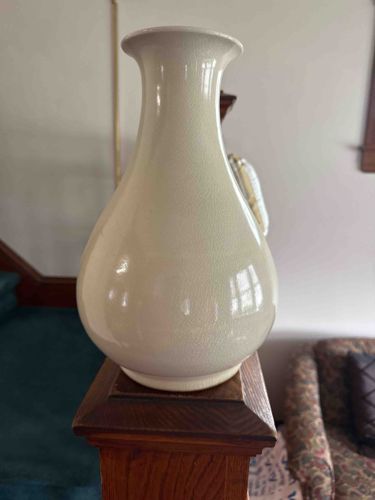
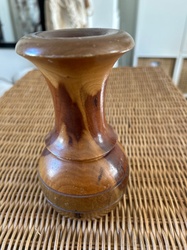
This is a ceramic vase, distinguished by its classic baluster-like form with a wide, bulbous body tapering upwards to a narrow neck and a gently flared rim. The vase is monochromatic, featuring a light, creamy-beige or off-white color that lends itself to a neutral aesthetic, suitable for various interior design schemes. A prominent physical characteristic is its glaze, which exhibits a subtle crackle finish visible across the entire surface. This crackle is not a defect but an intentional decorative technique, suggesting an aged or artisan quality. The glaze also possesses a slight sheen, reflecting ambient light, as evidenced by the clear reflections of a window pane on its surface. The base of the vase appears to be a separate, slightly broader foot, providing stability and a visual anchor, though the exact construction and attachment are not fully discernible from the image. The overall craftsmanship appears to be of good quality, with a smooth, consistent application of the glaze and a well-proportioned silhouette. There are no immediately visible chips, cracks, or significant wear, though a closer inspection would be required to confirm the absence of minor imperfections. Given its traditional form and crackle glaze, this vase could range in age from mid-20th century to contemporary, possibly with influences from Asian or Arts and Crafts revival styles. Without a clear view of the bottom or any manufacturing marks, precise dating and maker identification are challenging. Its substantial size, indicated by its presence on what appears to be a mantel or large piece of furniture, suggests it is an object intended for display.
AI Appraisal Report
Based on my visual examination of the provided image, this Glazed Ceramic Vase with Crackle Finish presents as a decorative item of good quality. The classic baluster form, combined with the creamy-beige crackle glaze, suggests a versatile aesthetic that would complement various interior styles. The condition appears to be very good; I observe no visible chips, cracks, or significant wear from the image, and the glaze application seems smooth and consistent. The intentional crackle finish is well-executed, adding to its decorative appeal rather than indicating damage. However, it is crucial to state that a definitive assessment of condition, including minor surface abrasions or hidden repairs, cannot be fully determined without a direct, hands-on inspection.
Authenticity, in terms of age and maker, is challenging to ascertain from the image alone. The style could range from mid-20th century to contemporary, possibly drawing inspiration from Asian or Arts and Crafts movements. Without designer marks, a visible signature, or provenance documentation, attribution to a specific artist or manufacturer is impossible. Market conditions for decorative ceramic vases of this nature are generally moderate. While attractive, it lacks the unique artistic merit or historical significance that would drive a higher valuation. Comparable items, typically mass-produced or artisan pieces without celebrity attribution, often retail in the $75-$250 range depending on size, specific design nuances, and material quality. Its substantial size is a positive factor for display impact.
Factors significantly impacting its value include the lack of identified provenance or maker, which prevents it from being valued as a collectible art piece. Its primary value lies in its decorative utility and aesthetic appeal. Demand for such general decorative ceramics without specific artistic attribution is steady but not exceptional, meaning it's unlikely to command high prices unless a collector specifically desires this style. The vase is not rare in its general form or finish, although specific contemporary artists may produce similar, more valuable works which this does not appear to be. To fully authenticate its age, origin, and potential maker, an in-person examination would be required to look for impressed or painted marks on the base, assess the clay body and glaze composition, and potentially perform comparative analysis with known production pieces. Given these considerations, I estimate an appraisal value of $100-200.