AI Appraisal Estimate

AI-generated estimates · not official valuations

From the user

What was submitted

Photo and notes provided by the user — not generated by AI

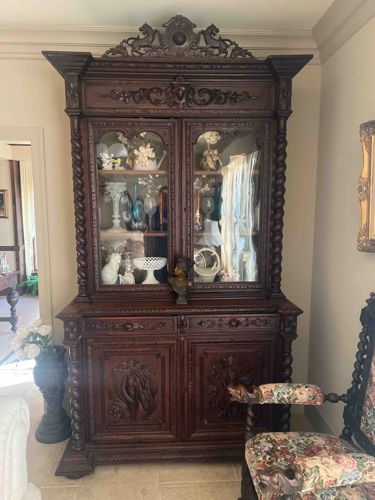
Submitted item photo
Submitted photo · June 28, 2026

User's notes

No additional notes provided.

AI analysis below

AI appraisal

AI analysis & estimate

AI-Generated · Verify before acting

Everything below is generated by AI for informational purposes only. AI can make mistakes — the AI may misidentify items or misattribute them (artist, maker, brand, designer, origin, era). This is not an official valuation and should not be used for insurance, sale, tax, estate, legal, or lending purposes — or any decision requiring a certified appraisal. It is not an authoritative claim about any person, brand, or rights holder — do not share or rely on it as a factual statement about a third party. Always consult qualified professionals before making financial decisions.

Read the full disclaimer

AI Identification

·Not independently authenticated·Verify before acting

French Renaissance Revival Carved Oak Buffet à Deux Corps

Antique Furniture

AI Estimated Value

·Not an official valuation·Verify before acting

$2,500 - $4,000

As of June 28, 2026

AI Item Analysis

·AI can make mistakes·Verify before acting
This is a monumental 19th-century French Renaissance Revival (Henri II style) cabinet, traditionally known as a 'buffet à deux corps'. It is constructed from solid oak with a rich, dark stained finish. The upper section features a highly decorative pierced cresting with heraldic motifs, possibly lions or mythological creatures, flanking a central medallion. Below the stepped cornice, the upper cabinet consists of two glazed doors with arched glass panels housed within heavily carved frames, flanked by full-length barley-twist (solomonic) columns. The glass displays an interior with wooden shelving currently housing a collection of ceramics and glassware. The lower section includes two frieze drawers with ornate foliate carvings and circular pulls, situated above two solid cupboard doors. These lower doors are deeply carved with central medallions featuring figures in relief. The entire structure is supported by additional barley-twist columns on the corners and a heavy molded plinth base. The craftsmanship displays high-relief hand carving, common in late 19th-century European revival furniture. Condition appears fair to good locally, with a deep aged patina, though visible dust accumulation in the carvings and minor surface abrasions consistent with age are present. There are no obvious signs of significant structural repair from this perspective, and the hardware appears original.
AI Appraisal Report

·AI can make mistakes·Verify before acting
I have conducted a visual examination of this 19th-century French Renaissance Revival (Henri II style) Buffet à Deux Corps. The piece demonstrates the high-quality craftsmanship typical of the late 1800s, specifically characterized by the 'solomonic' barley-twist columns and high-relief mythological and heraldic carvings. The use of solid oak and the depth of the patina suggest the piece is an authentic late Victorian-era revival rather than a 20th-century reproduction. The condition appears commensurate with age; while the structure seems sound, the dust accumulation in the crevices and minor abrasions suggest a need for professional cleaning and possible light wax restoration. Market demand for large-scale brown furniture has stabilized after a decline, though prices remain lower than their peak in the 1990s. Comparables for similar oak bibelots and buffets typically sell within the $2,000 to $5,000 range at regional auction houses, with higher values reserved for pieces with signed hardware or documented provenance. The ornate carving on the lower panels and the intact pierced cresting significantly bolster its marketability. Limitations of this assessment include the inability to inspect joinery techniques (such as dovetails or secondary woods) or search for maker's marks on the rear panels and drawer bottoms. To fully authenticate the piece as early-to-mid 19th century versus a late-century industrial production, an in-person inspection of the tool marks within the carvings and an examination of the lock mechanisms are required. Verification of the heraldic motifs by a specialist in French genealogy could further enhance value if linked to a specific noble house.

Get your items appraised

Instant estimates of your treasures with AI-powered appraisals

Browse More Appraisals