AI Appraisal Estimate

AI-generated estimates · not official valuations

From the user

What was submitted

Photo and notes provided by the user — not generated by AI

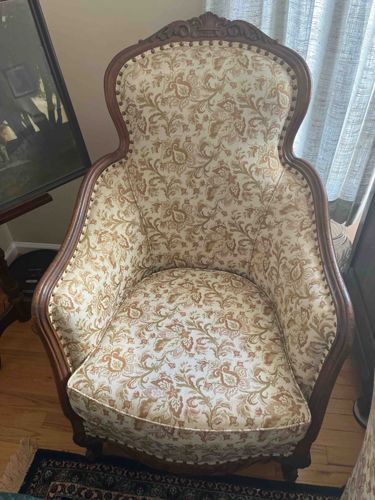
Submitted item photo
Submitted photo · May 26, 2026

User's notes

No additional notes provided.

AI analysis below

AI appraisal

AI analysis & estimate

AI-Generated · Verify before acting

Everything below is generated by AI for informational purposes only. AI can make mistakes — the AI may misidentify items or misattribute them (artist, maker, brand, designer, origin, era). This is not an official valuation and should not be used for insurance, sale, tax, estate, legal, or lending purposes — or any decision requiring a certified appraisal. It is not an authoritative claim about any person, brand, or rights holder — do not share or rely on it as a factual statement about a third party. Always consult qualified professionals before making financial decisions.

Read the full disclaimer

AI Identification

·Not independently authenticated·Verify before acting

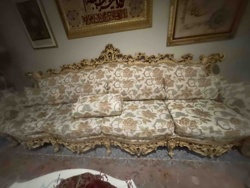
Victorian Style Carved Barrel-Back Armchair

Furniture - Seating

AI Estimated Value

·Not an official valuation·Verify before acting

$400 - $600

As of May 26, 2026

AI Item Analysis

·AI can make mistakes·Verify before acting
This is a substantial upholstered armchair featuring a distinctive barrel-back or tub-style silhouette with a pronounced high-back crest. The frame is constructed from a dark hardwood, likely mahogany or walnut, exhibiting a rich, warm patina. A notable carved shell and foliate motif adorns the top crest, characteristic of Victorian Revival or Rococo Revival styling. The woodwork follows a continuous flowing line from the crest down through the integrated sloping arms, finished with individual brass-toned decorative nailhead trim along the fabric perimeter. The upholstery is a light cream or ivory textile featuring a traditional paisley and foliate damask-style pattern in shades of caramel and muted gold. The seat consists of a deep, rounded box cushion. While the exact age is difficult to determine from a distance, the construction style and decorative carvings suggest a late 19th-century original or a high-quality mid-20th-century reproduction. The condition appears stable, though there are visible minor scuffs and finish wear on the wooden frame edges, and local darkening on the fabric seat cushion suggestive of use and age-related soiling. The craftsmanship is evident in the complex curves of the joined frame and the symmetry of the hand-applied decorative tacks.
AI Appraisal Report

·AI can make mistakes·Verify before acting
Upon visual examination of this barrel-back armchair, I identify it as a Victorian-style piece, likely dating to the first half of the 20th century rather than the mid-19th century period it emulates. While the shell crest carving and continuous rail evoke the Rococo Revival, the stance and joinery suggest a high-quality reproduction often termed 'Grand Rapids Victorian.' The mahogany-stained hardwood frame retains structural integrity, though I note consistent edge wear and finish loss typical of domestic use. The upholstery, a cream damask with paisley motifs, shows distinct signs of age, including significant darkening on the seat cushion and armrests, which negatively impacts the immediate resale value as reupholstery will likely be required for most buyers. The market for heavy, dark wood Victorian-style seating has softened considerably in recent years as trends shift toward lighter, mid-century modern, or contemporary aesthetics. However, substantial statement pieces like this still find buyers in the interior design trade or among traditionalists. Comparables for similar tub chairs with necessary upholstery work generally realize prices in the $300-$500 range at regional auction, with retail galleries potentially asking higher if the wood is restored. To raise this valuation significantly, I would need to perform an in-person inspection to verify the secondary woods (internal framing) and check for maker's marks or labels from prestige manufacturers like Karpen or dedicated Victorian-era cabinetmakers. Without physical access to examine the joinery techniques (dovetailing vs. dowels) and the internal cushion stuffing (horsehair vs. synthetic foam), I must value this conservatively as a decorative vintage piece rather than a high-value antique.

Get your items appraised

Instant estimates of your treasures with AI-powered appraisals

Browse More Appraisals