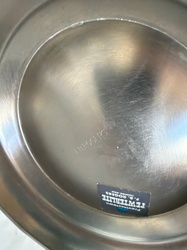
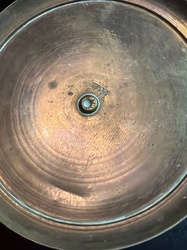
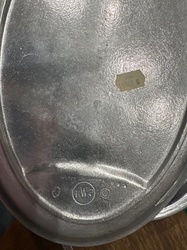
These notes were written by the person who submitted this item. Appraiser.AI has not verified them, and the AI's identification and estimate may rely on them.
AI Estimated Value
Not an official valuation
$150-$300
AI estimate as of November 22, 2026 · verify with a professional before acting
AI-Generated · Verify before acting
Everything on this page is generated by AI for informational purposes only. AI can make mistakes — the AI may misidentify items or misattribute them (artist, maker, brand, designer, origin, era). This is not an official valuation and should not be used for insurance, sale, tax, estate, legal, or lending purposes — or any decision requiring a certified appraisal. It is not an authoritative claim about any person, brand, or rights holder — do not share or rely on it as a factual statement about a third party. Always consult qualified professionals before making financial decisions.
This analysis also relies on unverified notes provided by the user, which may be incomplete or inaccurate and could affect the result.
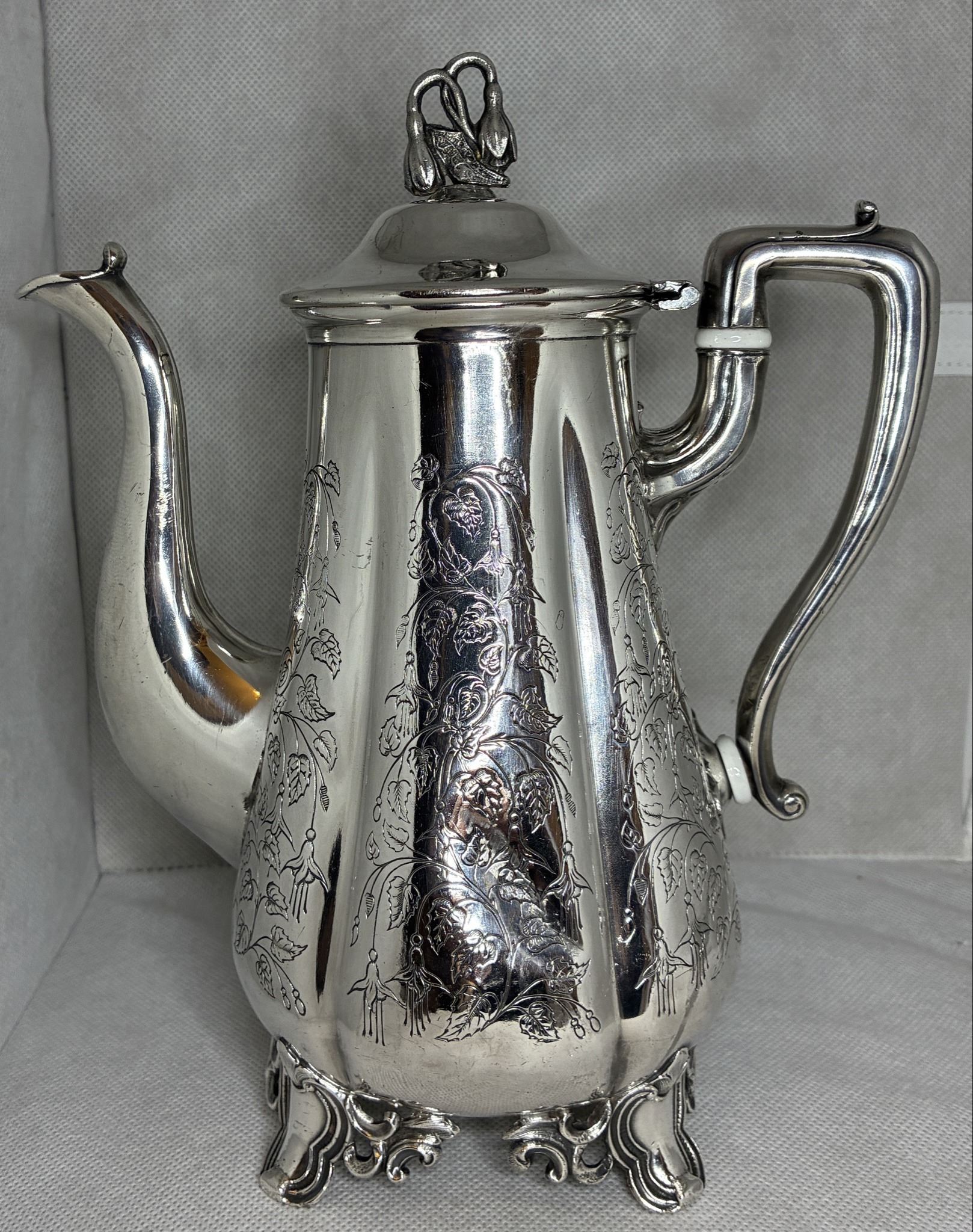
This is a tall, slender serving vessel that appears to be a silver-plated coffee pot, characterized by its bulbous lower body tapering up into a faceted neck and flared rim. The piece features intricate, hand-engraved floral and foliate motifs, specifically showcasing cascading fuchsia flowers and leaves winding down the panels. It stands upon four ornately cast, scroll-form feet and is topped with a matching domed lid featuring a finial shaped like a drooping flower blossom. The C-scroll handle incorporates small white insulators, typically made of bone, ceramic, or plastic, indicating its function for holding hot liquids. The surface displays a polished silver-colored metallic finish with some minor surface scratches, tarnish, and patina consistent with age and handling. There is no visible maker's mark or hallmark discernible in the photograph. The style suggests a Victorian or Edwardian aesthetic, likely dating from the late 19th to early 20th century, though the exact era and composition remain unverified without physical testing or examination of stamps. The owner has provided unverified notes stating a height of 25cm and a weight of 810 grams. The identification of this item is based entirely on its visual form as a handled serving pot and lacks any formal maker attribution.
AI Appraisal Report
Based on what I can see in the provided photographs and the unverified user details indicating a height of 25cm and weight of 810 grams, I am examining a tall, silver-plated coffee pot featuring intricate floral and foliate engraving, scroll-form feet, and insulated C-scroll handle attachments. I cannot verify the exact composition, metal purity, age, or maker from a photograph alone, as physical inspection, hallmark analysis, and potential non-destructive testing would be needed to confirm these details. Per user submission, the piece is presented as a late 19th to early 20th-century Victorian or Edwardian serving vessel, though this remains an unverified hypothesis lacking discernible maker's marks or hallmarks in the available images. My value estimate of $150 to $300 assumes the owner's claims regarding period style and silver-plated composition are correct. In the broader antiques marketplace, silver-plated hollowware from the Victorian or Edwardian eras generally sees modest demand, with values largely dependent on condition, weight, aesthetic appeal, and maker attribution. The minor surface scratches, tarnish, and patina observed are consistent with age and handling, which moderately impact value depending on buyer preference for original surfaces versus polished plating. If this item were to turn out to be a later reproduction, modern replica, or created simply 'in the style of' antique silver-plate rather than an authentic period piece, the value would significantly decrease, typically dropping to a decorative range of $40 to $80. To establish a more precise valuation and authenticate the piece, an in-person physical examination by a qualified silver expert or appraiser is required to inspect the construction methods, handle insulators, and any microscopic markers.