AI estimate as of October 12, 2025 · verify with a professional before acting
AI-Generated · Verify before acting
Everything on this page is generated by AI for informational purposes only. AI can make mistakes — the AI may misidentify items or misattribute them (artist, maker, brand, designer, origin, era). This is not an official valuation and should not be used for insurance, sale, tax, estate, legal, or lending purposes — or any decision requiring a certified appraisal. It is not an authoritative claim about any person, brand, or rights holder — do not share or rely on it as a factual statement about a third party. Always consult qualified professionals before making financial decisions.
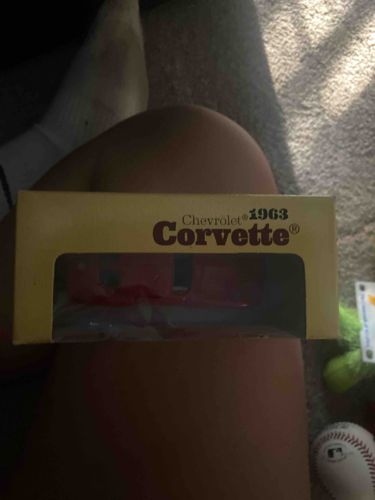
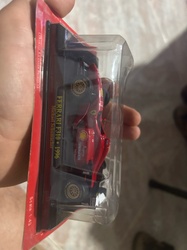
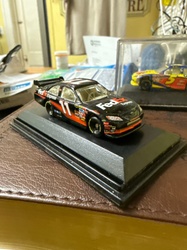
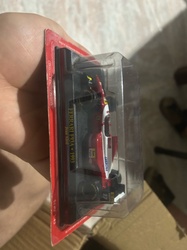
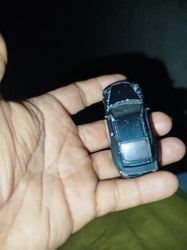
This item is a boxed model car, specifically identified as a 1963 Chevrolet Corvette. The car appears to be red, though details are hard to discern through the transparent window of the packaging. The box is a light tan or yellowish cardboard with 'Chevrolet' and 'Corvette' printed prominently in a dark brown, stylized font, along with the year '1963' above 'Corvette'. The 'Corvette' text also includes a registered trademark symbol. The model car itself is visible inside the box, which features a clear plastic window allowing a view of the item within. It appears to be in its original packaging, and the car looks to be in new or nearly new condition, having been protected within the box. There are no obvious signs of wear, damage, or repairs visible on the packaging or the small portion of the car that is clear. The packaging suggests it is a collectible item, likely a die-cast model or similar scale replica, produced for collectors or enthusiasts of classic automobiles. The crispness of the printing on the box indicates good preservation for its age. Without further details on the manufacturer, it's difficult to ascertain specific material composition beyond what common for such models (likely metal and plastic).
AI Appraisal Report
Upon examining the provided image of the 1963 Chevrolet Corvette Model Car in Box, I assess its condition to be excellent. The model appears to be new or nearly new, protected within its original packaging. The box itself, a light tan with dark brown 'Chevrolet' and 'Corvette' sans-serif font, including the '1963' designation, shows no obvious signs of wear, creasing, or fading, which is highly beneficial for its collectible value. The clear plastic window is intact, allowing a good view of the presumably red Corvette model. The crispness of the printing on the box suggests good provenance and care over time.
Authenticity, based purely on visual inspection, seems high given the apparent factory packaging. However, without a physical examination, I cannot definitively confirm the model's originality to the box, nor can I verify the material composition or manufacturer. These details often significantly impact value. Brand identity (e.g., Franklin Mint, Danbury Mint, promo model, or vintage toy brand like Dinky or Corgi) is crucial. A physical inspection would allow me to check for manufacturer markings, scale, and specific detailing which are key identifiers.
Market conditions for vintage model cars, particularly iconic vehicles like the 1963 Corvette 'split-window' coupe, are generally strong, especially for boxed examples in pristine condition. Demand is consistent among automotive collectors and die-cast enthusiasts. While not exceptionally rare given the volume of model cars produced, a vintage model in its original, undamaged packaging elevates its desirability. Comparables would typically be similar era Corvette models by recognized manufacturers in comparable condition, which can range from $50 for common examples to several hundred for highly detailed or scarce versions.
Limitations: My assessment is based solely on the provided image. For full authentication and a more precise valuation, I would need to physically examine the model car to identify the manufacturer, scale, materials, and any subtle defects not visible through the packaging. Additionally, provenance documentation, if available, would provide invaluable context regarding its history and originality. Without these details, the valuation is a conservative estimate.