Tumbled Green Smithsonite or Prehnite Specimen
Minerals, Crystals, and Gemstones

Tumbled Green Smithsonite or Prehnite Specimen

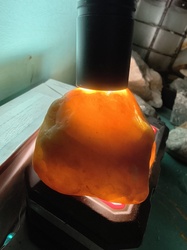
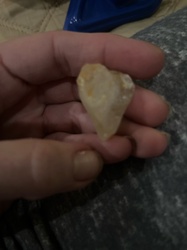
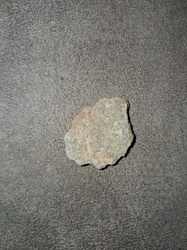
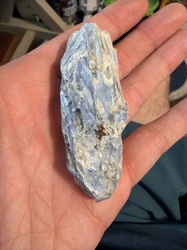
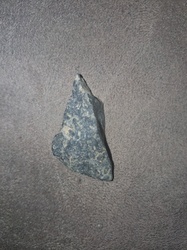
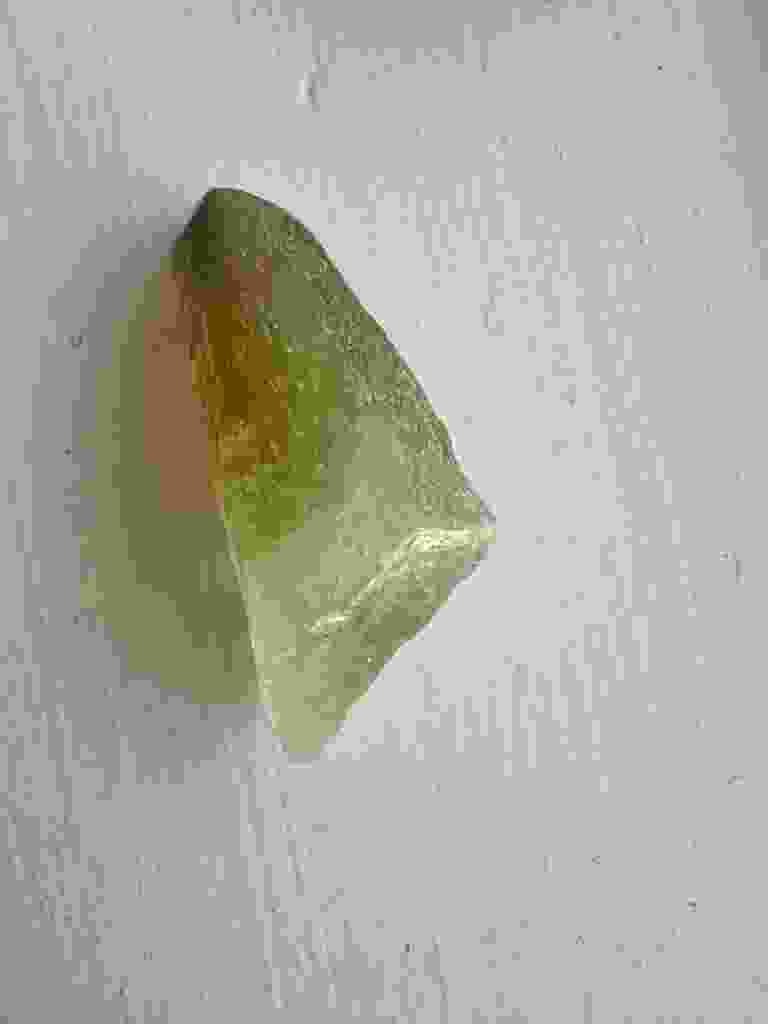
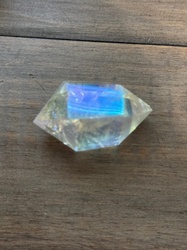
This item is a semi-translucent, light-green mineral specimen featuring an irregular, wedge-like shape that suggests it has been partially tumbled or water-worn. The primary color is a pale pistachio or sea-foam green, with noticeable areas of yellowish-brown and reddish-orange inclusions or surface staining, likely due to iron oxide deposits. Physically, the specimen exhibits a waxy to Vitreous luster on its naturally polished surfaces. The texture is non-uniform, showing internal fractures and cloudy inclusions that create a mottled visual depth. There are visible 'steps' or cleavage planes along one edge, while other surfaces are smooth and rounded. The condition shows no significant human-made damage like deep chips or saws marks, but does possess natural pitting and internal veining consistent with raw mineral formations. Given its coloration and botryoidal hints, it is likely a form of green Smithsonite, Prehnite, or possibly a piece of rough Adventurine. The quality is typical of commercial-grade collector minerals used for lapidary work or metaphysical display. No maker's marks or signatures are present, as this is a natural geological product.
Estimated Value

$45–$70

Basic Information

Category

Minerals, Crystals, and Gemstones

Appraised On

April 11, 2026

Estimated Value

$45–$70

Item Description

This item is a semi-translucent, light-green mineral specimen featuring an irregular, wedge-like shape that suggests it has been partially tumbled or water-worn. The primary color is a pale pistachio or sea-foam green, with noticeable areas of yellowish-brown and reddish-orange inclusions or surface staining, likely due to iron oxide deposits. Physically, the specimen exhibits a waxy to Vitreous luster on its naturally polished surfaces. The texture is non-uniform, showing internal fractures and cloudy inclusions that create a mottled visual depth. There are visible 'steps' or cleavage planes along one edge, while other surfaces are smooth and rounded. The condition shows no significant human-made damage like deep chips or saws marks, but does possess natural pitting and internal veining consistent with raw mineral formations. Given its coloration and botryoidal hints, it is likely a form of green Smithsonite, Prehnite, or possibly a piece of rough Adventurine. The quality is typical of commercial-grade collector minerals used for lapidary work or metaphysical display. No maker's marks or signatures are present, as this is a natural geological product.
Get Your Items Appraised

Instant estimates of your treasures with AI-powered instant appraisals

Browse More Appraisals