AI identification & appraisal estimate

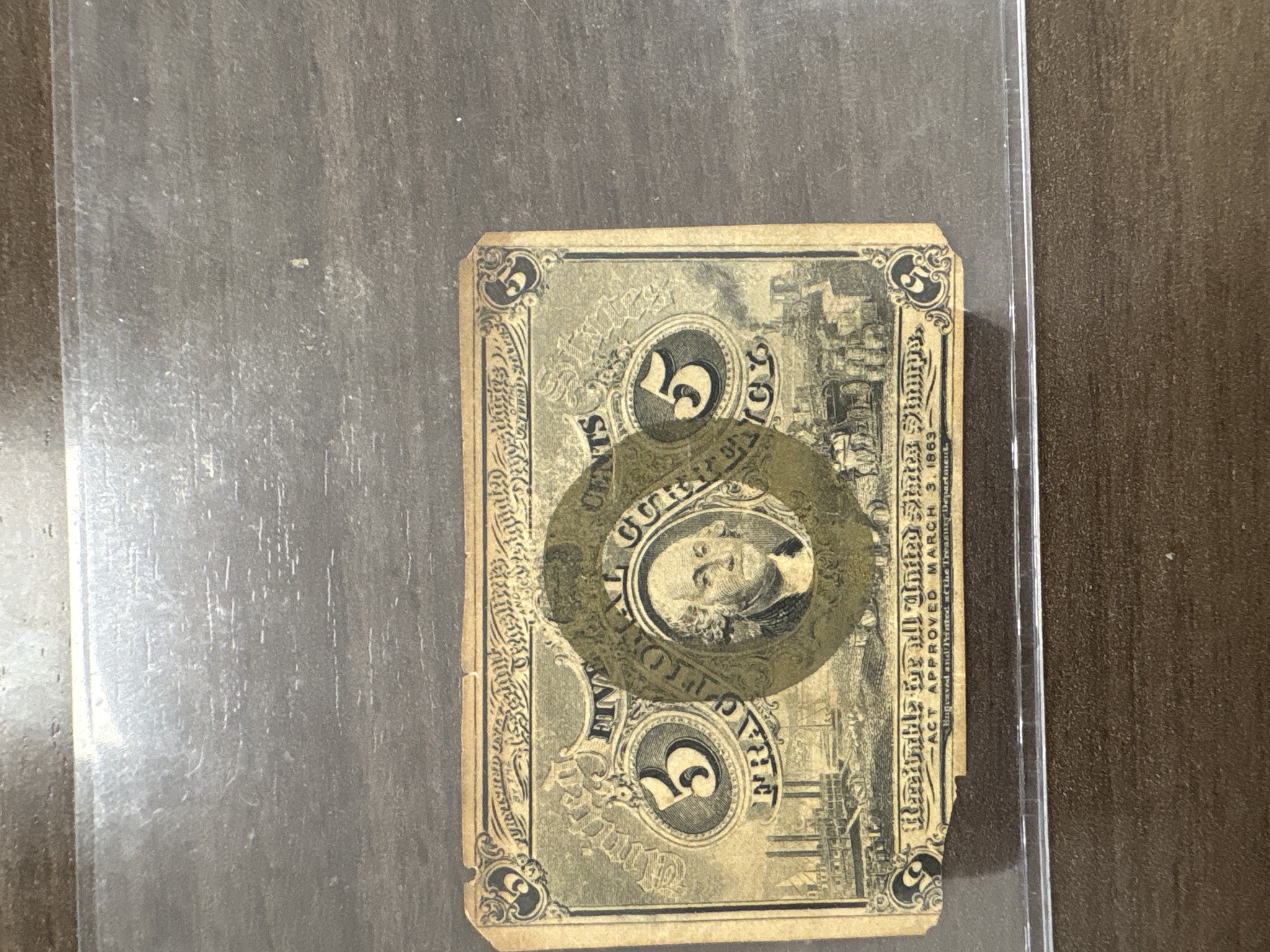
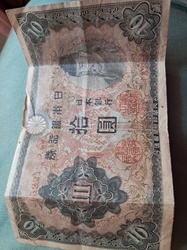
vintage paper currency note appearing to be a US fractional currency note

This name is the AI's identification of the item — it may be incorrect.

Submitted photo of vintage paper currency note appearing to be a US fractional currency note
Photo submitted by the user — not generated by AI

AI Estimated Value

Not an official valuation

$50-$150

AI estimate as of July 28, 2026 · verify with a professional before acting

AI-Generated · Verify before acting

Everything on this page is generated by AI for informational purposes only. AI can make mistakes — the AI may misidentify items or misattribute them (artist, maker, brand, designer, origin, era). This is not an official valuation and should not be used for insurance, sale, tax, estate, legal, or lending purposes — or any decision requiring a certified appraisal. It is not an authoritative claim about any person, brand, or rights holder — do not share or rely on it as a factual statement about a third party. Always consult qualified professionals before making financial decisions.

Read the full disclaimer

AI Item Analysis

This physical item is a small rectangular paper currency note encased in a protective plastic sleeve, resting on a dark textured surface. The note is primarily monochromatic with green and black ink tones, exhibiting a heavily oxidized, yellowed, and aged paper quality. The physical characteristics include ornate engraved borders featuring the number '5' in the four corners, prominent circular medallions containing the number '5', and a central circular portrait featuring a profile bust of a figure resembling George Washington, which is surrounded by a circular cancellation-style stamp or paper seal overlay. Visible text printed on the right side reads 'Act approved March 3, 1863' alongside other partially legible phrasing typical of historical currency, such as 'Fractional Currency'. The condition shows significant wear, including frayed and clipped edges, corner rounding, creases, discoloration, surface dirt, and fading of the ink consistent with age and circulation. Manufacturing details visible in the imagery include intricate intaglio-style line engraving typical of 19th-century security printing, although the current photograph does not allow for a physical examination of the paper stock or watermark, meaning the piece remains unauthenticated. The style is consistent with mid-19th-century American paper money, specifically appearing in the style of a Fifth Issue or similar fractional currency note. Because this evaluation is conducted solely from a photograph without physical handling, tactile testing, or microscopic inspection of the paper and ink, the attribution is treated strictly as a visual hypothesis rather than a fact, and the piece must be physically inspected by a currency expert to ascertain its status.
AI Appraisal Report

Based on what I can see in the photograph, the item appears visually consistent with a 19th-century United States fractional currency note, specifically resembling a Fifth Issue fractional note featuring a central portrait and ornate geometric borders. I must emphasize that this evaluation is based solely on a digital image and represents a working hypothesis rather than a confirmed identification. I cannot verify from a photo alone the paper stock quality, watermarks, or whether the ink and paper are historically accurate, as visual markings can be replicated. Based on the assumption that this note is a period piece of fractional currency, similar examples in heavily circulated, worn condition typically trade in a market value range of $50 to $150, heavily influenced by the presence of tears, clipped edges, creases, and fading. Demand for historical US paper money remains steady among collectors of 19th-century numismatics, though condition is a primary driver of market value. To move beyond a visual hypothesis and establish the status of the piece, an in-person examination by a professional currency expert is required, along with potential scientific testing of the paper and verification of historical printing techniques. If physical inspection were to reveal that this piece is a modern reproduction, replica, or facsimile rather than a period-issued note, the value would decrease significantly, typically dropping to a nominal souvenir or educational value of $5 to $15. Therefore, this estimated range is strictly contingent upon successful physical authentication.

Keep exploring

More paper money appraisals

Get your items appraised

Instant AI-powered appraisal estimates from a photo

Browse More Appraisals