AI Appraisal Estimate

AI-generated estimates · not official valuations

From the user

What was submitted

Photo and notes provided by the user — not generated by AI

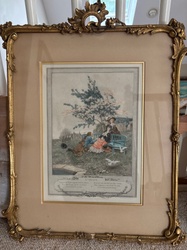
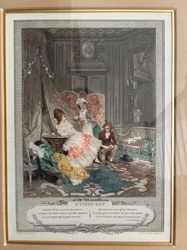
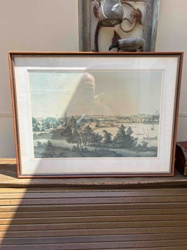
Submitted item photo
Submitted photo · June 6, 2026

User's notes

No additional notes provided.

AI analysis below

AI appraisal

AI analysis & estimate

AI-Generated · Verify before acting

Everything below is generated by AI for informational purposes only. AI can make mistakes — the AI may misidentify items or misattribute them (artist, maker, brand, designer, origin, era). This is not an official valuation and should not be used for insurance, sale, tax, estate, legal, or lending purposes — or any decision requiring a certified appraisal. It is not an authoritative claim about any person, brand, or rights holder — do not share or rely on it as a factual statement about a third party. Always consult qualified professionals before making financial decisions.

Read the full disclaimer

AI Identification

·Not independently authenticated·Verify before acting

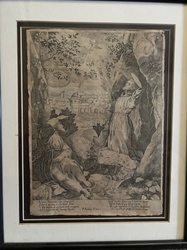
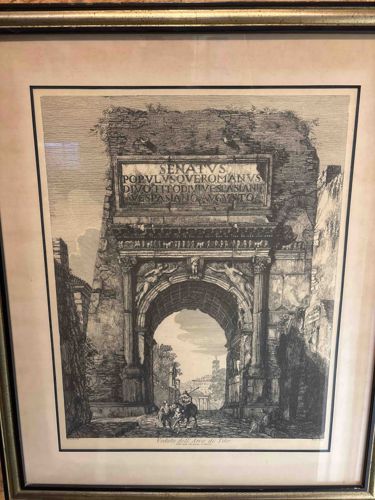
Giovanni Battista Piranesi, Veduta dell’Arco di Tito (View of the Arch of Titus)

Fine Art - Prints & Engravings

AI Estimated Value

·Not an official valuation·Verify before acting

$1,200 - $1,800

As of June 6, 2026

AI Item Analysis

·AI can make mistakes·Verify before acting
This is a monochrome etching on paper, specifically a plate from the renowned 'Vedute di Roma' (Views of Rome) series by Giovanni Battista Piranesi, dating originally to the mid-18th century (circa 1748-1774). The image depicts the Arch of Titus in a state of romanticized ruin, captured with Piranesi's signature dramatic scale and high-contrast 'chiaroscuro' lighting. The composition features the massive archway dominating the frame, with the Latin inscription 'SENATVS POPVLVSQVE ROMANVS...' clearly visible on the attic. Small human figures and a horse-drawn traveler at the base provide a sense of grand scale. The etching exhibits intricate line work, masterful cross-hatching to create depth, and detailed architectural ornamentation. The paper shows significant signs of age, including overall yellowing/toning and visible foxing (brown spotting) concentrated primarily in the upper matting area, suggesting it may not be mounted on acid-free materials. The piece is housed in a modern gilded frame with a cream-colored mat and a black inner bevel. While it captures the Neoclassical/Grand Tour aesthetic perfectly, the lack of visible plate marks or a signature in this photograph (though 'Veduta dell'Arco di Tito' is written at the bottom) requires physical inspection to determine if this is a lifetime impression from a Roman edition, a later Parisian edition, or a high-quality 19th/20th-century reproduction.

AI Appraisal Report

·AI can make mistakes·Verify before acting
I have conducted a visual examination of this etching from Giovanni Battista Piranesi’s 'Vedute di Roma' series. The work displays the masterful chiaroscuro and atmospheric drama characteristic of Piranesi’s Roman views. Architecturally, the rendering of the Arch of Titus is consistent with his mid-18th-century plates. However, several factors significantly impact the valuation. The condition is a primary concern: visible foxing and significant toning suggest acid damage from historical contact with non-archival materials. The matting appears to be a modern addition, but the visible discoloration indicates the paper has suffered from light exposure and humidity. Market-wise, Piranesi remains a staple of the 'Grand Tour' aesthetic; however, value hinges entirely on the 'state' and edition. Lifetime Roman impressions (pre-1778) on thick laid paper with fleur-de-lis watermarks command five-figure sums, whereas posthumous Parisian editions or 19th-century Calcografia prints realize significantly less. Without a physical inspection, I cannot verify the presence of a plate mark, a central vertical fold (typical of early bound volumes), or paper watermarks. Furthermore, the lack of visible marginalia in the photograph makes it difficult to distinguish between a high-quality 19th-century strike and an earlier impression. Due to these limitations, this appraisal assumes a standard 19th-century strike in fair condition. To reach a definitive valuation, I would require an out-of-frame inspection to verify the paper's weight and watermark, as well as a microscopic analysis of the line quality to ensure it is a true intaglio print rather than a photogravure or offset lithographic reproduction.

Get your items appraised

Instant estimates of your treasures with AI-powered appraisals

Browse More Appraisals