AI Appraisal Estimate

AI-generated estimates · not official valuations

From the user

What was submitted

Photo and notes provided by the user — not generated by AI

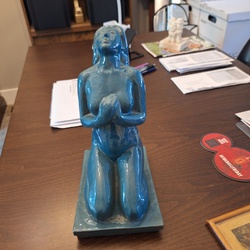
Submitted item photo
Submitted photo · June 8, 2026

User's notes

Unknown artist, unknown sculpture

AI analysis below

AI appraisal

AI analysis & estimate

AI-Generated · Verify before acting

Everything below is generated by AI for informational purposes only. AI can make mistakes — the AI may misidentify items or misattribute them (artist, maker, brand, designer, origin, era). This is not an official valuation and should not be used for insurance, sale, tax, estate, legal, or lending purposes — or any decision requiring a certified appraisal. It is not an authoritative claim about any person, brand, or rights holder — do not share or rely on it as a factual statement about a third party. Always consult qualified professionals before making financial decisions.

Note

This analysis also relies on unverified notes provided by the user, which may be incomplete or inaccurate and could affect the result.

Read the full disclaimer

AI Identification

·Not independently authenticated·Verify before acting

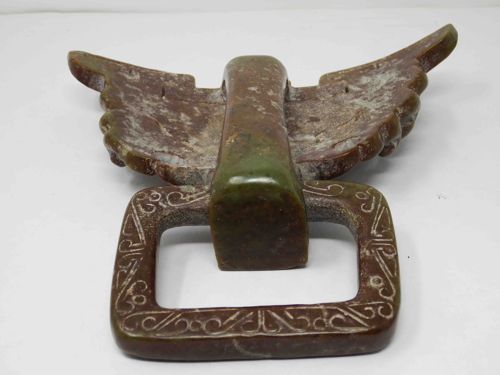
Carved Soapstone or Low-Grade Jade Winged Totem Sculpture

Art & Collectibles / Sculptures

AI Estimated Value

·Not an official valuation·Verify before acting

$150-250

As of June 8, 2026

AI Item Analysis

·AI can make mistakes·Verify before acting
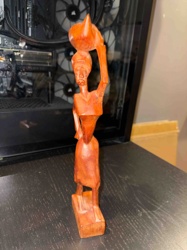
This item is a hand-carved decorative sculpture featuring a winged avian or mythological figure emerging from a rectangular frame. The piece is crafted from a variegated stone, likely soapstone or a low-grade nephrite jade, characterized by a deep brownish-red base color with mottle green and grey inclusions throughout. The construction features a central vertical body that extends into two wide, scalloped wings with undulating edges. A large rectangular base or frame is joined to the bottom, decorated with shallowly incised scrolling or cloud-like patterns. The surface exhibits a matte to semi-gloss finish with significant visible wear, including a heavy white calcification or dust-like patina in the recessed areas of the wings, which suggests an attempt at creating an archaic appearance. Small chips and surface abrasions are visible along the sharpest edges of the wings and the rectangular base. The craftsmanship appears to be a modern interpretation of archaic Chinese jades (such as Hongshan or Liangzhu styles), though the lack of authentic surface mineralization and the specific incised patterns suggest it is a 20th-century decorative piece rather than an antiquity. There are no visible maker's marks or signatures.
AI Appraisal Report

·AI can make mistakes·Verify before acting
Based on my examination of this carved stone sculpture, I have determined it to be a modern decorative piece executed in the 'Archaic style,' specifically drawing inspiration from Hongshan culture avian motifs. The material appears to be a variegated soapstone or soft nephrite, exhibiting a characteristic waxy luster. While the piece displays a heavy surface patina, the 'calcification' in the recessed areas appears to be a synthetic application (often a mixture of calcium carbonate or gypsum) intended to simulate centuries of burial. Authentic mineralization usually displays more irregular, crystalline growth than seen here. The incised scrollwork on the base lacks the fluid, hand-tool movement found in genuine antiquities, suggesting a 20th-century production. The current market for 'Neo-Archaic' Chinese decorative arts is stable but distinct from the high-value antiquity market. Similar soapstone carvings produced in the mid-to-late 20th century frequently appear in estate auctions, generally realizing modest prices as decorative objects rather than investment-grade collectibles. Its value is primarily driven by its aesthetic appeal and scale rather than historical significance. Note: This appraisal is based on visual analysis. A definitive determination of the stone's mineral composition would require a Mohs hardness test or spectroscopic analysis. Without documented provenance tracing the item back several decades or a scientific thermoluminescence test (if applicable to associated materials), it cannot be authenticated as an ancient artifact. An in-person inspection would also be necessary to verify if any surface abrasions reveal a different base color, which would further confirm the use of artificial staining.

Get your items appraised

Instant estimates of your treasures with AI-powered appraisals

Browse More Appraisals