AI estimate as of August 10, 2025 · verify with a professional before acting
AI-Generated · Verify before acting
Everything on this page is generated by AI for informational purposes only. AI can make mistakes — the AI may misidentify items or misattribute them (artist, maker, brand, designer, origin, era). This is not an official valuation and should not be used for insurance, sale, tax, estate, legal, or lending purposes — or any decision requiring a certified appraisal. It is not an authoritative claim about any person, brand, or rights holder — do not share or rely on it as a factual statement about a third party. Always consult qualified professionals before making financial decisions.
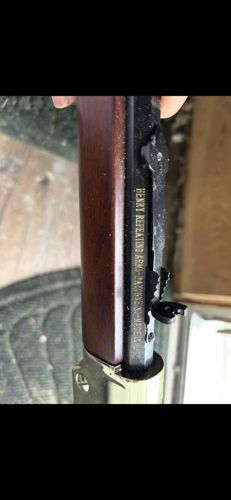
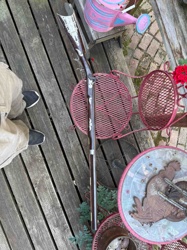
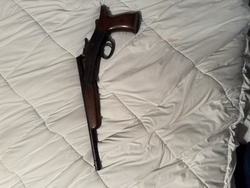
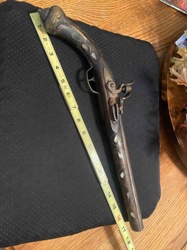
The item is a Henry Repeating Arms 'Youth Model' Lever Action Rifle, as indicated by the clear inscription on the side of the receiver. It features a rich, dark wooden stock, likely walnut, which appears to be in good condition with a smooth finish, suggesting careful handling or maintenance. The metal components, including the receiver and what appears to be part of the barrel or magazine tube, are a combination of black blued steel and a brighter, possibly brass or nickel-plated, lower receiver section where the lever action mechanism would typically be housed. The blued steel parts show some dust and minor surface wear consistent with light use or storage, but no significant rust or pitting is immediately visible. The brighter metal part exhibits a polished sheen. A rear sight, which appears to be a folding or adjustable buckhorn type, is mounted on the blued receiver. This model is characterized by its lever-action mechanism and is often shorter and lighter than standard rifles, making it suitable for younger shooters. The craftsmanship appears solid, typical of Henry Repeating Arms, known for their well-made and reliable firearms. No significant damage or repairs are apparent from the provided image, and the overall construction suggests a durable and functional piece. The precise caliber is not discernible from the image alone but is likely a popular rimfire cartridge like .22 LR, common for youth models. This rifle presents as a well-maintained example of a modern lever-action firearm.
AI Appraisal Report
I have examined the provided image of the Henry Repeating Arms 'Youth Model' Lever Action Rifle. Based on my visual assessment, the rifle appears to be in very good to excellent condition. The dark wooden stock, likely walnut, shows a smooth finish with no apparent significant blemishes, cracks, or deep scratches, indicating careful handling. The metal components, including the blued steel receiver and barrel/magazine tube, exhibit minor surface wear and some dust, consistent with light use or storage, but I see no signs of rust or pitting. The brighter lower receiver section, possibly brass or nickel-plated, retains a polished sheen. The clear inscription 'Henry Repeating Arms Youth Model' on the side confirms its authenticity as a Henry product. The presence of a folding or adjustable buckhorn rear sight is typical for this model.
From a market perspective, Henry Repeating Arms firearms are generally well-regarded for their quality and reliability, holding their value comparatively well. Youth models, while having a specific niche, also attract collectors and new shooters. Demand for lever-action rifles, especially in popular rimfire calibers like .22 LR (which this model likely is), remains consistent. This specific model is not rare, but its condition elevates its desirability. Factors positively impacting value include the overall excellent visual condition and the reputable manufacturer. There are no readily apparent negative factors.
It is crucial to state that my authentication and condition assessment are limited to what is visible in the image. A full, in-person examination would be necessary to confirm the absence of internal wear, mechanical issues, bore condition, and to definitively identify the caliber. Provenance documentation, such as original sales receipts or manufacturing records, would further solidify authenticity and history. Scientific testing, while unlikely for a modern firearm of this nature, could confirm material composition if ever needed for deeper analysis.