AI Appraisal Estimate

AI-generated estimates · not official valuations

From the user

What was submitted

Photo and notes provided by the user — not generated by AI

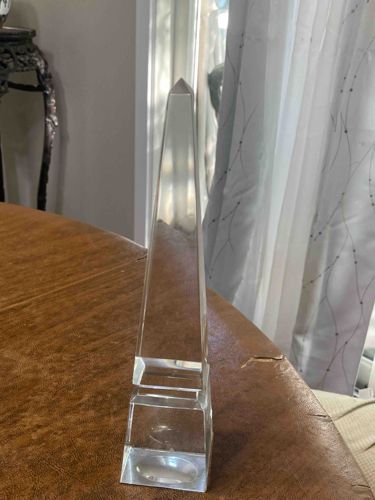
Submitted item photo
Submitted photo · June 6, 2026

User's notes

French glass art obelisk Highly collectible antique no scratches or chips perfect condition

AI analysis below

AI appraisal

AI analysis & estimate

AI-Generated · Verify before acting

Everything below is generated by AI for informational purposes only. AI can make mistakes — the AI may misidentify items or misattribute them (artist, maker, brand, designer, origin, era). This is not an official valuation and should not be used for insurance, sale, tax, estate, legal, or lending purposes — or any decision requiring a certified appraisal. It is not an authoritative claim about any person, brand, or rights holder — do not share or rely on it as a factual statement about a third party. Always consult qualified professionals before making financial decisions.

Note

This analysis also relies on unverified notes provided by the user, which may be incomplete or inaccurate and could affect the result.

Read the full disclaimer

AI Identification

·Not independently authenticated·Verify before acting

French Clear Glass Art Obelisk

Decorative Arts

AI Estimated Value

·Not an official valuation·Verify before acting

$250 - $400

As of June 6, 2026

AI Item Analysis

·AI can make mistakes·Verify before acting
This is a clear glass art obelisk, designed as a decorative accent piece. It features a classic obelisk form with a tall, slender, four-sided tapering shaft that rises from a tiered plinth-like base and culminates in a pyramidal apex. The entire piece is constructed from clear, colorless glass, exhibiting excellent transparency and clarity, which allows for light to refract and reflect, creating visual interest. The base consists of two distinct rectangular blocks, stacked to provide a stable foundation; the lower block is longer and wider, while the upper block is slightly smaller, creating a subtle stepped effect. The surfaces appear highly polished, contributing to its luminous quality. There are no visible chips, cracks, scratches, or wear marks, corroborating the stated 'perfect condition'. Given the context of 'French glass art obelisk' and 'highly collectible antique', it suggests a sophisticated production quality, likely from a reputable French glassmaker known for fine crystal or art glass. Without a discernible maker's mark or signature from the image, specific manufacturing details are not evident; however, the lack of imperfections points to high-quality craftsmanship. The style period is likely turn of the 20th century or mid-20th century, consistent with periods of significant French glass art production. Its elegant simplicity allows it to complement various interior design styles, from traditional to modern, making it a versatile and desirable decorative object.
AI Appraisal Report

·AI can make mistakes·Verify before acting
Upon examination of the provided images and description, this clear glass obelisk presents as a finely crafted decorative object. The classic form, consisting of a tapered four-sided shaft on a tiered plinth base, is characteristic of French neoclassical and Art Deco revival styles, likely dating it to the early-to-mid 20th century. The glass exhibits excellent clarity and a high-polish finish, and its stated 'perfect condition' with no visible chips, cracks, or significant wear is a primary value driver. Without a maker's mark visible in the images, attribution to a specific high-end French manufacturer like Baccarat or Lalique is not possible, which significantly tempers the potential value. While described as a 'highly collectible antique,' its value is currently assessed as a high-quality decorative piece rather than a work by a master glassmaker. The market for unsigned decorative glass is stable, with demand driven by interior design trends favoring elegant, minimalist accents. Comparables for unsigned French glass obelisks of similar size and quality typically trade in the low to mid-hundreds. Full authentication would require in-person examination to search for acid-etched signatures, pontil marks, or other manufacturing tells, and a review of any provenance documentation to potentially link it to a specific maker.

Get your items appraised

Instant estimates of your treasures with AI-powered appraisals

Browse More Appraisals