AI estimate as of August 9, 2025 · verify with a professional before acting
AI-Generated · Verify before acting
Everything on this page is generated by AI for informational purposes only. AI can make mistakes — the AI may misidentify items or misattribute them (artist, maker, brand, designer, origin, era). This is not an official valuation and should not be used for insurance, sale, tax, estate, legal, or lending purposes — or any decision requiring a certified appraisal. It is not an authoritative claim about any person, brand, or rights holder — do not share or rely on it as a factual statement about a third party. Always consult qualified professionals before making financial decisions.
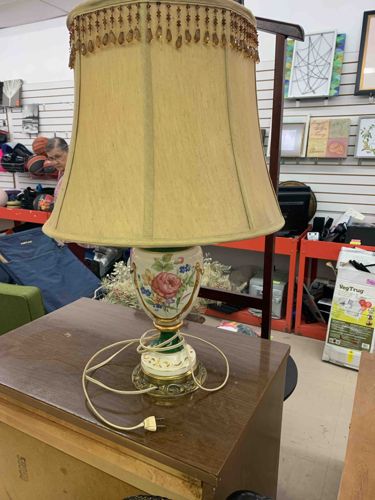
This is a vintage-style decorative table lamp, characterized by its ornate base and an Empire-shaped lampshade. The lamp stands on a dark wooden surface. The base appears to be constructed from ceramic or porcelain, featuring a white background adorned with hand-painted floral motifs in various colors, including shades of red, pink, blue, and green. A prominent feature is a large red rose, accompanied by smaller blue flowers and green foliage. The ceramic portion is accented with gilded details and has a fluted design near the top of the white section, just below the floral painting. The neck of the lamp, connecting the base to the light fixture, is a vibrant dark green, likely ceramic or painted metal, and appears to be gilded at the top and bottom. The lamp sits on a round, ornate brass or gilded metal base with intricate scrollwork or filigree patterns. The lampshade is a wide, conical Empire style, made of a light, possibly silk or linen, fabric in an aged cream or yellowish hue. The most distinguishing feature of the lampshade is its lavish trim: a double row of hanging beads and faceted crystal dangles in an amber or brown tone, giving it a somewhat Bohemian or antique aesthetic. The shade itself shows some signs of age, with possible discoloration or dust accumulation, but no overt tears or significant damage are visible. The electrical cord, a standard two-prong variety, is visible coiled on the tabletop, indicating it is an electric lamp. There are no visible maker's marks or signatures in the provided images. The overall style suggests a mid-20th century European or American decorative piece, possibly from the Rococo Revival or Hollywood Regency periods given its opulence, or a later reproduction inspired by these styles. Its condition appears to be fair to good vintage, with typical wear commensurate with age, but no major structural damage or chips are apparent on the base.
AI Appraisal Report
After examining the images of this vintage table lamp, I assess it to be a decorative piece likely from the mid-20th century, drawing inspiration from Rococo Revival or Hollywood Regency styles. The lamp's primary value lies in its decorative appeal. The hand-painted floral motifs on the ceramic base, combined with the ornate gilded metalwork and the elaborately beaded lampshade, create a striking, opulent aesthetic.
Based on visual assessment, the lamp appears to be in good vintage condition, with age-appropriate wear such as minor discoloration on the shade but no apparent major chips, cracks, or structural damage. The beaded fringe on the shade is a significant value driver, as these are often damaged or lost over time; its apparent completeness is a strong positive factor.
The current market for such decorative lamps is steady, particularly among buyers seeking unique, character-rich pieces. Comparable lamps of this style and period, often unlabeled or from lesser-known manufacturers, typically sell in the range provided. The lack of a visible maker's mark from a high-end manufacturer like Dresden, Capodimonte, or a specific Hollywood Regency designer prevents it from reaching a higher valuation tier.
My appraisal is limited by the inability to physically inspect the lamp. A full authentication would require examining the base for hidden marks, testing the metal for composition (brass vs. plated), inspecting the electrical wiring for safety and originality, and assessing the ceramic and paintwork for any restoration under ultraviolet light. Without this in-person verification, the piece is appraised as a decorative, high-quality vintage item of indeterminate origin.