AI Appraisal Estimate

AI-generated estimates · not official valuations

From the user

What was submitted

Photo and notes provided by the user — not generated by AI

Submitted item photo
Submitted photo · June 4, 2026

User's notes

No additional notes provided.

AI analysis below

AI appraisal

AI analysis & estimate

AI-Generated · Verify before acting

Everything below is generated by AI for informational purposes only. AI can make mistakes — the AI may misidentify items or misattribute them (artist, maker, brand, designer, origin, era). This is not an official valuation and should not be used for insurance, sale, tax, estate, legal, or lending purposes — or any decision requiring a certified appraisal. It is not an authoritative claim about any person, brand, or rights holder — do not share or rely on it as a factual statement about a third party. Always consult qualified professionals before making financial decisions.

Read the full disclaimer

AI Identification

·Not independently authenticated·Verify before acting

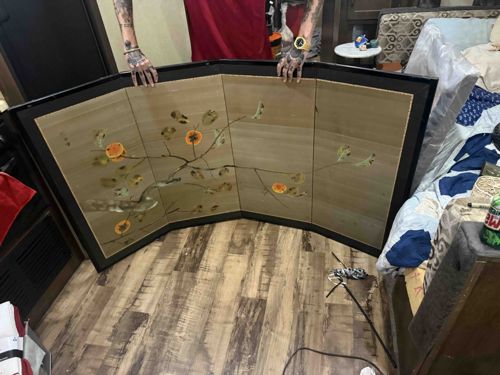
East Asian Lacquered Room Divider Screen with Persimmon and Bird Motif

Furniture

AI Estimated Value

·Not an official valuation·Verify before acting

$400 - $600

As of June 4, 2026

AI Item Analysis

·AI can make mistakes·Verify before acting
This is a four-panel, folding room divider screen, likely of East Asian origin. The screen features a dark, possibly black or very dark brown, lacquered frame that encloses each panel. The panels themselves appear to be made of a lighter, beige or light brown material, possibly silk or fine paper, with a slightly textured or aged appearance. The central motif across all four panels depicts a tree branch with vibrant orange persimmons and delicate green foliage, alongside what appears to be a bird or multiple birds. The artwork is characterized by its somewhat muted background tones, allowing the brighter orange of the fruit to stand out. The painting style suggests a traditional East Asian aesthetic, possibly Chinese or Japanese, with a focus on natural elements. The screen is shown being held by a person, indicating its size is substantial, likely suitable for dividing a room or as a decorative accent. Given its construction, it is designed to fold for storage or to create a curved-panel display. Visible condition issues are minimal from the provided image, but some minor wear and tear on the lacquered frame or slight discoloration on the panels might be present upon closer inspection, typical of an item of potential age. There are no immediate visible maker's marks, signatures, or stamps, which would require a closer physical examination. The craftsmanship shows attention to detail in the painted elements and the assembly of the panels within the lacquered frame, suggesting a piece of reasonable quality. The style period is difficult to ascertain precisely without more information but could range from mid-20th century to contemporary, adopting traditional motifs.
AI Appraisal Report

·AI can make mistakes·Verify before acting
Based on my visual examination of the provided imagery, this four-panel East Asian lacquered room divider screen presents as a decorative piece of reasonable quality, likely produced in the mid-to-late 20th century. The screen features a traditional motif of persimmons and birds, skillfully painted on what appears to be silk or paper panels set within a dark lacquered wood frame. The overall condition seems good from a distance, with vibrant colors in the artwork and a structurally sound frame. Minor wear, such as scuffs on the lacquer and potential light fading or foxing on the panels, is anticipated given its likely age but does not significantly detract from its aesthetic appeal. The market for such decorative screens is steady, driven by interior design trends that favor global and traditional elements. Comparable 20th-century Asian screens of similar quality and subject matter typically trade in the $400 to $600 range at auction and in secondary retail markets. The primary factor influencing value is its decorative quality rather than significant age or rarity. The lack of a visible artist's signature or maker's mark suggests it was likely created for the decorative market rather than as a fine art piece. It is crucial to note the limitations of this appraisal. Without physical inspection, I cannot confirm the materials (e.g., silk vs. paper, type of wood), verify the age through construction techniques, or search for hidden signatures or marks. Full authentication would require in-person examination to assess the joinery, the painter's technique, and the material's age, along with any provenance documentation that could establish its origin and history.

Get your items appraised

Instant estimates of your treasures with AI-powered appraisals

Browse More Appraisals