These notes were written by the person who submitted this item. Appraiser.AI has not verified them, and the AI's identification and estimate may rely on them.
AI Estimated Value
Not an official valuation
$100-250
AI estimate as of July 21, 2025 · verify with a professional before acting
AI-Generated · Verify before acting
Everything on this page is generated by AI for informational purposes only. AI can make mistakes — the AI may misidentify items or misattribute them (artist, maker, brand, designer, origin, era). This is not an official valuation and should not be used for insurance, sale, tax, estate, legal, or lending purposes — or any decision requiring a certified appraisal. It is not an authoritative claim about any person, brand, or rights holder — do not share or rely on it as a factual statement about a third party. Always consult qualified professionals before making financial decisions.
This analysis also relies on unverified notes provided by the user, which may be incomplete or inaccurate and could affect the result.
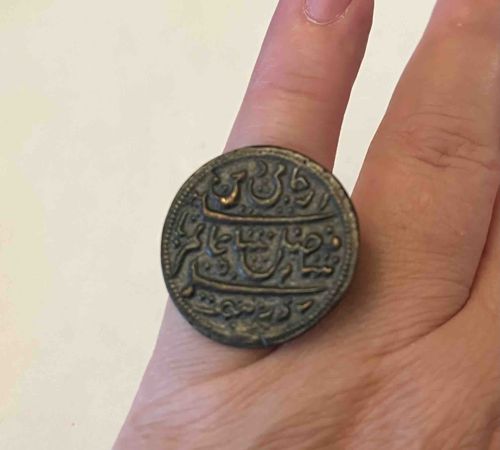
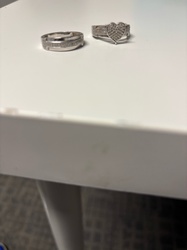
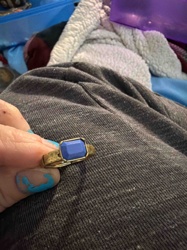
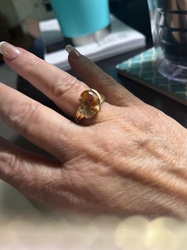
This item is an antique or vintage ring featuring a prominent circular coin, likely made of bronze or a bronze alloy, integrated as its bezel. The coin exhibits what appears to be Arabic or Persian script deeply engraved or struck into its surface, suggesting historical origins from the Middle East or South Asia. The relief of the script indicates it was a minted coin, not a cast piece. The coin has a diameter that is substantial enough to cover a significant portion of the finger's width, suggesting a bold statement piece. Its color is a dark, aged bronze or greenish-brown, indicative of patina built up over time, which adds to its antique aesthetic. Some areas of the raised script appear slightly brighter, possibly due to wear or polishing, highlighting the details. The edges of the coin are visibly worn but still retain a circular shape, with no significant chips or deformities apparent. The ring band, though not fully visible, is described as adjustable, which typically suggests a simpler construction, possibly a wrap-around or split shank design, often made of a less precious metal or base metal for flexibility. The overall condition shows signs of age and regular use, with expected wear and the rich patina of an older metal object. The legibility of the script is good, allowing for potential translation and identification of the coin's origin, date, and ruler or issuer, which would significantly impact its historical and monetary value. The craftsmanship of setting the coin into a ring, especially with an adjustable band, implies a piece likely intended for everyday wear or as a souvenir, rather than high-end formal jewelry. Its unique character lies in the integration of an authentic historical artifact (the coin) into a wearable item.
AI Appraisal Report
Upon visual examination of the provided image, this Coin Ring with Arabic/Persian Script presents as an interesting antique or vintage piece. The coin, integrated as the bezel, appears to be an authentic historical artifact, likely bronze or a bronze alloy, exhibiting deeply struck Arabic or Persian script. The legibility of the script is good, suggesting potential for identification of its origin and age, which would be crucial for a definitive valuation.
The condition of the coin shows expected wear commensurate with age and use, displaying a rich, dark patina. The adjustable band, while practical, usually indicates a simpler, less precious metal construction, which impacts overall value. The craftsmanship suggests it was intended more as a unique wearable artifact or souvenir rather than high-end jewelry.
Market conditions for coin jewelry can vary widely. While the inherent historical value of an authentic coin is present, its integration into an adjustable ring often places it in a more accessible market segment. Rarity would largely depend on the specific coin's origin, date, and historical significance, which cannot be determined solely from the image.
Several factors impact value: the coin's authenticity, its specific origin and date, the metal content of both the coin and the ring band, and the overall craftsmanship of the setting. The primary limitation in this appraisal is the inability to verify the coin's authenticity, exact origin, and specific details of the script without physical examination. In-person inspection, potential translation of the script, and possibly even XRF testing to determine metal composition would be necessary for a full authentication and more precise valuation. Provenance documentation, if available, would also significantly enhance its value.