AI identification & appraisal estimate

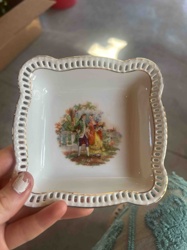
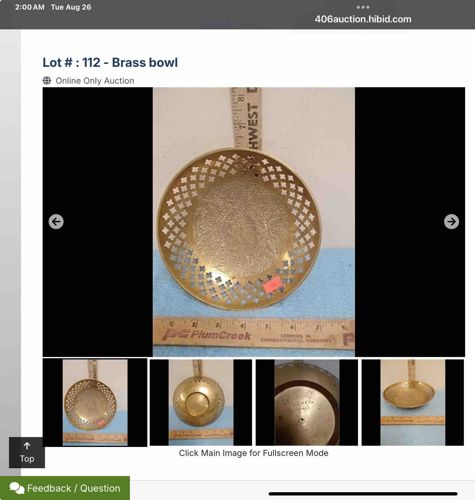
Brass Engraved and Pierced Decorative Bowl

Submitted photo of Brass Engraved and Pierced Decorative Bowl
Photo submitted by the user — not generated by AI

User's notes

Made in India

These notes were written by the person who submitted this item. Appraiser.AI has not verified them, and the AI's identification and estimate may rely on them.

AI Estimated Value

Not an official valuation

$40-60

AI estimate as of August 26, 2025 · verify with a professional before acting

AI-Generated · Verify before acting

Everything on this page is generated by AI for informational purposes only. AI can make mistakes — the AI may misidentify items or misattribute them (artist, maker, brand, designer, origin, era). This is not an official valuation and should not be used for insurance, sale, tax, estate, legal, or lending purposes — or any decision requiring a certified appraisal. It is not an authoritative claim about any person, brand, or rights holder — do not share or rely on it as a factual statement about a third party. Always consult qualified professionals before making financial decisions.

This analysis also relies on unverified notes provided by the user, which may be incomplete or inaccurate and could affect the result.

Read the full disclaimer

AI Item Analysis

This is a circular brass bowl, approximately 8 inches in diameter as indicated by the measuring tape visible in the background. The bowl is crafted from polished brass, exhibiting a golden hue characteristic of the alloy. Its design features intricately cut geometric patterns, specifically an openwork lattice of four-leaf clover or cross shapes, forming an ornate border around the rim. The center of the bowl is solid and showcases a deeply engraved or etched floral and foliate design, suggesting a traditional motif commonly found in Middle Eastern or Indian craftsmanship. The condition appears good with a visible patinated surface, indicating age, and some minor surface scratches consistent with use and handling. The underside of the bowl, as shown in one of the supplementary images, reveals a circular indent in the center, and what appears to be a maker's mark or country of origin stamp, which reads "MADE IN INDIA." This mark provides a clear manufacturing detail. The craftsmanship suggests it was either hand-etched or machine-engraved with fine detail. This item likely dates from the mid to late 20th century, given its style and the typical production of such brassware from India during that period. The precise cutouts and intricate central design speak to a good level of traditional craftsmanship.
AI Appraisal Report

Based on my visual examination of the provided image and the information that this brass bowl is 'MADE IN INDIA', I can offer the following appraisal. The bowl, approximately 8 inches in diameter, exhibits a polished brass construction with a golden hue, typical of the alloy. Its design features an intricately cut openwork lattice bordering the rim, possibly representing four-leaf clovers or crosses, and a solid center showcasing a deeply engraved floral and foliate design. This style is consistent with traditional Middle Eastern or Indian craftsmanship. The patinated surface and minor scratches indicate age and use, supporting its good condition. The 'MADE IN INDIA' stamp aligns with expectations for such brassware produced from the mid to late 20th century. In terms of market conditions, items of this nature, while decorative, are generally available. They appeal to collectors of global ethnic arts or those seeking eclectic home decor. Demand is moderate, with a larger supply of similar items, which limits rarity. Comparables on online marketplaces and at antique bazaars typically range from affordable to mid-range. Factors impacting value include the precise craftsmanship, the 'handmade' versus 'machine-made' quality of the engraving, and the overall aesthetic appeal. Limitations: While the 'MADE IN INDIA' stamp provides a clear origin, I cannot definitively verify the "hand-etched" claim versus machine engraving from images alone. A physical examination would allow me to inspect the depth and consistency of the cuts for tool marks and assess the overall tactile quality more precisely. Provenance documentation, such as original sales receipts or family history, would further enhance authenticity verification. Without physical inspection, I cannot confirm that there are no repairs or significant hidden flaws.

Keep exploring

More decorative arts appraisals

Get your items appraised

Instant AI-powered appraisal estimates from a photo

Browse More Appraisals