These notes were written by the person who submitted this item. Appraiser.AI has not verified them, and the AI's identification and estimate may rely on them.
AI Estimated Value
Not an official valuation
$500 - $800
AI estimate as of June 24, 2025 · verify with a professional before acting
AI-Generated · Verify before acting
Everything on this page is generated by AI for informational purposes only. AI can make mistakes — the AI may misidentify items or misattribute them (artist, maker, brand, designer, origin, era). This is not an official valuation and should not be used for insurance, sale, tax, estate, legal, or lending purposes — or any decision requiring a certified appraisal. It is not an authoritative claim about any person, brand, or rights holder — do not share or rely on it as a factual statement about a third party. Always consult qualified professionals before making financial decisions.
This analysis also relies on unverified notes provided by the user, which may be incomplete or inaccurate and could affect the result.
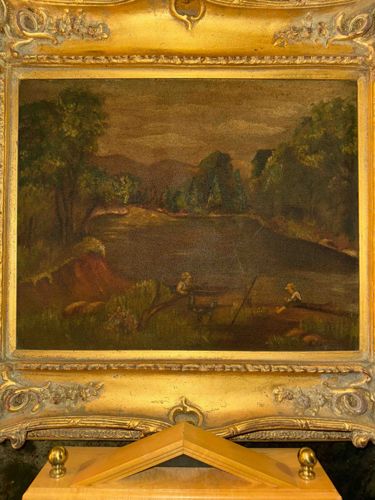
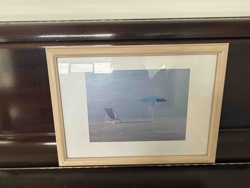
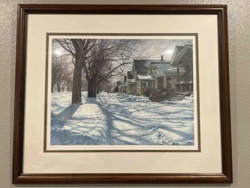
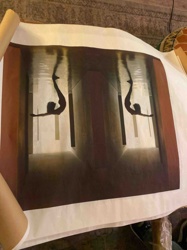
This item is an oil painting depicting a tranquil landscape scene. The painting features a large body of water, likely a river or lake, with lush green trees and foliage lining its banks. In the distant background, gentle hills or mountains are visible under a muted, overcast sky, characteristic of a cloudy day or twilight. The color palette primarily consists of greens, browns, and muted blues and grays, contributing to a somewhat melancholic or serene atmosphere. Two small figures, possibly children or fishermen, are discernible near the water's edge, adding a narrative element to the landscape. One figure appears to be in a small boat or a similar craft, engaged in an activity that might be fishing, given the presence of what looks like a fishing rod. The brushwork appears to be traditional, possibly academic or Hudson River School influenced, with a focus on capturing the natural light and environmental details. The canvas shows signs of age, including a visible craquelure pattern across the surface, indicating the paint has dried and cracked over time. The colors, while mostly intact, might have experienced some level of patination or subtle darkening characteristic of aged oil paintings. There are no immediately apparent signs of major damage such as tears or significant paint loss, but a professional cleaning might reveal more vibrant colors hidden under accumulated grime. The painting is housed within a substantial, ornate gilded frame. The frame features intricate relief carvings, possibly cast plaster or carved wood, with details such as acanthus leaves and decorative scrolls. The gold leaf or paint on the frame shows some areas of wear and minor loss, revealing darker underlayers in spots, which is consistent with its age. Some dust and minor debris are visible along the inner edges of the frame where it meets the canvas. The overall impression is that of an antique piece, likely dating from the late 19th to early 20th century, given the style of both the painting and the frame. No discernible artist's signature or maker's marks are visible in the provided image.
AI Appraisal Report
Based on my examination of the images, this is a late 19th to early 20th-century oil on canvas landscape painting, housed in a period ornate gilded frame. The style is characteristic of the era, showing influences from academic traditions or schools like the Hudson River School, with a serene subject matter and competent execution. The visible craquelure across the surface is a natural sign of aging and consistent with a painting of this vintage. The overall condition appears fair, though a professional cleaning would likely improve its appearance.
The most significant factor impacting the value is the lack of a visible artist's signature or any provided provenance. Without attribution to a known artist, the painting is valued as a decorative work by an anonymous hand. The market for unsigned but well-executed landscapes of this period is steady, driven by decorative appeal. The ornate gilded frame is a substantial asset, potentially holding as much value as the painting itself, given its style and condition.
This appraisal is inherently limited as it is based on images alone. An in-person examination is required to fully assess the condition of the canvas and frame, search for a hidden signature or inscriptions on the reverse, and examine the brushwork more closely. Full authentication would require establishing provenance or, in rare cases, forensic and art historical research to attribute the work.