These notes were written by the person who submitted this item. Appraiser.AI has not verified them, and the AI's identification and estimate may rely on them.
AI Estimated Value
Not an official valuation
$150 - $250
AI estimate as of September 30, 2025 · verify with a professional before acting
AI-Generated · Verify before acting
Everything on this page is generated by AI for informational purposes only. AI can make mistakes — the AI may misidentify items or misattribute them (artist, maker, brand, designer, origin, era). This is not an official valuation and should not be used for insurance, sale, tax, estate, legal, or lending purposes — or any decision requiring a certified appraisal. It is not an authoritative claim about any person, brand, or rights holder — do not share or rely on it as a factual statement about a third party. Always consult qualified professionals before making financial decisions.
This analysis also relies on unverified notes provided by the user, which may be incomplete or inaccurate and could affect the result.
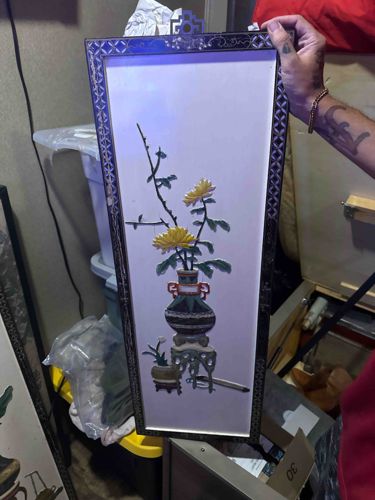
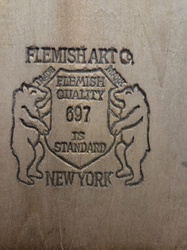
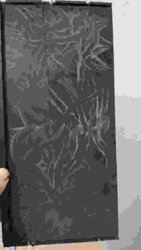
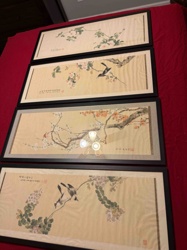
This item is a rectangular, framed relief panel featuring an intricate floral design, likely depicting chrysanthemums, in a vase. The panel itself appears to be made from a light-colored material, possibly a type of alabaster, marble, or a synthetic composite, serving as a neutral background for the relief work. The relief elements, which constitute the floral arrangement and vase, exhibit fine carving and appear to be crafted from 'Ivory Dynasty' material, which is typically a synthetic resin designed to mimic the appearance and texture of ivory. The colors used for the floral elements are primarily yellow for the blossoms, with darker greens for the leaves and stems. The vase itself shows detailed decorative patterns in shades of dark green, black, and possibly red accents on the handles. It rests on an ornate, open-worked stand, and a smaller potted plant is depicted to its left, on the ground level. A distinctive feature is a long, thin implement, possibly a paintbrush or writing tool, lying horizontally in front of the vase. The frame surrounding the panel is dark, likely wood or a composite material, and is meticulously inlaid with geometric patterns and small floral motifs, possibly using mother-of-pearl or bone, creating a decorative border. The overall construction suggests careful craftsmanship. No significant condition issues like cracks, chips, or repairs are immediately visible from the provided image, though detailed inspection would be required. The style points to a traditional Chinese aesthetic, and given the 'Ivory Dynasty' context, it is likely a modern reproduction or decorative art piece, possibly dating from the late 20th century to the present, rather than an antique made from genuine ivory. The quality of the carving and inlay appears to be high, indicating a well-made decorative item.
AI Appraisal Report
Upon examining the images of this Framed Chinese Floral Relief Panel, I assess it to be a decorative art piece from the late 20th or early 21st century. The stated material, 'Ivory Dynasty', confirms my initial assessment that the relief elements are a synthetic resin composite designed to mimic ivory, not genuine elephant ivory. The craftsmanship appears to be of good quality, with detailed carving in the floral relief and intricate inlay work, likely mother-of-pearl or bone, on the dark wood or composite frame. From the images, the piece appears to be in excellent condition with no visible cracks, chips, or discoloration.
The value of this panel is determined by its decorative appeal rather than its material composition or historical significance. The market for such modern, mass-produced decorative items is relatively soft. Comparables would be other 'Ivory Dynasty' or similar resin-based decorative panels sold through online marketplaces and second-hand furniture stores. These items typically do not achieve high prices at auction. The primary factor impacting its value is that it is a reproduction-style piece made from modern synthetic materials. While well-executed, it lacks the rarity and provenance of an antique.
This appraisal is based solely on visual examination of the provided images. A definitive assessment of the inlay and frame materials would require in-person inspection. However, even if the inlay were genuine mother-of-pearl, it would not substantially alter the value, given the synthetic nature of the main relief. No further scientific testing is necessary as the item is not presented as an antique.