Framed Coptic Textile Fragment with Figurative Scene
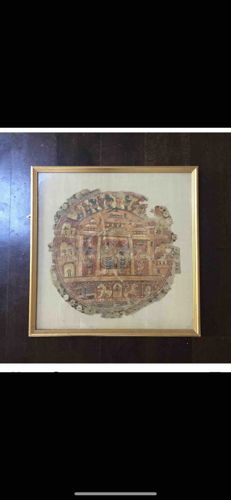
This item is a circular tapestry-woven textile fragment, likely Coptic in origin, dating approximately from the 4th to 7th century AD. It is composed of linen and dyed wool yarns using a tapestry technique. The fragment features a complex narrative or architectural scene set within a roundel (orbiculus). At the center, two figures appear beneath a pediment or canopy, flanked by vertical columns, suggesting a classical or holy setting typical of Late Antique art. Below the central scene is a horizontal register containing zoomorphic figures, possibly lions or mythological beasts. The color palette is dominated by reddish-brown (madder), ochre, and deep indigoid tones on a faded cream ground. The fragment measures approximately 10 to 12 inches in diameter and is set against a light-colored paper or fabric mounting board within a simple square gold-toned metallic frame. Regarding condition, the piece shows significant archeological wear consistent with its age. The edges are irregularly frayed and jagged, indicating loss from its original larger garment (likely a tunic) or hanging. There are notable vertical and horizontal areas of material loss within the weave, causing gaps in the imagery. The colors show some attenuation, though the deep reds remain remarkably legible. No specific maker's marks are present, as is standard for ancient textiles, but the level of detail indicates high-quality craftsmanship from a professional urban workshop. The fragment represents an important period of transition between Classical and Early Christian/Byzantine aesthetic styles.
AI-Generated Appraisal Disclaimer
Estimated Value
$4,500 - $6,500
Basic Information
Category
Antiquities and Ancient Textiles
Appraised On
February 28, 2026
Estimated Value
$4,500 - $6,500
Item Description
This item is a circular tapestry-woven textile fragment, likely Coptic in origin, dating approximately from the 4th to 7th century AD. It is composed of linen and dyed wool yarns using a tapestry technique. The fragment features a complex narrative or architectural scene set within a roundel (orbiculus). At the center, two figures appear beneath a pediment or canopy, flanked by vertical columns, suggesting a classical or holy setting typical of Late Antique art. Below the central scene is a horizontal register containing zoomorphic figures, possibly lions or mythological beasts. The color palette is dominated by reddish-brown (madder), ochre, and deep indigoid tones on a faded cream ground. The fragment measures approximately 10 to 12 inches in diameter and is set against a light-colored paper or fabric mounting board within a simple square gold-toned metallic frame. Regarding condition, the piece shows significant archeological wear consistent with its age. The edges are irregularly frayed and jagged, indicating loss from its original larger garment (likely a tunic) or hanging. There are notable vertical and horizontal areas of material loss within the weave, causing gaps in the imagery. The colors show some attenuation, though the deep reds remain remarkably legible. No specific maker's marks are present, as is standard for ancient textiles, but the level of detail indicates high-quality craftsmanship from a professional urban workshop. The fragment represents an important period of transition between Classical and Early Christian/Byzantine aesthetic styles.
Get Your Items Appraised
Instant estimates of your treasures with AI-powered instant appraisals