AI estimate as of July 19, 2025 · verify with a professional before acting
AI-Generated · Verify before acting
Everything on this page is generated by AI for informational purposes only. AI can make mistakes — the AI may misidentify items or misattribute them (artist, maker, brand, designer, origin, era). This is not an official valuation and should not be used for insurance, sale, tax, estate, legal, or lending purposes — or any decision requiring a certified appraisal. It is not an authoritative claim about any person, brand, or rights holder — do not share or rely on it as a factual statement about a third party. Always consult qualified professionals before making financial decisions.
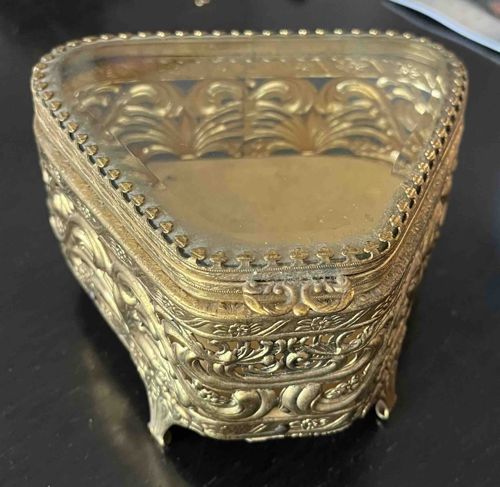
This is a vintage or antique triangular-shaped trinket box or vanity dish, likely made of gilt metal or brass, given its golden hue and the apparent weight suggestive of metal construction. Its form tapers slightly, creating a soft, rounded triangular profile. The exterior is heavily adorned with intricate Rococo-inspired scrolling ornamentation, featuring acanthus leaves, C-scrolls, and shell motifs, indicative of a decorative style popular in the late 19th to early 20th century. The lid, which appears to be non-removable from the visible angle, seems to incorporate a clear, possibly beveled, glass or acrylic insert, allowing a view into the interior, which has a reflective gold-toned bottom. The top edge of the box features a decorative gallery or rim, characterized by a series of small, bead-like elements or points, further enhancing its ornate appearance. The box stands on three small, ornate feet, which are also decorated with scrollwork, blending seamlessly with the overall design. The golden finish exhibits a noticeable patina and some discoloration, particularly in the recessed areas of the detailing and along edges, suggesting age and oxidation typical of aged brass or gilt finishes. There is visible dust and dirt accumulated within the decorative crevices and on the glass, indicating it has been stored or used over time without thorough cleaning. No specific maker's marks or signatures are discernible from the provided images, but the level of detail and craftsmanship suggests a mass-produced, yet finely-detailed, ornamental item. The overall condition appears to be good for its age, with no obvious signs of significant damage like dents or cracks, though the surface wear and patina are consistent with a vintage item.
AI Appraisal Report
Based on my visual examination of the provided image, this gilt metal ornamental trinket box with a glass lid appears to be a charming decorative item, likely dating from the late 19th to early 20th century, consistent with its Rococo-inspired ornamentation. The overall condition appears to be good for its age, exhibiting a desirable patination and some discoloration typical of aged brass or gilt finishes, which adds to its antique appeal. There are no obvious signs of significant damage such as dents or cracks, though surface wear and accumulated dust are present.
Market conditions for such ornamental trinket boxes are steady but not soaring. While visually appealing, its lack of identifiable maker's marks or a distinctive historical provenance limits its top-tier value. Comparable items, often found in antique malls or online marketplaces, typically fall within a modest range. The primary demand for such pieces comes from collectors of decorative arts, those seeking unique home décor, or individuals looking for functional yet ornate storage for small items. Its rarity is moderate; while not a unique, one-of-a-kind piece, its specific triangular form and ornate detailing make it less common than standard rectangular or oval trinket boxes.
Factors significantly impacting value include its appealing aesthetics, good condition for its age, and detailed craftsmanship. However, the lack of known provenance or a renowned maker significantly caps its potential value. Without physical inspection, I cannot ascertain the exact material (e.g., solid brass vs. plated metal) or the type of glass used. For full authentication and a more precise valuation, I would need a physical examination to check for maker's marks, assess the metal type and thickness, examine the construction methods, and properly evaluate the lid's seating and overall structural integrity. Microscopic analysis could also confirm the age of the materials and detect any repairs or alterations.