Namibia 50 Cents Coin
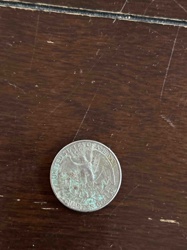
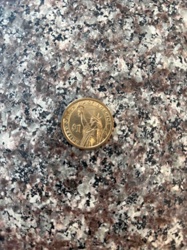
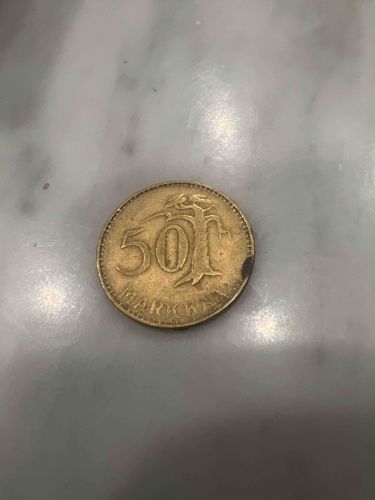
This is a circular Namibia 50 Cents circulation coin, featuring the distinctive golden-yellow hue of its copper-nickel-tin (bronze) or brass plating composition. The obverse side (visible) showcases a stylized Quiver tree (Aloe dichotoma), a symbol native to the Namib Desert, placed to the right of the large numeral '50'. Below the denomination, the word 'MARCK' or 'MARK' is partially visible, likely referring to the engraver's mark or specific nomenclature within that series. The coin features a raised, beaded rim along the outer edge. Regarding condition, the coin displays significant signs of circulation and age, including surface scratches, oxidation spots, and a dark tarnish mark on the lower right edge at the four o'clock position. The relief of the tree and numerals shows moderate wear, with some blurring of the finer details. This design was part of the coinage issued by the Bank of Namibia starting in the early 1990s following the country's independence, representing the transition to a distinct national currency. The craftsmanship reflects mass-produced industrial minting standards, with the focus on durability and legibility for everyday commerce.
AI-Generated Appraisal Disclaimer
Estimated Value
$0.20 - $1.00
Basic Information
Category
Numismatics / Currency
Appraised On
February 23, 2026
Estimated Value
$0.20 - $1.00
Item Description
This is a circular Namibia 50 Cents circulation coin, featuring the distinctive golden-yellow hue of its copper-nickel-tin (bronze) or brass plating composition. The obverse side (visible) showcases a stylized Quiver tree (Aloe dichotoma), a symbol native to the Namib Desert, placed to the right of the large numeral '50'. Below the denomination, the word 'MARCK' or 'MARK' is partially visible, likely referring to the engraver's mark or specific nomenclature within that series. The coin features a raised, beaded rim along the outer edge. Regarding condition, the coin displays significant signs of circulation and age, including surface scratches, oxidation spots, and a dark tarnish mark on the lower right edge at the four o'clock position. The relief of the tree and numerals shows moderate wear, with some blurring of the finer details. This design was part of the coinage issued by the Bank of Namibia starting in the early 1990s following the country's independence, representing the transition to a distinct national currency. The craftsmanship reflects mass-produced industrial minting standards, with the focus on durability and legibility for everyday commerce.
Related Tags
Get Your Items Appraised
Instant estimates of your treasures with AI-powered instant appraisals