AI Appraisal Estimate

AI-generated estimates · not official valuations

From the user

What was submitted

Photo and notes provided by the user — not generated by AI

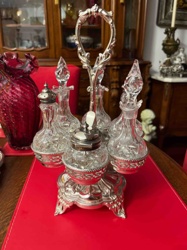
Submitted item photo
Submitted photo · May 19, 2026

User's notes

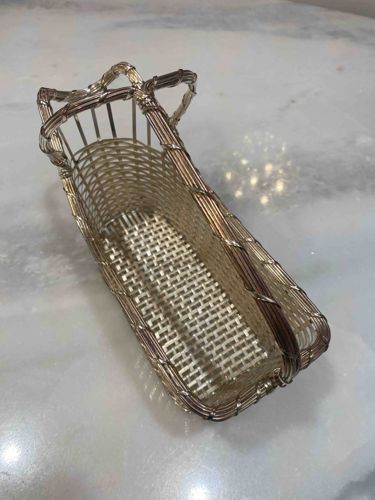
Silver wine basket

AI analysis below

AI appraisal

AI analysis & estimate

AI-Generated · Verify before acting

Everything below is generated by AI for informational purposes only. AI can make mistakes — the AI may misidentify items or misattribute them (artist, maker, brand, designer, origin, era). This is not an official valuation and should not be used for insurance, sale, tax, estate, legal, or lending purposes — or any decision requiring a certified appraisal. It is not an authoritative claim about any person, brand, or rights holder — do not share or rely on it as a factual statement about a third party. Always consult qualified professionals before making financial decisions.

Note

This analysis also relies on unverified notes provided by the user, which may be incomplete or inaccurate and could affect the result.

Read the full disclaimer

AI Identification

·Not independently authenticated·Verify before acting

Silver-Plated Faux Bamboo Woven Wine Cradle

Antique Silver & Tableware

AI Estimated Value

·Not an official valuation·Verify before acting

$450 - $650

As of May 19, 2026

AI Item Analysis

·AI can make mistakes·Verify before acting
This item is an elegant silver-plated wine basket or cradle, designed to hold a standard Bordeaux-style bottle at a slight angle to allow sediment to settle. The piece features a sophisticated 'faux bamboo' or 'trompe l'oeil' aesthetic, meticulously constructed with silver wire to mimic organic wicker weaving. Its elongated, boat-shaped body consists of a flat-weave lattice bottom transitioned into vertical wire ribs at the sides. The rim and prominent handle are crafted from thicker, bundled silver rods reinforced with spiral-wrapped wire to simulate the joints and texture of natural bamboo. This style was highly popular in the late 19th and early 20th centuries, particularly in France and England, as part of the Japonisme and Chinoiserie movements. The craftsmanship is high-quality, showing complex soldering points where the delicate wires intersect the frame. Regarding condition, the piece shows a light silver patina with minor tarnishing in the recessed areas (natural oxidation), which is typical for its age. There is no visible crushing or broken wires, suggesting it has been well-preserved. The reflective quality of the surface indicates a high silver content in the plating, though no specific hallmarks are visible from this angle. It likely dates from the late Victorian or Edwardian period (circa 1890-1915).
AI Appraisal Report

·AI can make mistakes·Verify before acting
I have carefully examined the silver-plated faux bamboo wine cradle via high-resolution imagery. The piece is a fine example of late 19th-century Japonisme, likely of French or English origin (circa 1895-1910). The 'faux bamboo' aesthetic, created through the complex manipulation of silver-plated wire, is executed with a high degree of technical skill. The structural integrity appears excellent; there is no evidence of the 'crushing' or wire separation often found in utilitarian silver-plate items of this age. The patina is consistent with age, showing appropriate oxidation in recessed areas which highlights the depth of the woven texture. Market demand for antique wine accoutrements remains steady, particularly for pieces that bridge the gap between functional barware and decorative sculpture. Comparables for unsigned silver-plated baskets of this quality typically sell within the $400 to $700 range at boutique auctions. The value is driven by the 'faux bamboo' motif, which is currently seeing a resurgence in interior design popularity. However, there are limitations to this digital appraisal. Without a physical inspection, I cannot verify the base metal (likely nickel or brass), nor can I locate strike marks or maker's marks that may be hidden near the handle joins or underside, which could significantly increase the value if attributed to a known maker like Christofle or Elkington & Co. A full authentication would require an in-person acid test of the plating thickness and a search for hallmarks. Furthermore, provenance or original purchase documentation would be necessary to solidify its historical timeline. This valuation assumes the plating is intact and that no major repairs are masked by the current patina.

Get your items appraised

Instant estimates of your treasures with AI-powered appraisals

Browse More Appraisals