AI estimate as of September 27, 2025 · verify with a professional before acting
AI-Generated · Verify before acting
Everything on this page is generated by AI for informational purposes only. AI can make mistakes — the AI may misidentify items or misattribute them (artist, maker, brand, designer, origin, era). This is not an official valuation and should not be used for insurance, sale, tax, estate, legal, or lending purposes — or any decision requiring a certified appraisal. It is not an authoritative claim about any person, brand, or rights holder — do not share or rely on it as a factual statement about a third party. Always consult qualified professionals before making financial decisions.
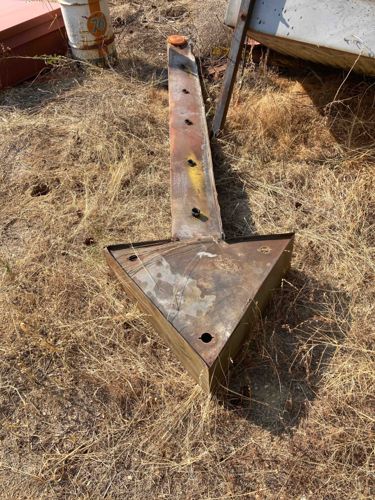
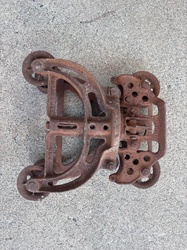
This item is a large, weathered metal component that appears to be part of an old, possibly illuminated, arrow-shaped sign. It is constructed from sheet metal, likely steel, which has been bent and welded to form a three-dimensional arrow. The predominant color is a rusted reddish-brown, indicative of significant exposure to the elements. Traces of yellow paint are visible along the shaft of the arrow, suggesting it may have originally been brightly colored or had specific directional markings. The surface exhibits heavy rust, pitting, and discoloration, consistent with outdoor use and deferred maintenance over many years. There are several circular holes drilled into the flat surfaces of both the arrow's head and its shaft, which likely served as mounting points for fasteners, or possibly for internal lighting elements. The head of the arrow is triangular and hollow, while the shaft is a long, rectangular prism-like structure, also hollow. The edges appear somewhat blunt, possibly due to thick gauge metal or corrosion. Visible bolts, likely rusted, are still present in some of the holes on the shaft, indicating it was once attached to another structure. The construction appears to be utilitarian, designed for durability rather than intricate aesthetics, typical of commercial signage from the mid-20th century. No specific maker's marks or signatures are discernible due to the extensive corrosion. The overall condition suggests a vintage piece, likely from the 1940s to 1970s, now in a state of advanced decay, showing considerable wear and damage.
AI Appraisal Report
I have examined the provided image of this Vintage Metal Arrow Sign Component. This piece is a large, weathered metal arrow, likely constructed from steel sheet, exhibiting significant reddish-brown rust and pitting consistent with extensive outdoor exposure. Traces of yellow paint on the shaft suggest its original appearance. The multiple circular holes and visible bolts indicate its former function as a commercial sign, potentially illuminated. Its utilitarian design and advanced state of decay, including heavy corrosion and discoloration, strongly suggest a mid-20th-century origin, likely 1940s-1970s.
Authenticity: Based on visual cues, the construction, material, and severe weathering are consistent with authentic vintage architectural salvage. However, without in-person examination, I cannot definitively determine the exact alloy of the metal or specific construction techniques beyond what is visible. Physical inspection would allow for gauging metal thickness, assessing weld quality, and detecting any modern alterations. Provenance documentation, such as old photographs of the sign in situ, would further solidify its authenticity and history.
Market Conditions: This item falls into the architectural salvage and industrial decor categories. Demand for such pieces is steady, driven by interior designers, collectors, and individuals seeking unique decorative elements. Its large size and distinct arrow shape are desirable, making it a strong focal point. Comparables in similar condition often fetch values based on their size and aesthetic appeal rather than rarity, as individual sign components like this are not inherently rare. The heavily rusted patination, while indicating wear, is often sought after in this market segment as it adds character and authenticity.
Factors Impacting Value: The primary factors are its significant size, classic arrow shape, and the authentic, heavily weathered patina. The rust, while extensive, is generally seen as an asset rather than a detriment in this market for 'industrial chic' aesthetics. However, the lack of original paint beyond traces, and the overall deterioration (even if desired for aesthetic reasons), prevent it from reaching higher values reserved for pieces with more intact finishes.
Appraisal Value: Given its present condition, material, and market demand for architectural salvage, I assess its value to be in the range of $150-250. This reflects its appeal as a decorative, conversation-starting piece, tempered by its condition and classification as a component rather than a complete, functional sign.