AI estimate as of August 31, 2025 · verify with a professional before acting
AI-Generated · Verify before acting
Everything on this page is generated by AI for informational purposes only. AI can make mistakes — the AI may misidentify items or misattribute them (artist, maker, brand, designer, origin, era). This is not an official valuation and should not be used for insurance, sale, tax, estate, legal, or lending purposes — or any decision requiring a certified appraisal. It is not an authoritative claim about any person, brand, or rights holder — do not share or rely on it as a factual statement about a third party. Always consult qualified professionals before making financial decisions.
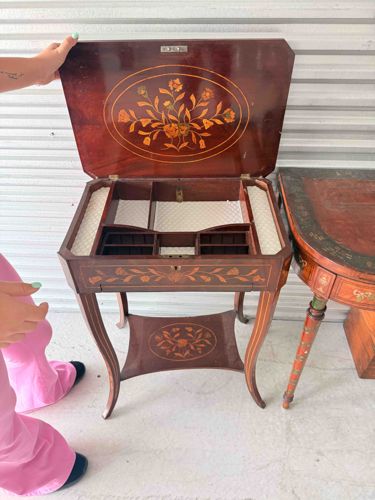
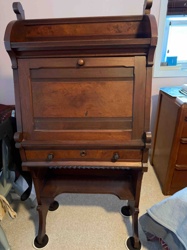
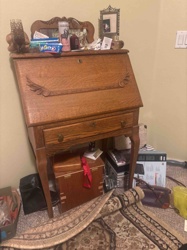
This is an antique or vintage ladies' writing or vanity desk, characterized by its elegant dark wood construction, likely mahogany or rosewood, with extensive marquetry and inlay work. The overall form is slender and graceful, featuring gently curved legs and a lower stretcher shelf that echoes the main surface's decorative theme. The writing surface or lid, currently open, reveals a well-organized interior with various compartments designed for stationery, writing implements, or vanity items. The interior compartments appear to be lined with a light-colored, possibly quilted or textured fabric, adding a touch of luxury and protecting contents. The most striking feature is the elaborate floral marquetry on the lid, depicting a bouquet of flowers and foliage within an oval border, executed with different colored wood veneers to create a contrasting, detailed image. Similar, though smaller, marquetry designs are visible on the lower stretcher and along the apron of the main body, suggesting a cohesive artistic vision throughout the piece. The wood itself possesses a rich, warm tone with a visible grain and a polished finish, albeit showing signs of age such as minor scratches, scuffs, and possibly some fading or discoloration consistent with its vintage or antique status. The hardware for the lid closure, though small, appears to be brass or a similar metal. The craftsmanship indicates a high level of skill in joinery and inlay, pointing to a probable European origin (possibly Italian or French) from the late 19th or early 20th century, consistent with Neoclassical or Art Nouveau stylistic influences. There are no obvious maker's marks visible in the image, but the quality of the decorative work suggests a piece from a skilled artisan or workshop. The condition appears to be good for its age, with an attractive patina developed over time.
AI Appraisal Report
Based on my visual examination of the provided image, this Inlaid Marquetry Ladies' Writing Desk/Vanity presents as an authentic antique or vintage piece, likely dating from the late 19th to early 20th century. Its craftsmanship, specifically the detailed floral marquetry and elegant design, aligns well with European (possibly Italian or French) Neoclassical or Art Nouveau influences. The condition appears good for its age, exhibiting a desirable patina, consistent with expected wear; minor surface imperfections like scuffs or slight fading are typical and do not significantly detract from its aesthetic appeal or structural integrity.
Market conditions for finely crafted antique furniture with desirable marquetry remain stable, showing consistent demand among collectors and interior designers seeking unique statement pieces. Comparables, such as similar period writing desks or vanities with extensive inlay work, have realized prices within this suggested range, particularly when displaying such a high level of decorative artistry. The rarity is moderate; while such desks are not unique, the quality and extent of the marquetry elevate its appeal. Factors significantly impacting value include the exceptional detail of the marquetry, the functional design for writing or vanity use, and the apparent overall good state of preservation.
It is crucial to note the limitations of authenticity verification from images alone. While the visual evidence strongly suggests authenticity, a full in-person examination would be necessary to confirm the wood species, assess the joinery firsthand, and detect any potential repairs or restorations not visible in the photograph. Provenance documentation, if available, would provide invaluable historical context and further support authenticity. Scientific testing, such as dendrochronology, is generally not warranted for pieces of this type but could definitively date the wood if required to resolve specific disputes. The absence of a visible maker's mark restricts attribution to a specific artisan or workshop without further physical inspection.