AI Appraisal Estimate

AI-generated estimates · not official valuations

From the user

What was submitted

Photo and notes provided by the user — not generated by AI

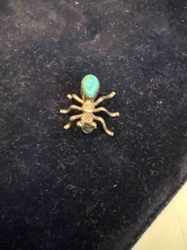
Submitted item photo
Submitted photo · June 6, 2026

User's notes

No additional notes provided.

AI analysis below

AI appraisal

AI analysis & estimate

AI-Generated · Verify before acting

Everything below is generated by AI for informational purposes only. AI can make mistakes — the AI may misidentify items or misattribute them (artist, maker, brand, designer, origin, era). This is not an official valuation and should not be used for insurance, sale, tax, estate, legal, or lending purposes — or any decision requiring a certified appraisal. It is not an authoritative claim about any person, brand, or rights holder — do not share or rely on it as a factual statement about a third party. Always consult qualified professionals before making financial decisions.

Read the full disclaimer

AI Identification

·Not independently authenticated·Verify before acting

Southwestern Style Winged Turquoise Inlay Naja Pendant

Jewelry / Native American Art

AI Estimated Value

·Not an official valuation·Verify before acting

$450 - $650

As of June 6, 2026

AI Item Analysis

·AI can make mistakes·Verify before acting
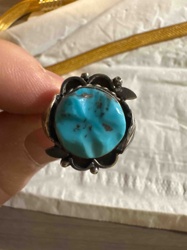
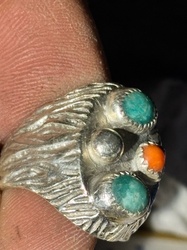
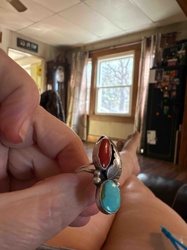
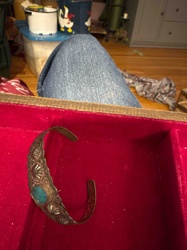
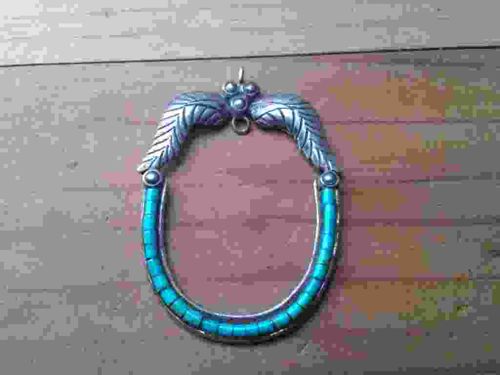
This item is a handcrafted U-shaped pendant, commonly referred to in Southwestern jewelry as a 'Naja.' The piece features a crescent-shaped base meticulously inlaid with a row of vibrant, rectangular-cut turquoise stones, exhibiting a consistent bright blue-green hue characteristic of Sleeping Beauty or similar high-quality American turquoise. The silver-tone metal construction, likely sterling silver, frames the stones in a channel-set style. The top of the pendant is uniquely ornamented with two symmetrical, stylized wings or feathers that curve outward from a central cluster of three silver beads and an attachment loop. The metal displays a significant dark gray and purple iridescent patina, particularly on the feathered sections, which indicates natural oxidation over time or a specialized tarnish finish. While no maker's mark is visible from the front view, the craftsmanship suggests a Mid-to-Late 20th Century Native American (likely Navajo or Zuni style) or contemporary artisan production. Condition-wise, the inlay appears intact without missing segments, though the metal surfaces show minor surface wear and significant tarnish that could be polished or left as a testament to its age. The presence of two loops—one at the very top and another centered below the beads—suggests this could be used as a central focal point for a squash blossom necklace or a standalone pendant.
AI Appraisal Report

·AI can make mistakes·Verify before acting
I have carefully examined the high-resolution images of this winged Naja pendant. The piece is a classic representation of Southwestern silversmithing, likely Navajo or Zuni in origin, dating from the late 1960s to the 1980s. The channel-set turquoise inlay exhibits a consistent color and matrix-free quality associated with the Sleeping Beauty mine, which is a significant value driver due to the mine's closure. The 'winged' or feathered design is a unique departure from the standard Naja, suggesting a specialized artisan hand. Condition appears excellent, with all inlay stones secure and flush. The significant iridescent patina suggests long-term storage and natural oxidation of a high-purity silver alloy, likely .925 sterling. Currently, the market for vintage Native American jewelry remains robust, with high demand for pieces that bridge traditional motifs with unique stylistic flourishes. Similar mid-century Naja pendants typically realize between $400 and $700 at specialized auction houses or boutique galleries. Several factors must be noted regarding the limitations of this remote assessment. While the craftsmanship is consistent with period-authentic Native American work, I cannot definitively verify the silver content without a metallurgical acid test or XRF scan. Furthermore, without a visible hallmark, attribution to a specific artist is speculative. Full authentication requires an in-person inspection of the reverse side to check for characteristic tool marks and signatures. Provenance, such as a bill of sale from a reputable trading post or inclusion in a known collection, would be necessary to reach a premium appraisal tier.

Get your items appraised

Instant estimates of your treasures with AI-powered appraisals

Browse More Appraisals