AI Appraisal Estimate

AI-generated estimates · not official valuations

From the user

What was submitted

Photo and notes provided by the user — not generated by AI

Submitted item photo
Submitted photo · May 26, 2026

User's notes

No additional notes provided.

AI analysis below

AI appraisal

AI analysis & estimate

AI-Generated · Verify before acting

Everything below is generated by AI for informational purposes only. AI can make mistakes — the AI may misidentify items or misattribute them (artist, maker, brand, designer, origin, era). This is not an official valuation and should not be used for insurance, sale, tax, estate, legal, or lending purposes — or any decision requiring a certified appraisal. It is not an authoritative claim about any person, brand, or rights holder — do not share or rely on it as a factual statement about a third party. Always consult qualified professionals before making financial decisions.

Read the full disclaimer

AI Identification

·Not independently authenticated·Verify before acting

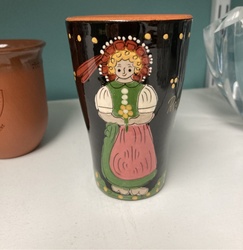
Hand-Painted Ceramic Sunflower Planter or Jar

Decorative Arts - Ceramics / Folk Art

AI Estimated Value

·Not an official valuation·Verify before acting

$5.00 - $15.00

As of May 26, 2026

AI Item Analysis

·AI can make mistakes·Verify before acting
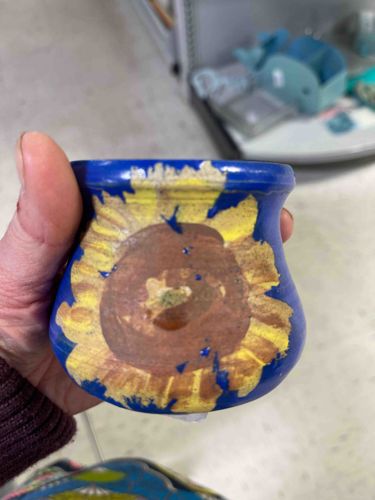
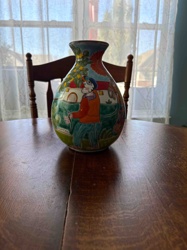
This item is a small, hand-painted ceramic vessel, likely intended as a decorative planter, votive holder, or small storage jar. It features a bulbous body that tapers toward a flared rim, a shape commonly associated with folk-style pottery. The base color is a vibrant cobalt blue, which serves as a high-contrast backdrop for a large, central sunflower motif. The sunflower is rendered in earthy tones, with yellow petals and a large brown center, applied with visible, somewhat primitive brushwork that suggests artisanal or amateur production rather than mass-market manufacturing. This piece is likely crafted from low-fire earthenware or stoneware. The condition is poor to fair, showing significant signs of wear and age. Notable condition issues include substantial glaze loss and chipping along the top rim and across the central sunflower design, revealing the lighter ceramic body beneath. There are also smaller surface scuffs and blue pigment splatters on the yellow petals, indicating a less refined finishing process. Its folk-art aesthetic suggests a late 20th-century origin, possibly a piece of souvenir pottery or a hobbyist project. The lack of visible maker's marks in the current orientation prevents a specific studio attribution.
AI Appraisal Report

·AI can make mistakes·Verify before acting
I have completed a visual examination of the hand-painted ceramic sunflower vessel. Based on the cobalt blue glaze palette and the specific 'primitive' execution of the sunflower motif, this piece appears to be a contemporary folk-art production, likely dating from the 1980s to the early 2000s. It resembles amateur hobbyist pottery or mass-produced souvenir ware from regions known for earthenware traditions, such as Mexico or parts of the American Southwest. The condition is a primary detractor from its value; the significant glaze loss at the rim and the chipping on the central motif drastically impact the aesthetic and structural integrity of the piece. Market demand for damaged, unsigned contemporary ceramics is minimal. While the 'shabby chic' or folk aesthetic has some decorative appeal, the lack of a studio mark or artist's signature suggests it has no significant secondary market value among collectors of fine ceramics. Comparable sold items in similar condition typically trade as 'decor' items rather than 'art' items. Authenticity as a historic folk artifact is unlikely given the pigment vibrance and wear patterns. Limitations: This appraisal is based solely on digital imagery. To provide a definitive valuation, I would need to inspect the base for hidden marks, perform a tactile inspection to determine the exact clay body (earthenware vs. stoneware), and verify the depth of the glaze loss. A physical examination could rule out whether the 'wear' is intentional distressing or genuine degradation. No scientific testing is recommended given the low market value.

Get your items appraised

Instant estimates of your treasures with AI-powered appraisals

Browse More Appraisals