AI estimate as of November 29, 2025 · verify with a professional before acting
AI-Generated · Verify before acting
Everything on this page is generated by AI for informational purposes only. AI can make mistakes — the AI may misidentify items or misattribute them (artist, maker, brand, designer, origin, era). This is not an official valuation and should not be used for insurance, sale, tax, estate, legal, or lending purposes — or any decision requiring a certified appraisal. It is not an authoritative claim about any person, brand, or rights holder — do not share or rely on it as a factual statement about a third party. Always consult qualified professionals before making financial decisions.
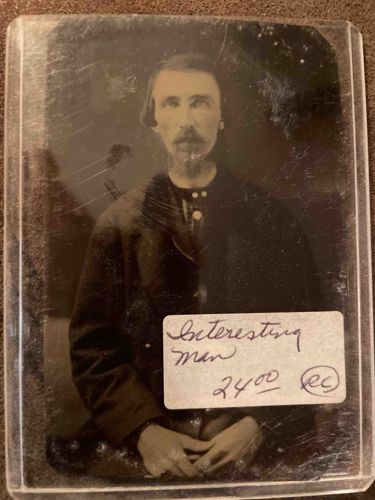
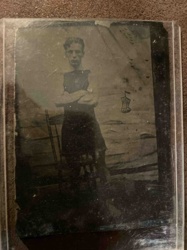
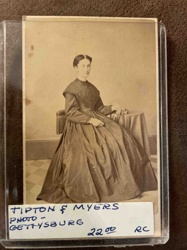
This item is a tintype photographic portrait, likely from the mid to late 19th century, depicting a serious-looking man with a mustache and beard. The tintype itself appears to be housed within a protective transparent sleeve or case, which exhibits significant surface scratches and a milky haze due to wear and age. The photographic plate shows a man from the chest up, positioned slightly to the viewer's right, with his gaze directed towards the camera. He wears a dark, possibly black or very dark brown, coat over a lighter collared shirt, visible with several prominent buttons down the front. His hands are clasped together, resting in front of his body, suggesting a formal pose typical of the era. The man's hair is dark and parted on the side, with sideburns that blend into his beard. The overall tone of the tintype is dark, with highlights on the man's face and hands, characteristic of the photographic process. There are no discernible maker's marks or signatures directly on the tintype. A paper label, handwritten with "Interesting man 24.00 (EC)", is affixed to the protective covering, not the tintype itself, indicating a previous sale price or description from a vendor. The physical condition of the tintype itself seems relatively stable underneath the damaged protective layer, though the image quality is somewhat obscured by the front covering's deterioration. The edges of the tintype appear slightly rounded, typical for the period. The portrait captures a dignified and somewhat somber expression, reflecting the long exposure times and formality of early photographic sittings. The craftsmanship is typical of a studio portrait from the era, with attention given to capturing the subject's likeness.
AI Appraisal Report
I have examined the provided image of this tintype portrait. Based on its characteristics, it is a mid to late 19th-century tintype, consistent with the photographic processes and stylistic conventions of the era. The man's attire, facial hair, and formal pose are all indicative of a period studio portrait. The transparent sleeve or case shows significant wear, including scratches and haziness, which obscures the image quality; however, the tintype itself appears to be in relatively stable condition beneath this protective layer. The handwritten label on the sleeve, 'Interesting man 24.00 (EC)', suggests a prior retail price, likely in a vintage or antique shop setting.
From the image alone, I can confirm the authenticity as a period tintype photograph. However, without physical examination, I cannot conclusively assess the full extent of the tintype's condition underneath the damaged protective covering, nor can I determine if there are any subtle flaws on the plate itself (e.g., scratches, emulsion loss beyond what is visible through the sleeve haze, or bends). Provenance documentation is absent, which is common for such items.
Market conditions for unstaged, unidentified tintype portraits of common individuals are generally modest. While there is a steady demand for historical photography, individual tintypes, particularly without unique identifying features, compelling narratives, or artistic merit beyond standard portraiture, command lower prices. Rarity is not a significant factor here, as numerous such portraits were produced. Factors impacting value include the lack of a known subject, the generic nature of the pose, and the obscuring protective case. For a full authentication, physical inspection would be required to meticulously assess the condition of the tintype surface, verify the photographic process (though highly likely to be tintype), and search for any hidden details or markings. Without these, the appraisal remains based solely on visual characteristics from the image provided, and the estimated value reflects the typical market for such an item in its presented condition.