AI estimate as of October 25, 2025 · verify with a professional before acting
AI-Generated · Verify before acting
Everything on this page is generated by AI for informational purposes only. AI can make mistakes — the AI may misidentify items or misattribute them (artist, maker, brand, designer, origin, era). This is not an official valuation and should not be used for insurance, sale, tax, estate, legal, or lending purposes — or any decision requiring a certified appraisal. It is not an authoritative claim about any person, brand, or rights holder — do not share or rely on it as a factual statement about a third party. Always consult qualified professionals before making financial decisions.
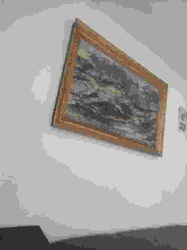
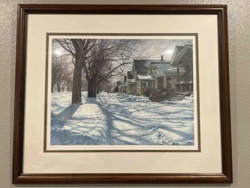
This item is an oil painting depicting a desert landscape, likely a canyon or mesa environment, characterized by warm earthy tones. The painting appears to be executed on a canvas or canvas board, visible through the textured brushstrokes. Physical characteristics include a palette dominated by various shades of orange, red, brown, and ochre for the ground and rock formations, contrasted with greens and muted sage-like blues for the vegetation. The brushwork is impressionistic, with visible texture from the paint application, suggesting a technique that emphasizes color and light. Notable features include distinct layers of rock strata, boulders scattered across the foreground, and various types of desert scrub and bush. The composition shows good depth, with nearer elements in sharper focus and richer color, receding into a slightly softer focus in the background. In the lower right corner, a signature 'J. DANT' or 'J. DANT' (the final letter is unclear but begins with D) is discernible, indicating the artist. The painting is housed within a simple, narrow gold-colored frame with a slightly textured or speckled finish, framed against a white mat or liner. There are no immediately obvious condition issues like cracks, flaking paint, or significant damage visible in the provided image. The frame also appears to be in good condition, with no visible chipping or scratches. The style suggests it could be a contemporary piece or from the late 20th century, consistent with a traditional landscape painting approach. The craftsmanship appears competent, with a clear understanding of color, light, and composition.
AI Appraisal Report
I have examined the provided image of this Desert Landscape Oil Painting, attributed to 'J. DANT'. The overall condition appears excellent, with no visible cracks, flaking paint, or significant damage to the canvas or the paint layer. The simple gold-colored frame also appears in very good condition with no obvious nicks or scratches. The impressionistic brushwork and warm earthy tones effectively capture the essence of a desert canyon or mesa. The artist demonstrates competent skill in composition, color theory, and rendering depth, utilizing distinct rock strata and varied vegetation.
Market conditions for unsigned or lesser-known landscape artists can be variable. This piece falls into a broad category of decorative landscape art. Comparables would include similar-sized oil paintings by regional or emerging artists with a recognizable, though not widely established, market presence. Demand for such pieces is generally stable, appealing to those seeking aesthetically pleasing artwork for home or office decor. Rarity is not a significant factor here; while unique, it is not a rare stylistic or subject matter.
Factors significantly impacting its value include the professional execution and good condition. The primary limitation in assessing true authenticity and value is the artist's signature. While 'J. DANT' (or similar) is discernible, without further provenance, biographical information on the artist, or a track record in the art market, establishing a firm artist's value is challenging. For full authentication and a more precise valuation, I would require an in-person examination to verify paint characteristics, canvas age, and technique more closely, as well as research into the artist's exhibition history, sales records, and any documented provenance. Without this, the appraisal remains largely based on its decorative appeal and competent craftsmanship.