AI Appraisal Estimate

AI-generated estimates · not official valuations

From the user

What was submitted

Photo and notes provided by the user — not generated by AI

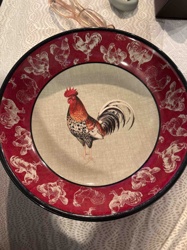
Submitted item photo
Submitted photo · June 10, 2026

User's notes

No additional notes provided.

AI analysis below

AI appraisal

AI analysis & estimate

AI-Generated · Verify before acting

Everything below is generated by AI for informational purposes only. AI can make mistakes — the AI may misidentify items or misattribute them (artist, maker, brand, designer, origin, era). This is not an official valuation and should not be used for insurance, sale, tax, estate, legal, or lending purposes — or any decision requiring a certified appraisal. It is not an authoritative claim about any person, brand, or rights holder — do not share or rely on it as a factual statement about a third party. Always consult qualified professionals before making financial decisions.

Read the full disclaimer

AI Identification

·Not independently authenticated·Verify before acting

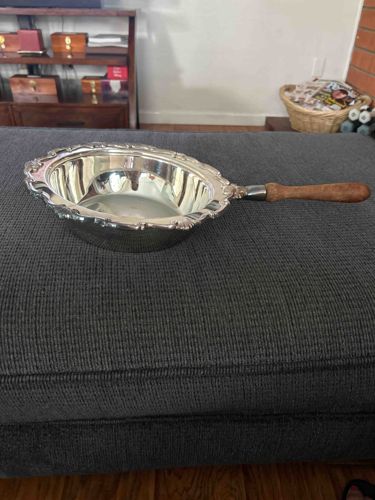
Ornate Silver-Plated Serving Dish with Wooden Handle

Kitchenware / Tableware

AI Estimated Value

·Not an official valuation·Verify before acting

$150-250

As of June 10, 2026

AI Item Analysis

·AI can make mistakes·Verify before acting
This item is a decorative silver-colored serving dish, possibly a sauceboat or a small serving pan, featuring a short wooden handle. The main body of the dish appears to be made of polished metal, likely silver plate or sterling silver, given its reflective surface and detailed ornamentation. The bowl is oval-shaped with an ornate, scalloped rim that features rococo-style scrollwork and floral motifs, indicative of a decorative rather than purely utilitarian purpose. The interior of the bowl is smooth and highly reflective, showing some minor surface scuffs or reflections consistent with use and age. The handle is made of light-colored wood, possibly maple or birch, with a smooth, ergonomic shape for gripping. It connects to the metal bowl via a silver-colored ferrule or collar, which also appears to have some subtle decorative banding. The attachment point between the metal and wood seems sturdy, but there is a visible line indicating the joint. There are no obvious dents or major deformations visible on the metal, suggesting it has been reasonably well-maintained. The wood handle shows a natural grain and appears to be in good condition, without significant cracks or chips. There are no discernible maker's marks or signatures visible from this angle. Given the elaborate detailing and the combination of materials, it likely dates from the late 19th to early 20th century, a period known for decorative household silver. The craftsmanship appears to be of good quality, with attention paid to the molding and finishing of the metalwork.
AI Appraisal Report

·AI can make mistakes·Verify before acting
Based on my visual examination of the provided image, this ornate silver-plated serving dish with a wooden handle appears to be in very good condition for its assumed age. The metalwork, likely silver plate given the period and style, shows a high degree of reflectivity with minimal visible scuffs or significant deformations, suggesting it has been well-maintained. The rococo-style scrollwork and floral motifs on the scalloped rim are finely detailed, indicative of quality craftsmanship from the late 19th to early 20th century. The wooden handle, possibly maple or birch, is smooth and well-preserved, without obvious cracks or chips. I assess the authenticity as likely period-appropriate given the design and material combination typical of household silver from that era. Market conditions for silver-plated items, even ornate ones, are generally moderate compared to sterling silver. Demand exists among collectors of antique kitchenware/tableware, but it is not high given the prevalence of such pieces. It is not particularly rare. Factors impacting value positively include its decorative appeal and good condition. Negatively, the fact that it is likely silver plate rather than sterling silver significantly limits its intrinsic and resale value. The absence of visible maker's marks is also a limiting factor, as marked pieces often command higher prices. Further verification would greatly benefit from an in-person examination to confirm material composition (e.g., specific gravity test for silver content, if sterling is suspected), check for hidden damage, and locate any obscured maker's marks or hallmarks. Provenance documentation would also provide valuable insight into its history and authenticity. Without this, my assessment of authenticity is based solely on visual characteristics from the image.

Get your items appraised

Instant estimates of your treasures with AI-powered appraisals

Browse More Appraisals