AI Appraisal Estimate

AI-generated estimates · not official valuations

From the user

What was submitted

Photo and notes provided by the user — not generated by AI

Submitted item photo
Submitted photo · June 25, 2026

User's notes

No additional notes provided.

AI analysis below

AI appraisal

AI analysis & estimate

AI-Generated · Verify before acting

Everything below is generated by AI for informational purposes only. AI can make mistakes — the AI may misidentify items or misattribute them (artist, maker, brand, designer, origin, era). This is not an official valuation and should not be used for insurance, sale, tax, estate, legal, or lending purposes — or any decision requiring a certified appraisal. It is not an authoritative claim about any person, brand, or rights holder — do not share or rely on it as a factual statement about a third party. Always consult qualified professionals before making financial decisions.

Read the full disclaimer

AI Identification

·Not independently authenticated·Verify before acting

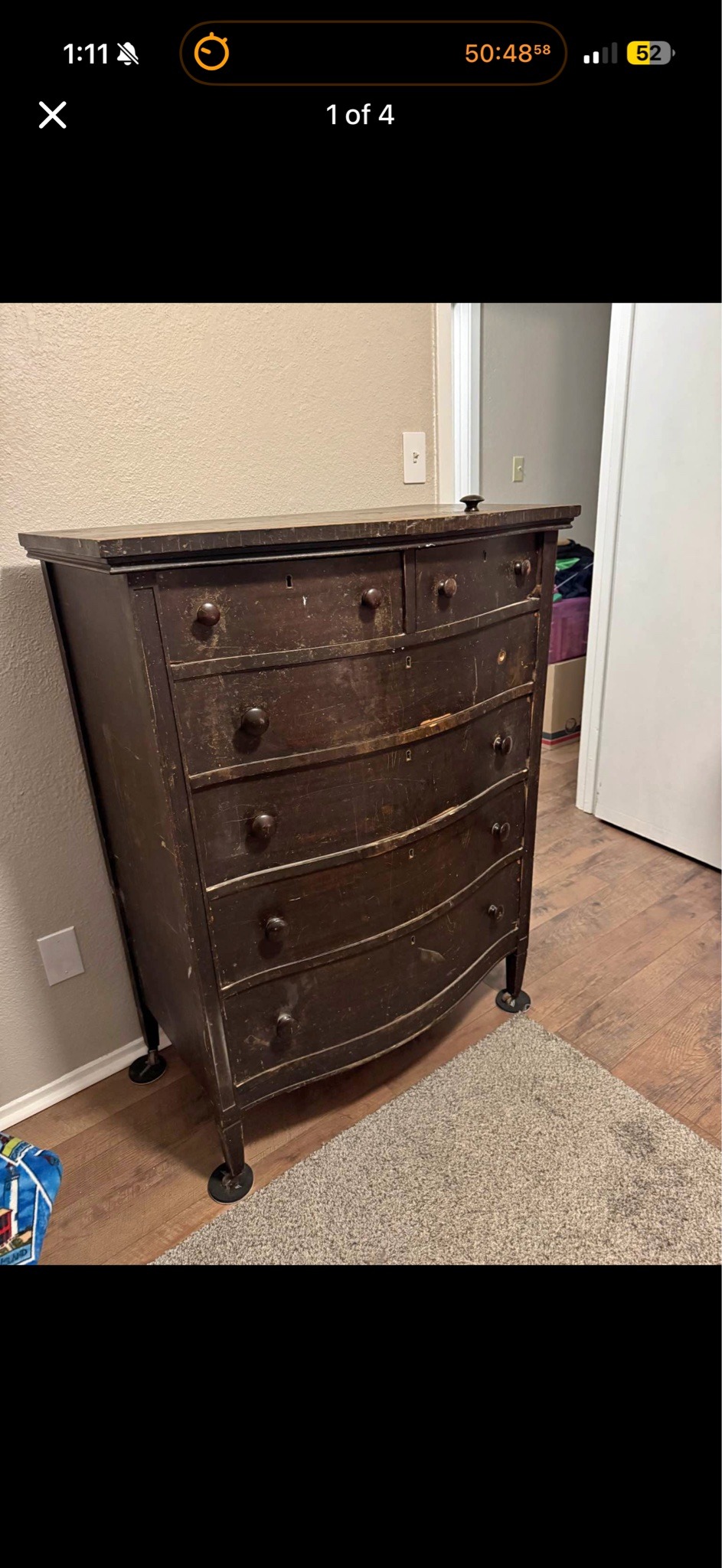
Antique Empire Style Bow-Front Tallboy Chest of Drawers

Antique Furniture

AI Estimated Value

·Not an official valuation·Verify before acting

$400 - $650

As of June 25, 2026

AI Item Analysis

·AI can make mistakes·Verify before acting
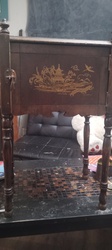
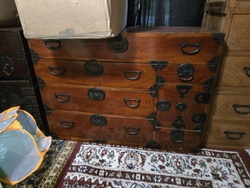
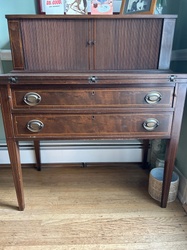
This is a nineteenth-century bow-front tallboy chest of drawers, likely dating from the mid-to-late 1800s. The piece is constructed with a curved front profile, featuring two small drawers at the top and four full-width graduated drawers below. It is finished in a very dark, aged brown mahogany or walnut stain that has developed a significant patina. Physical characteristics include round wooden mushroom-style knobs, keyed escutcheon plates on each drawer, and tapered square legs that are currently resting on modern floor protectors. The construction appears to be solid wood with possible veneer on the curved drawer fronts. Notable condition issues are evident throughout: the finish is heavily weathered with numerous surface scratches, scuffs, and impact marks. There is visible loss of wood/veneer along the horizontal rails between the drawers, particularly on the second and third sections. A circular hole or missing knot is visible on the upper right side of the second large drawer. The piece shows the structural integrity expected of mid-19th-century American or English cabinetry, though it requires significant restoration. No maker's marks are visible on the exterior, but the drawer joinery and interior wood species would likely provide further identification. The style is a vernacular interpretation of the Federal or Empire periods, characterized by simple, functional lines and a lack of ornate carving.
AI Appraisal Report

·AI can make mistakes·Verify before acting
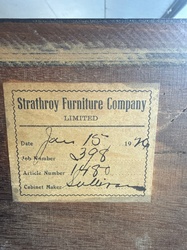
I have examined this mid-to-late 19th-century bow-front tallboy chest. The piece represents a vernacular interpretation of the Empire style, likely produced in either England or the Eastern United States. Based on the visual evidence, the chest exhibits authentic signs of age, including a deep patina and period-appropriate wooden mushroom knobs. However, the condition is a primary concern; there is significant loss to the horizontal rails and veneers between the drawers, along with heavy surface abrasions and a visible void on the second large drawer face. These issues represent substantial deferred maintenance. The current market for large, dark brown furniture remains soft, as modern buyers typically favor pieces in 'ready-to-place' condition. Comparables for restored examples might reach $1,200, but in its current state, the value is heavily discounted to account for professional restoration costs totaling several hundred dollars. Rarity is moderate; while bow-front chests are more desirable than flat fronts, this specific example lacks the high-style inlay or exotic wood grains that drive premium prices. Please note that this appraisal is based strictly on photographic evidence. A definitive authentication would require a physical inspection to confirm secondary wood types (such as pine or poplar), evaluate the hand-cut joinery (dovetails), and inspect for structural stability and insect damage. The absence of a maker's mark is typical for this era, but provenance documentation or historical receipts would be necessary to link the piece to a specific cabinetmaker and potentially increase its fair market value.

Get your items appraised

Instant estimates of your treasures with AI-powered appraisals

Browse More Appraisals