AI Appraisal Estimate

AI-generated estimates · not official valuations

From the user

What was submitted

Photo and notes provided by the user — not generated by AI

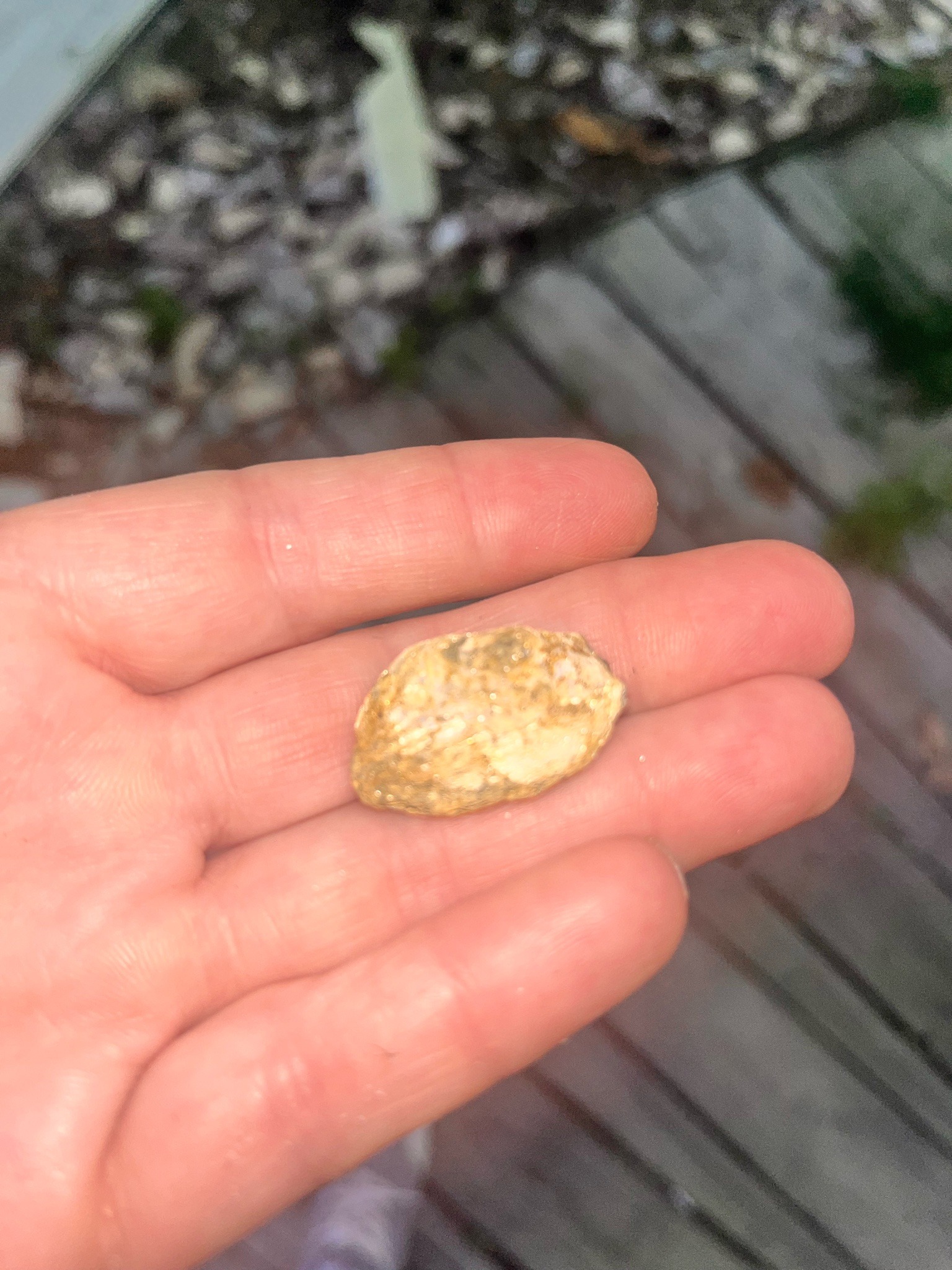
Submitted item photo
Submitted photo · May 28, 2026

User's notes

No additional notes provided.

AI analysis below

AI appraisal

AI analysis & estimate

AI-Generated · Verify before acting

Everything below is generated by AI for informational purposes only. AI can make mistakes — the AI may misidentify items or misattribute them (artist, maker, brand, designer, origin, era). This is not an official valuation and should not be used for insurance, sale, tax, estate, legal, or lending purposes — or any decision requiring a certified appraisal. It is not an authoritative claim about any person, brand, or rights holder — do not share or rely on it as a factual statement about a third party. Always consult qualified professionals before making financial decisions.

Read the full disclaimer

AI Identification

·Not independently authenticated·Verify before acting

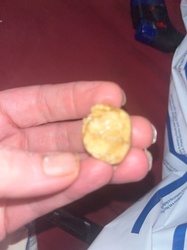
Gold Nugget or Gold-Bearing Quartz Specimen

Minerals, Gems, and Precious Metals

AI Estimated Value

·Not an official valuation·Verify before acting

$450 - $650

As of May 28, 2026

AI Item Analysis

·AI can make mistakes·Verify before acting
This item is a small, irregular mineral specimen held in a palm for scale. It measures approximately 15-20mm in length and features a distinctly metallic, brassy-yellow luster characteristic of native gold. The object presents a rugged, pitted surface texture with various inclusions and crystalline structures. The primary material appears to be a high-karat natural gold alloy, potentially containing silver or copper as is common in alluvial deposits. Interspersed throughout the metallic mass are traces of white-to-tan host rock or matrix, which appears to be quartz, suggesting this piece may be a hard-rock specimen rather than a water-worn river nugget. The coloration is heterogeneous, ranging from bright lemon yellow in the metallic sections to earthy, iron-stained tan in the recessed crevices. There are no maker's marks or signatures, as this is a natural geological occurrence. The condition shows heavy natural weathering and an uneven, botryoidal-like formation without evidence of human cutting or polishing. Its age is geological, likely millions of years old, sourced from a hydrothermal vein. The specimen exhibits high density and an authentic metallic sheen that differentiates it from iron pyrite (fool's gold), which usually presents more cubic crystallization.
AI Appraisal Report

·AI can make mistakes·Verify before acting
Based on my visual examination of the provided imagery, I have assessed this specimen as a natural gold-in-quartz specimen. The piece exhibits the characteristic 'buttery' yellow luster and irregular, botryoidal-like morphology consistent with high-purity native gold (likely 20-22k). The presence of white quartz matrix suggests it is a specimen from a lode deposit rather than a water-worn alluvial nugget. At an estimated weight of 5 to 8 grams, its value is derived both from its intrinsic gold content and its 'specimen premium,' which currently commands 1.5x to 2x the spot price of gold due to collector demand for aesthetic mineral samples. The current market for natural gold specimens is robust, with high demand for pieces that display visible crystalline structures over common bulk bullion. However, the prevalence of iron-stained quartz and the somewhat cluttered surface texture place this in the mid-range of collectability. Limitation on Authentication: This appraisal is based solely on visual photographic evidence. I cannot definitively verify the authenticity of the specimen or its specific density (Specific Gravity) without physical testing. To reach a definitive conclusion, an in-person examination is required to conduct a displacement test to calculate exact gold-to-quartz ratio and an XRF (X-ray fluorescence) scan to determine precise purity. I also note that while the luster distinguishes it from pyrite, laboratory testing is the only way to rule out high-quality lab-grown specimens or synthetic enhancements. Provenance documentation regarding the specific mining locality would further increase marketability and value.

Get your items appraised

Instant estimates of your treasures with AI-powered appraisals

Browse More Appraisals