AI Appraisal Estimate

AI-generated estimates · not official valuations

From the user

What was submitted

Photo and notes provided by the user — not generated by AI

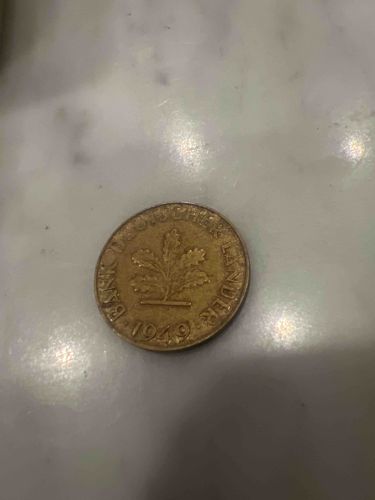
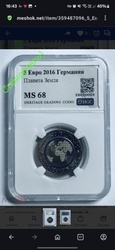
Submitted item photo
Submitted photo · May 23, 2026

User's notes

No additional notes provided.

AI analysis below

AI appraisal

AI analysis & estimate

AI-Generated · Verify before acting

Everything below is generated by AI for informational purposes only. AI can make mistakes — the AI may misidentify items or misattribute them (artist, maker, brand, designer, origin, era). This is not an official valuation and should not be used for insurance, sale, tax, estate, legal, or lending purposes — or any decision requiring a certified appraisal. It is not an authoritative claim about any person, brand, or rights holder — do not share or rely on it as a factual statement about a third party. Always consult qualified professionals before making financial decisions.

Read the full disclaimer

AI Identification

·Not independently authenticated·Verify before acting

1949 German 50 Pfennig Coin (Bank Deutscher Länder)

Numismatics / Collectible Coins

AI Estimated Value

·Not an official valuation·Verify before acting

$5.00 - $15.00

As of May 23, 2026

AI Item Analysis

·AI can make mistakes·Verify before acting
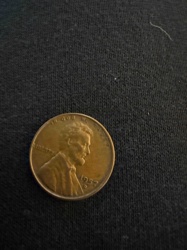
This numismatic item is a 1949 50 Pfennig coin issued by the Bank Deutscher Länder, representing the early currency era of the Federal Republic of Germany following World War II. The coin is struck in a cupro-nickel alloy, though it exhibits a distinct yellowish or brassy patina in this lighting, likely due to oxidation, environmental toning, or surface grime. The obverse side visible here features a central oak seedling sprout, a traditional symbol of growth and German rebirth, surrounded by the circumscribed text 'BANK DEUTSCHER LÄNDER' and the date '1949' at the bottom. The coin appears to be in circulated condition, showing moderate wear on the high points of the oak leaves and the lettering. Fine scratches and small contact marks are visible across the field. The strike remains relatively clear, with the rim showing minor softening. This specific issue is highly significant as it was produced before the minting authority switched to 'BUNDESREPUBLIK DEUTSCHLAND' in 1950, making it a key transitional piece for collectors of German coinage. The overall craftsmanship reflects the industrial quality of mid-century German minting.
AI Appraisal Report

·AI can make mistakes·Verify before acting
Based on my visual examination of the digital images provided, this is a 1949 50 Pfennig coin issued by the Bank Deutscher Länder. This specific issue is historically significant as a transitional currency produced shortly before the official formation of the Federal Republic of Germany (Bundesrepublik Deutschland) in late 1949. While the standard composition for this issue is a copper-nickel alloy, the item presented exhibits a distinct yellowish-brassy toning. This is most likely due to environmental oxidation, nicotine staining, or long-term storage in reactive holders rather than a rare metal error, though I cannot rule out chemical alteration without physical testing. The condition appears to be circulated, likely falling in the Fine (F) to Very Fine (VF) range. The details of the oak seedling—symbolizing Germany's rebirth—remain discernible, but the high points show flattening, and the fields display consistent contact marks and surface chatter. In terms of market value, the 'Bank Deutscher Länder' variety is generally more common than novice collectors realize, with millions minted. However, the 1949 issue does hold interest for historical collectors. Most circulated examples trade for nominal amounts. However, if this were the rare 1950 'Bank Deutscher Länder' error strike (mule), values would skyrocket, but this is clearly dated 1949. Values are constrained by the heavy wear and problematic toning. To provide a definitive authentication and higher valuation, I would need to physically weigh the coin (to verify standard 3.5g weight) and examine the mint mark (A, D, F, G, or J) located on the reverse, which is not visible here. The yellowish hue requires XRF analysis to confirm it is merely surface toning and not a counterfeit alloy.

Get your items appraised

Instant estimates of your treasures with AI-powered appraisals

Browse More Appraisals