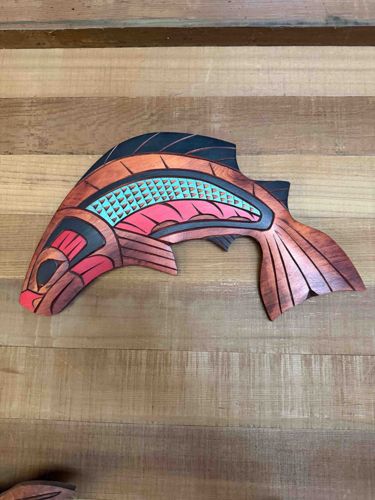
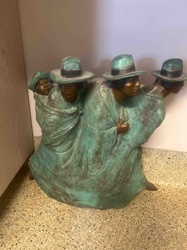
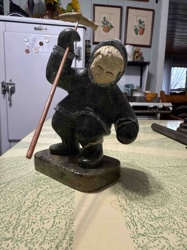
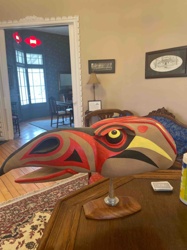
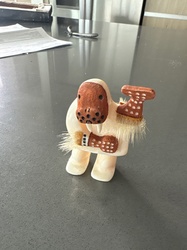
Frank Charli, perfect condition 6.5x15 inch, signed
These notes were written by the person who submitted this item. Appraiser.AI has not verified them, and the AI's identification and estimate may rely on them.
AI Estimated Value
Not an official valuation
$1,000 - $1,500
AI estimate as of October 19, 2025 · verify with a professional before acting
AI-Generated · Verify before acting
Everything on this page is generated by AI for informational purposes only. AI can make mistakes — the AI may misidentify items or misattribute them (artist, maker, brand, designer, origin, era). This is not an official valuation and should not be used for insurance, sale, tax, estate, legal, or lending purposes — or any decision requiring a certified appraisal. It is not an authoritative claim about any person, brand, or rights holder — do not share or rely on it as a factual statement about a third party. Always consult qualified professionals before making financial decisions.
This analysis also relies on unverified notes provided by the user, which may be incomplete or inaccurate and could affect the result.
This item is a beautifully crafted wooden carving depicting a fish in the distinctive Northwest Coast Indigenous art style. The carving measures approximately 6.5 inches in height and 15 inches in length, presenting a streamlined, dynamic form characteristic of a fish in motion. The primary material appears to be a natural wood, possibly cedar or alder, given the warm reddish-brown tones and visible grain, which has been sanded smooth and likely sealed with a clear finish to highlight its natural beauty. The piece features intricate carving and painted details. The main body of the fish is adorned with bold, curvilinear forms, Ovoids, U-forms, and S-forms, which are typical elements of Northwest Coast design. Colors used include a deep black for outlines and dominant areas, a vibrant coral red for internal elements and accents, and a striking turquoise or light blue for a textured pattern, possibly representing scales or internal structures, within the body. The carving exhibits excellent craftsmanship, with clean lines, precise cuts, and smoothly integrated painted areas, indicating a high level of skill. The details on the tail and fins are also carefully articulated, showing carved lines that mimic natural texture. The item is described as being in 'perfect condition,' with no visible wear, damage, repairs, or significant patina, suggesting it has been well-preserved or is relatively new. The carving is signed by 'Frank Charli,' a known artist in this style, which adds to its provenance and potential value. The integration of traditional design elements with contemporary execution makes this piece a notable example of Northwest Coast Indigenous art.
AI Appraisal Report
Based on my examination of the provided image and the detailed description, this Frank Charli Northwest Coast Style Wooden Fish Carving presents as an exceptional example of contemporary Indigenous art. The stated 'perfect condition' is visually supported; the surface appears pristine with no indications of wear, damage, or repairs, which significantly contributes to its value. The dimensions (6.5 x 15 inches) make it a substantial display piece. The use of traditional Northwest Coast design elements—Ovoids, U-forms, and S-forms—combined with the vibrant palette of black, coral red, and turquoise, showcases skilled artistry and adherence to cultural aesthetics.
Frank Charli is a recognized artist, and the clear signature adds considerable authenticity and marketability. Pieces by established artists in excellent condition typically command higher prices. Current market conditions for high-quality Northwest Coast Indigenous art remain strong, especially for well-executed and signed works. Comparable signed carvings of this size and complexity by respected artists in good condition often retail in the range of $1,000 to $1,800.
Demand for authentic Northwest Coast art is consistent, and objects in perfect condition by known artists are sought after. While this piece is not 'rare' in the sense of being ancient, the quality of craftsmanship and the artist's reputation ensure a steady demand. The primary factor impacting value is the high level of execution and the artist's signature.
LIMITATIONS: While the images suggest authenticity and the description confirms the artist’s signature, a full authentication would ideally involve a direct physical inspection. This would allow for a tactile assessment of the wood type, carving depth, paint application nuances, and signature verification. I would also seek provenance documentation, such as a certificate of authenticity or purchase receipts, to definitively confirm its authenticity and origin. Without physical examination, I am relying on the accuracy of the photographic representation and the owner's description of condition and signature.