AI Appraisal Estimate

AI-generated estimates · not official valuations

From the user

What was submitted

Photo and notes provided by the user — not generated by AI

Submitted item photo
Submitted photo · May 28, 2026

User's notes

No additional notes provided.

AI analysis below

AI appraisal

AI analysis & estimate

AI-Generated · Verify before acting

Everything below is generated by AI for informational purposes only. AI can make mistakes — the AI may misidentify items or misattribute them (artist, maker, brand, designer, origin, era). This is not an official valuation and should not be used for insurance, sale, tax, estate, legal, or lending purposes — or any decision requiring a certified appraisal. It is not an authoritative claim about any person, brand, or rights holder — do not share or rely on it as a factual statement about a third party. Always consult qualified professionals before making financial decisions.

Read the full disclaimer

AI Identification

·Not independently authenticated·Verify before acting

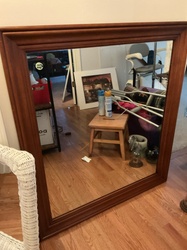
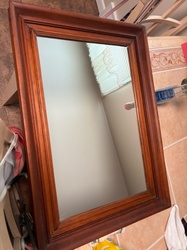
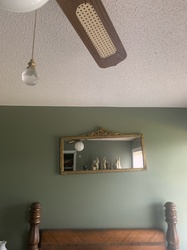
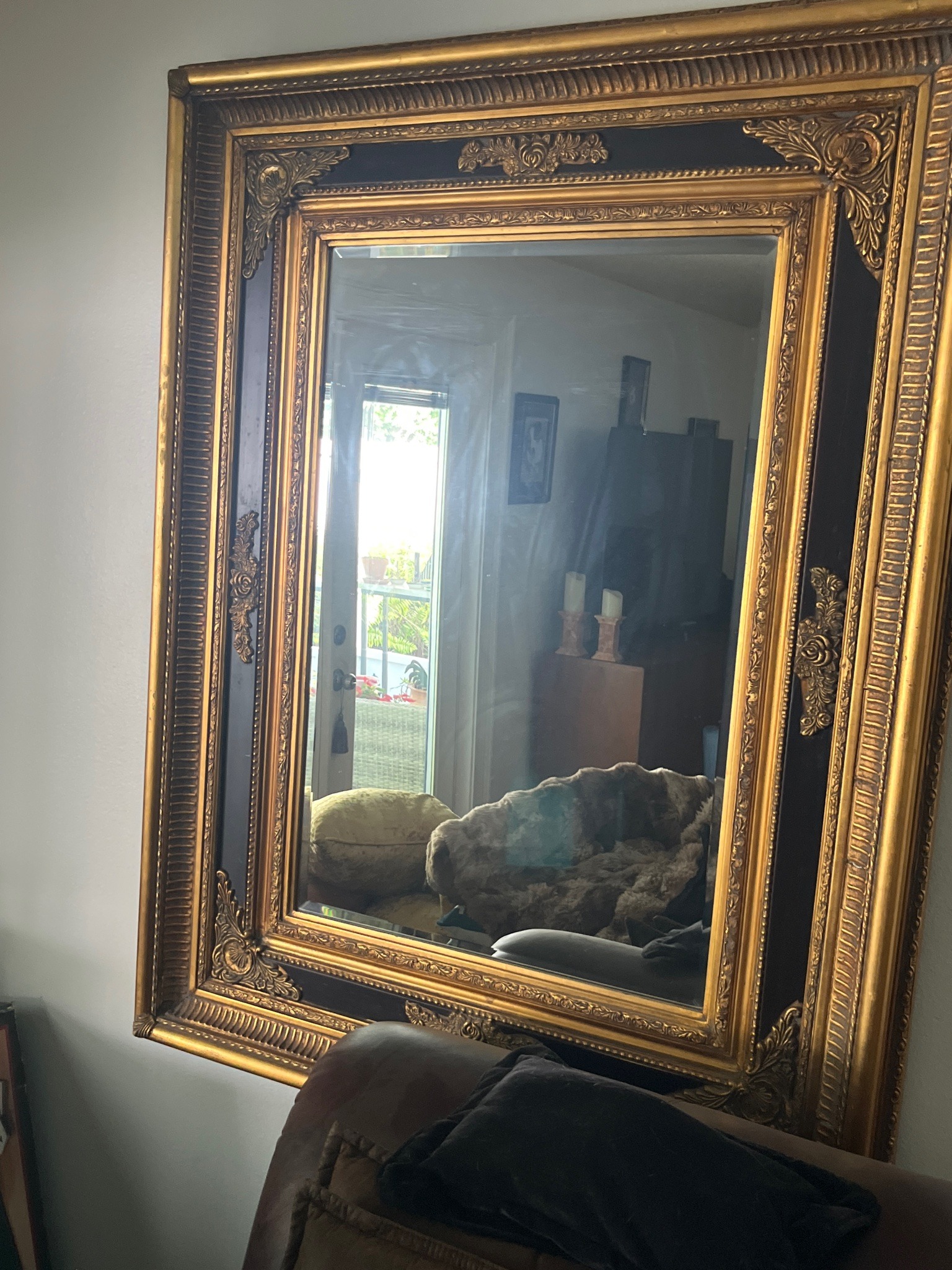
Large rectangular wall mirror in a Neoclassical-style gilt and ebonized frame

Home Decor & Mirrors

AI Estimated Value

·Not an official valuation·Verify before acting

$450–$850

As of May 28, 2026

AI Item Analysis

·AI can make mistakes·Verify before acting
This item is a large, wall-mounted rectangular mirror featuring a substantial composite frame. The frame presents a multi-tiered design with a high-contrast aesthetic, combining gold-toned (gilt) finishes with matte black ebonized sections. The outermost molding is decorated with a repeating gadroon-style pattern, leading to an ebonized flat panel. This panel is embellished with gold-toned resin or wood appliqués in the form of acanthus leaves and floral scrolls situated at the corners and mid-points. The inner border features a beaded or 'pearl' molding adjacent to the glass. The mirror glass appears to have a beveled edge, which is consistent with higher-quality decorative mirrors. Stylistically, the piece is consistent with Neoclassical or Empire revival designs, likely manufactured in the late 20th or early 21st century given the uniform appearance of the finishes. There are no visible maker's marks or signatures, and the identification is based solely on visual stylistic features. The surface shows minor dust accumulation, but no visible cracks to the glass or significant loss to the gilding is apparent from the image. Authentic antiquity cannot be determined without a physical inspection of the frame's reverse side and material composition.

AI Appraisal Report

·AI can make mistakes·Verify before acting
I have examined the image provided of this large wall mirror. Based on what I can see, the item is a Neoclassical-style frame featuring gilt and ebonized finishes with composite appliqués. While the design evokes late 18th-century European aesthetics, the uniformity of the gilding and the crispness of the molding suggest it is likely a high-quality reproduction from the late 20th or early 21st century. I cannot verify from a photo whether the substrate is solid wood, plaster, or synthetic resin, nor can I confirm the age of the glass; a physical inspection of the reverse side would be required to search for maker’s marks or construction techniques that indicate provenance. The estimated value reflects typical market behavior for decorative furnishings of this size and style. In the current secondary market, there is steady demand for large-scale interior mirrors that offer a formal, historical look. This value range assumes the frame and glass are in good condition without significant loss to the gilt or silvering. If this piece were to be identified as a period-correct antique through physical verification of hand-carving and authentic gold leaf, the value could increase significantly into the thousands. Conversely, if it is confirmed to be a common mass-produced contemporary resin mirror, the value would likely fall toward the lower end of the range or below. To confirm its status, one would need an in-person examination of the frame's composition and a review of any available provenance documentation or manufacturer labels on the backing board panels. Without such confirmation, this appraisal remains a hypothesis based on visual stylistic features alone and should be treated accordingly for insurance or resale purposes. The value of an unauthenticated decorative piece of this type is primarily driven by its aesthetic utility rather than historical rarity or artist signature.

Get your items appraised

Instant estimates of your treasures with AI-powered appraisals

Browse More Appraisals