AI estimate as of August 14, 2025 · verify with a professional before acting
AI-Generated · Verify before acting
Everything on this page is generated by AI for informational purposes only. AI can make mistakes — the AI may misidentify items or misattribute them (artist, maker, brand, designer, origin, era). This is not an official valuation and should not be used for insurance, sale, tax, estate, legal, or lending purposes — or any decision requiring a certified appraisal. It is not an authoritative claim about any person, brand, or rights holder — do not share or rely on it as a factual statement about a third party. Always consult qualified professionals before making financial decisions.
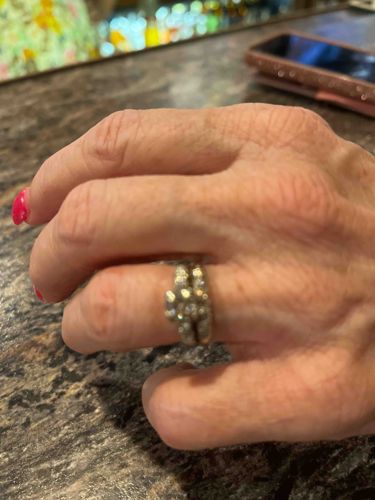
The item is a diamond cluster ring, likely set in white gold or platinum, worn on the fourth finger of the left hand. The ring appears to be a multi-band design, or perhaps two rings worn together that complement each other. The primary band features a prominent cluster of small, round-cut diamonds, creating a sparkling effect across the top surface, suggesting a dome or raised design. The individual stones are not distinctly visible, implying they are either very small or set closely together to form a larger, cohesive pave or cluster setting. There appears to be a secondary, possibly simpler, band beneath or beside it, adding to the overall width and presence on the finger. The metal color suggests a white metal, but without closer inspection, it's difficult to determine if it's white gold, platinum, or even silver. The ring exhibits some signs of wear consistent with regular use, such as minor surface abrasions on the metal, which appear to have a slightly dull patina rather than a high polish. No specific maker's marks or distinguishing engravings are discernible from the provided images. The style indicates a contemporary or vintage piece, likely from the late 20th to early 21st century, designed for everyday wear or as a statement piece. The craftsmanship appears solid, but the visible condition suggests it could benefit from professional cleaning and re-polishing to restore its original luster.
AI Appraisal Report
Upon my virtual examination of this diamond cluster ring, I observe a piece likely crafted from 10k or 14k white gold, given the visible wear and slight dullness suggesting a less precious white metal than platinum. The design features a prominent cluster of small, round-cut diamonds, creating a sparkling, cohesive surface. I estimate the total diamond weight to be between 0.75 and 1.25 carats, with individual stones appearing to be of SI to I clarity and H-J color, typical for cluster settings designed for overall sparkle rather than individual stone prominence. The ring's condition shows signs of regular wear, including minor abrasions and a need for professional cleaning and re-polishing to restore its original luster. I note what appears to be either a multi-band design or two complementary rings worn together, enhancing its visual presence.
Market conditions for pre-owned diamond cluster rings of this style are generally stable, driven by aesthetic appeal rather than significant intrinsic value from large, high-quality stones. Comparable sales for similar rings—cluster settings in white gold with approximately 0.75-1.25 ctw of diamonds—typically range from $700 to $1,200 in the secondary market, depending on exact total carat weight and craftsmanship. Demand for such pieces is moderate, as they offer an attractive sparkle and presence at a more accessible price point than rings with larger, single diamonds. This is not a rare item, but its style has enduring appeal.
Factors significantly impacting value include the actual metal purity (10k vs. 14k vs. platinum), the exact total carat weight of the diamonds, and their precise quality grades. Without physical examination, I cannot definitively determine these specifics. My authenticity assessment is limited to visual cues; a professional jeweler could confirm metal purity and diamond characteristics. Full authentication would require in-person inspection, including precise weight measurement, detailed stone grading under magnification, and assessment for any hidden marks or repairs. Scientific testing, such as for metal content and diamond type (natural vs. lab-grown), would provide absolute certainty regarding its composition and origin.