Mid-Century Murano Style Green Art Glass Swan Bowl
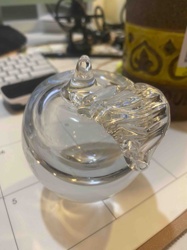
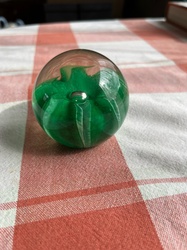
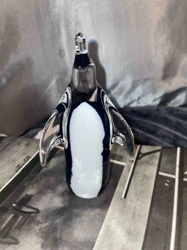
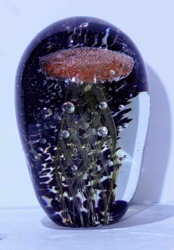
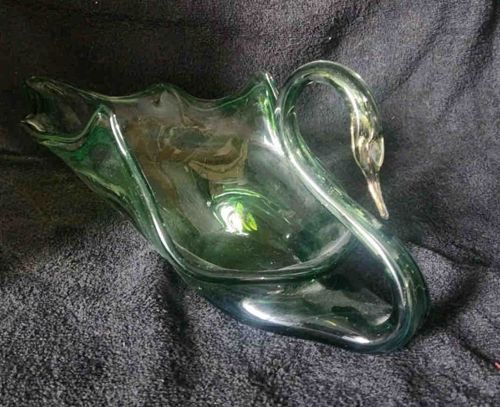
This item is a decorative hand-blown art glass centerpiece shaped into the stylized form of a swan. The piece is crafted from a deep emerald or forest green translucent glass, featuring a solid glass neck that curves gracefully into a pointed beak, which appears to have a slight amber or clear glass tint at the tip. The body of the swan serves as a bowl with a dramatic, free-form ruffled or scalloped edge on the tail end, characteristic of the 'soorglass' or Murano glass style of the mid-20th century. The construction displays a thick, heavy base for stability, tapering to thinner edges at the ruffles. Under close inspection, the glass shows subtle internal striations and occasional small air bubbles (seeds), typical of manual blowing processes rather than mold-pressing. The overall condition appears excellent with no visible chips or cracks on the delicate neck or ruffled edges. While no maker's mark is visible in the photograph, the style, weight, and color palette strongly suggest European origin, likely Italian (Venetian) or perhaps British (Whitefriars style), dating between the 1950s and 1970s. The piece demonstrates high-quality craftsmanship, particularly in the fluid integration of the neck into the bowl body and the organic, symmetrical flow of the glass folds.
AI-Generated Appraisal Disclaimer
Estimated Value
$125.00 - $185.00
Basic Information
Category
Art Glass / Collectibles
Appraised On
February 25, 2026
Estimated Value
$125.00 - $185.00
Item Description
This item is a decorative hand-blown art glass centerpiece shaped into the stylized form of a swan. The piece is crafted from a deep emerald or forest green translucent glass, featuring a solid glass neck that curves gracefully into a pointed beak, which appears to have a slight amber or clear glass tint at the tip. The body of the swan serves as a bowl with a dramatic, free-form ruffled or scalloped edge on the tail end, characteristic of the 'soorglass' or Murano glass style of the mid-20th century. The construction displays a thick, heavy base for stability, tapering to thinner edges at the ruffles. Under close inspection, the glass shows subtle internal striations and occasional small air bubbles (seeds), typical of manual blowing processes rather than mold-pressing. The overall condition appears excellent with no visible chips or cracks on the delicate neck or ruffled edges. While no maker's mark is visible in the photograph, the style, weight, and color palette strongly suggest European origin, likely Italian (Venetian) or perhaps British (Whitefriars style), dating between the 1950s and 1970s. The piece demonstrates high-quality craftsmanship, particularly in the fluid integration of the neck into the bowl body and the organic, symmetrical flow of the glass folds.
Related Tags
Get Your Items Appraised
Instant estimates of your treasures with AI-powered instant appraisals