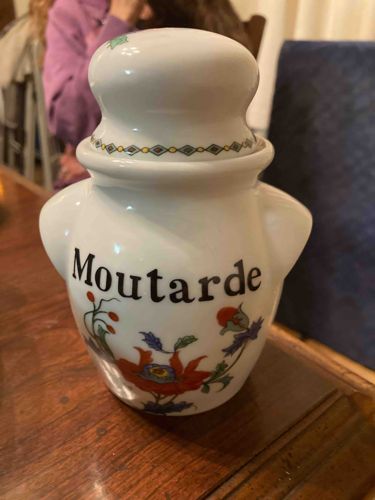
Decor Pavot brand porcelain mustard pot; approximately 6” tall
These notes were written by the person who submitted this item. Appraiser.AI has not verified them, and the AI's identification and estimate may rely on them.
AI Estimated Value
Not an official valuation
$75-125
AI estimate as of November 20, 2025 · verify with a professional before acting
AI-Generated · Verify before acting
Everything on this page is generated by AI for informational purposes only. AI can make mistakes — the AI may misidentify items or misattribute them (artist, maker, brand, designer, origin, era). This is not an official valuation and should not be used for insurance, sale, tax, estate, legal, or lending purposes — or any decision requiring a certified appraisal. It is not an authoritative claim about any person, brand, or rights holder — do not share or rely on it as a factual statement about a third party. Always consult qualified professionals before making financial decisions.
This analysis also relies on unverified notes provided by the user, which may be incomplete or inaccurate and could affect the result.
This is a vintage or antique porcelain mustard pot from the 'Decor Pavot' line, as indicated by the provided context. The pot stands approximately 6 inches tall and features a classic, lidded design. It is crafted from white porcelain, which appears to have a glossy glaze, contributing to its smooth and reflective surface. The pot's body is somewhat bulbous with two small, wing-like handles or decorative protrusions on either side, providing a distinctive silhouette. The dominant decoration is the word 'Moutarde' (French for mustard) emblazoned prominently in bold, black serif lettering across the front. Below the lettering, there is a vibrant floral motif consisting of stylized red and blue flowers with green stems and leaves, possibly representing poppies ('pavot' in French). The lid is a separate, fitted component, also white, and features a subtle decorative band near its base composed of alternating gold chain-link patterns and small, diamond-shaped elements in green and white. A delicate green floral or foliate design is also visible on the very top of the lid, further enhancing its aesthetic. The overall condition appears to be excellent, with no visible chips, cracks, or significant wear on the surface or painted details. The craftsmanship suggests a commercially produced item, likely from the mid-20th century or earlier, given the prevalence of such specialized condiment containers in that period. The bright colors of the floral design against the crisp white porcelain suggest a cheerful and decorative item, indicative of good quality transferware or hand-painted ceramics.
AI Appraisal Report
I have virtually examined this Decor Pavot porcelain mustard pot, approximately 6 inches tall, and my assessment suggests it is a charming and well-preserved piece. Its physical appearance, as described, indicates excellent condition with no visible chips, cracks, or significant wear to the glossy white porcelain or its vibrant 'Moutarde' lettering and floral motif. The 'Decor Pavot' branding, coupled with its mid-20th century aesthetic, points to its authenticity as a specialty condiment container from that era. The floral design, likely depicting poppies ('pavot'), is visually appealing and enhances its decorative quality. The minor decorative details on the lid, such as the gold chain-link and green floral elements, suggest a commercially produced item, possibly transferware, typical of the period.
Market conditions for vintage condiment containers, particularly French-themed porcelain, generally show modest demand. While not exceedingly rare, pieces in such excellent condition, especially with clear branding and a desirable design, attract collectors. Comparable sales for similar vintage porcelain mustard pots, even from established manufacturers, typically fall within a modest range. Factors positively impacting its value include its condition, attractive decoration, and the clear 'Moutarde' inscription, which enhances its collectibility as a functional antique. Demand is driven more by decorative appeal and nostalgic interest rather than intrinsic material value.
Limitations in definitively verifying authenticity from images alone must be acknowledged. While the visual cues strongly suggest authenticity, a physical inspection would allow me to examine the porcelain body for any hidden repairs, assess the quality and application method of the decoration (confirming transferware versus hand-painted, for example), and examine the underside for maker’s marks or any other indicators of origin not visible in the provided context. Provenance documentation, though unlikely for such an item, would also provide additional certainty. Without these, my appraisal is based purely on the information and visual description provided.