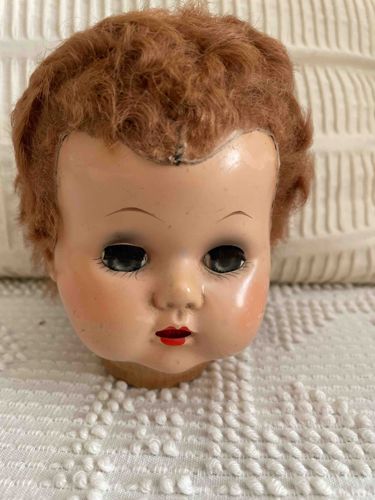
Any info or value on this sweet doll head? Body was rubber that deteriorated
These notes were written by the person who submitted this item. Appraiser.AI has not verified them, and the AI's identification and estimate may rely on them.
AI Estimated Value
Not an official valuation
$25-50
AI estimate as of August 7, 2025 · verify with a professional before acting
AI-Generated · Verify before acting
Everything on this page is generated by AI for informational purposes only. AI can make mistakes — the AI may misidentify items or misattribute them (artist, maker, brand, designer, origin, era). This is not an official valuation and should not be used for insurance, sale, tax, estate, legal, or lending purposes — or any decision requiring a certified appraisal. It is not an authoritative claim about any person, brand, or rights holder — do not share or rely on it as a factual statement about a third party. Always consult qualified professionals before making financial decisions.
This analysis also relies on unverified notes provided by the user, which may be incomplete or inaccurate and could affect the result.
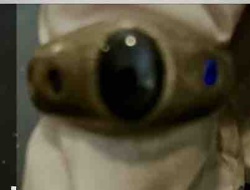
This is a vintage doll head, likely made from a composition material or hard plastic, characterized by its rosy cheeks, prominent eyelashes, and sculpted features. The head is painted with a light flesh tone, exhibiting some light wear and minor scuffing visible on the surface. It features large, dark, fixed or 'sleep' eyes with detailed painted irises and significant painted upper and lower eyelashes, giving the doll a wide-eyed, innocent expression. The lips are painted a vibrant red, slightly open, suggesting a childlike pout or readiness to speak. The doll's hair is a tightly curled, reddish-brown synthetic or mohair wig, appearing somewhat matted and showing some loss or thinning near the hairline, particularly at the forehead, revealing the underlying head material. There's a visible dark spot or possible small hole above the right eye, which might be a manufacturing flaw or damage. The neck is unfinished, indicating it was intended to be attached to a body. Given the style of the facial molding, the painted features, and the nature of the hair, this doll head likely dates from the mid-20th century, possibly the 1940s-1960s. The quality of the sculpting suggests a mass-produced item, though the hand-painted details on the face show a degree of craftsmanship. The condition, while showing age and some wear, appears generally stable, with no obvious cracks or significant breaks in the main material of the head.
AI Appraisal Report
I have examined the provided images and description of this vintage doll head. Based on the visual cues, the head appears to be crafted from either composition material or hard plastic, consistent with mid-20th century doll manufacturing (likely 1940s-1960s). The rosy cheeks, prominent eyelashes, and sculpted features are indicative of this period's aesthetic. The presence of some light wear, minor scuffing, and what seems to be a dark spot/small hole above the right eye suggests typical age-related deterioration and possibly some manufacturing imperfections. The mohair wig, while original in style, shows thinning and matting, which is common for materials of this age.
In terms of market conditions, doll heads without their original bodies, especially mass-produced ones, generally have a significantly lower value than complete, well-preserved dolls. The demand for doll parts is primarily from collectors looking to restore existing dolls or create custom pieces. This particular doll head, while charming, is not exceptionally rare. Similar heads frequently appear on online auction sites and in antique markets. The missing body (described as deteriorated rubber) is a major factor reducing its value, as collectors prefer complete items or parts that can easily be matched.
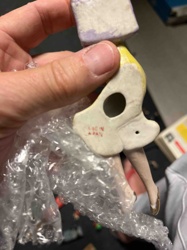
Without physical inspection, I cannot definitively confirm the exact material composition or authenticate every detail. An in-person examination would allow me to accurately assess surface integrity, identify any hidden damage, and confirm manufacturing marks that might indicate a specific maker. Provenance documentation, if available, would also be invaluable in establishing origin and authenticity. Scientific testing is typically not applied to items of this value unless there's a strong reason to suspect high rarity or unique material.
Given its condition as a standalone head, the general type of mass-produced doll it represents, and the current market for doll parts, the value is primarily artistic/restoration rather than high collectible.