AI estimate as of October 2, 2025 · verify with a professional before acting
AI-Generated · Verify before acting
Everything on this page is generated by AI for informational purposes only. AI can make mistakes — the AI may misidentify items or misattribute them (artist, maker, brand, designer, origin, era). This is not an official valuation and should not be used for insurance, sale, tax, estate, legal, or lending purposes — or any decision requiring a certified appraisal. It is not an authoritative claim about any person, brand, or rights holder — do not share or rely on it as a factual statement about a third party. Always consult qualified professionals before making financial decisions.
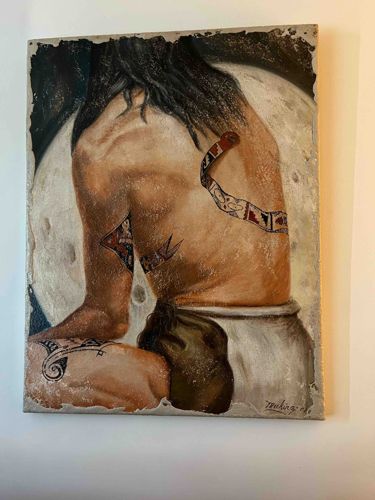
This is an oil or acrylic painting on canvas, depicting a seated, presumably male, figure shown from the back and side, with dark, flowing hair. The dominant colors include various shades of brown for the skin, ranging from light ochre to deeper sienna tones, contrasted with dark black hair and a lighter, muted background that appears to be a full moon or large circular light source. The figure is adorned with distinctive patterns resembling tattoos or body paint, particularly visible on the upper left arm, a band around the torso/chest area, and the lower leg/ankle. These patterns feature intricate geometric and curvilinear designs in red, black, and white. The painting has a somewhat rough, textural quality, visible especially in the lighter background and around the edges, suggesting a mixed media approach or intentional surface treatment. The edges of the canvas appear worn or distressed, with some paint loss or chipping, contributing to an aged aesthetic. The artist's signature, 'Mulino '06', is discernible in the lower right corner, indicating it was created in 2006. The style leans towards contemporary figurative art, possibly with cultural or tribal influences given the tattoo motifs. The craftsmanship is evident in the detailed rendering of the body and the expressive quality of the brushstrokes. There is a visible tear or imperfection on the canvas near the figure's lower back, which could be an intentional artistic choice or a condition issue.
AI Appraisal Report
I have examined the image of this figurative painting, "Seated Figure with Tattoos," signed 'Mulino '06'. The artwork is compelling, depicting a figure with distinctive patterns resembling tattoos or body paint, which suggests cultural or tribal influences. The color palette of browns and blacks against a muted background, combined with the detailed red, black, and white tattoo motifs, demonstrates a skilled hand. The visible texture and somewhat distressed edges contribute to an aged aesthetic, possibly intentional.
From the image, the condition appears fair to good for a contemporary piece with an intentional aged look. The tear or imperfection near the figure's lower back is a significant factor. If intentional, it's part of the artwork; if accidental damage, it would significantly reduce value. Without physical inspection, I cannot confirm its intentionality or assess repair costs. The signature 'Mulino '06' indicates authenticity as a work by this artist from 2006.
Market demand for contemporary figurative art, particularly with unique cultural motifs, is generally stable. However, the artist 'Mulino' is not widely recognized in major art markets, which limits the potential for higher valuations. Comparable sales for similar contemporary figurative works by emerging or lesser-known artists typically fall within the $500-$1,500 range, depending heavily on execution, subject matter, and condition.
For full authentication and a more precise valuation, an in-person examination is crucial. This would allow for a definitive assessment of the canvas's current condition, including whether the tear is intentional or damage, clarification on the mixed media aspects, and a more thorough verification of the artist's signature. Provenance documentation, such as exhibition history or previous sales records, would also be highly beneficial to establish market history and rarity.