AI Appraisal Estimate

AI-generated estimates · not official valuations

From the user

What was submitted

Photo and notes provided by the user — not generated by AI

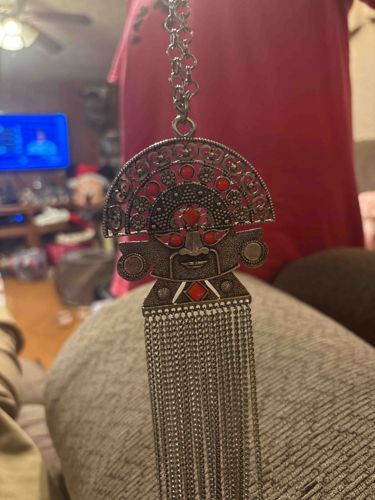
Submitted item photo
Submitted photo · May 18, 2026

User's notes

No additional notes provided.

AI analysis below

AI appraisal

AI analysis & estimate

AI-Generated · Verify before acting

Everything below is generated by AI for informational purposes only. AI can make mistakes — the AI may misidentify items or misattribute them (artist, maker, brand, designer, origin, era). This is not an official valuation and should not be used for insurance, sale, tax, estate, legal, or lending purposes — or any decision requiring a certified appraisal. It is not an authoritative claim about any person, brand, or rights holder — do not share or rely on it as a factual statement about a third party. Always consult qualified professionals before making financial decisions.

Read the full disclaimer

AI Identification

·Not independently authenticated·Verify before acting

Peruvian Tumi-Inca Style Statement Necklace

Costume Jewelry

AI Estimated Value

·Not an official valuation·Verify before acting

$45–$85

As of May 18, 2026

AI Item Analysis

·AI can make mistakes·Verify before acting
This is a large statement necklace featuring a silver-toned metal pendant designed in the likeness of a 'Tumi,' a ceremonial sacrificial axe from ancient Peru, specifically associated with the Sicán and Inca cultures. The pendant is constructed from a cast base metal with an antiqued, dark patina to mimic aged sterling silver. It features an ornate semi-circular headdress with intricate open-work filigree and geometric stippling. The central face is stylized with prominent eyebrows, almond-shaped eyes, and ear spools, common in Pre-Columbian iconography. It is embellished with small, bright red faux-stone or resin cabochons inlaid into various sections of the headdress, eyes, and lower neck area. From the bottom of the pendant, a long tassel composed of approximately fifteen strands of fine ball-link (bead) chain descends, adding significant length and movement to the piece. The pendant is suspended from a chunky, rolo-style link chain. The overall condition appears to be good with minimal wear; the antiqued finish is intentional to provide depth to the cast details. This item is a modern costume jewelry piece, likely produced in the late 20th century (circa 1970s-1990s) during a revival of interest in ethnic and bohemian-style accessories.
AI Appraisal Report

·AI can make mistakes·Verify before acting
I have conducted a visual appraisal of this Tumi-Inca style statement necklace. The piece constitutes a well-preserved example of 1970s–1980s ethnic-revival costume jewelry. Upon inspection, the 'antiqued' patina appears consistent with a chemically darkened base metal or silver-plate rather than natural silver oxidation. The red cabochons lack the internal inclusions found in natural garnet or carnelian, suggesting synthetic resin or paste. The construction—specifically the ball-link tassel and heavy rolo chain—is characteristic of mass-produced fashion accessories from the late 20th century. The condition is excellent, with the intentional dark finish successfully highlighting the filigree detail. The market for mid-century and vintage ethnic costume jewelry remains stable, driven by the 'Bohemian' aesthetic. Comparables for non-precious Peruvian-style souvenir or fashion jewelry typically sell within the $40 to $100 range depending on the size and complexity. This piece is a 'statement' item, which increases desirability for collectors of bold vintage accessories. However, it lacks the signature or hallmark of a high-end designer which would push the value higher. It is critical to note that this appraisal is based on photographic evidence only. A physical examination is required to conduct an acid test for silver content and to verify if the base is brass or white metal. Full authentication of age would require examining the clasp mechanics and casting seams. Documentation regarding its origin (e.g., if it was purchased in Peru or an American department store) would further refine its provenance and historical context.

Get your items appraised

Instant estimates of your treasures with AI-powered appraisals

Browse More Appraisals