AI estimate as of September 1, 2025 · verify with a professional before acting
AI-Generated · Verify before acting
Everything on this page is generated by AI for informational purposes only. AI can make mistakes — the AI may misidentify items or misattribute them (artist, maker, brand, designer, origin, era). This is not an official valuation and should not be used for insurance, sale, tax, estate, legal, or lending purposes — or any decision requiring a certified appraisal. It is not an authoritative claim about any person, brand, or rights holder — do not share or rely on it as a factual statement about a third party. Always consult qualified professionals before making financial decisions.
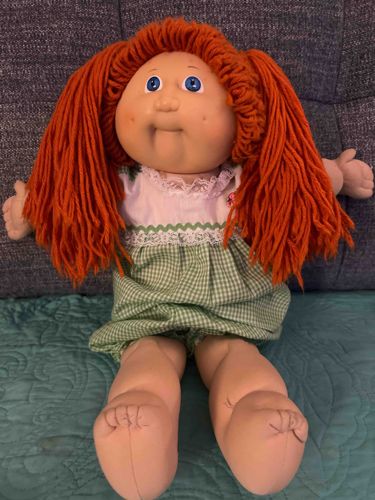
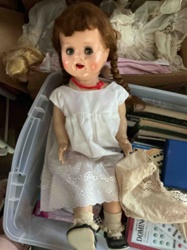
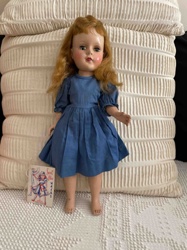
This is a vintage Cabbage Patch Kids doll, identifiable by its distinctive plastic head and soft fabric body and limbs. The doll features bright orange, acrylic yarn hair, styled in a shaggy, full manner around its face. Its head is made of a flesh-toned plastic or vinyl, with molded facial features including a small, open mouth, recessed nose, and chubby cheeks. The eyes are round, blue, and painted, giving the doll a wide-eyed expression. There are also faint pink blush marks on the cheeks and small, dark dots visible that simulate freckles, particularly on the left cheek. The body and limbs are made from a soft, light tan fabric, stitched to create rotund, baby-like arms and legs, with visible stitching lines on the feet. The hands are molded into a fist-like shape with visible finger details. The doll is dressed in a green and white gingham-patterned dress with a white bodice. The dress has a ruffled white lace trim along the neckline and a green patterned lace trim accenting the seam where the bodice meets the skirt. A small, pink floral emblem or patch is visible on the upper right side of the bodice. The doll appears to be in good overall condition for its age, with no significant tears or major staining visible on the fabric body or clothing. The plastic head shows minimal wear, though there might be some slight surface grime or subtle scuffs consistent with play use. The yarn hair appears to be largely intact, though some strands may be slightly frizzy or disheveled. This doll exemplifies the popular toy trend of the 1980s, belonging to an estimated age between the early 1980s and early 1990s. The quality of craftsmanship is typical for mass-produced dolls of this era, characterized by durable materials designed for children's play.
AI Appraisal Report
Based on my visual examination of the provided image, this Cabbage Patch Kids doll appears to be an authentic example from the early to mid-1980s, given its characteristic plastic head, fabric body, molded hands, and specific clothing style. The bright orange acrylic yarn hair, painted blue eyes, and faint cheek freckles are consistent with known Cabbage Patch Kids features of that era. The doll's condition is good for its age; the fabric body and clothing exhibit no significant tears or major staining. The plastic head shows minimal wear, though subtle surface grime or scuffs, common with play, are present. The hair appears largely intact but may be slightly disheveled, which is typical for these dolls after decades.
Market conditions for vintage Cabbage Patch Kids dolls are generally stable but not exceptionally high unless the doll is in pristine, never-removed-from-box (NRFB) condition, or is a particularly rare variation. This specific doll, while in good condition, is not NRFB, and the visible wear suggests it was played with. Comparable sales for well-preserved, played-with Cabbage Patch Kids dolls from the 1980s typically fall within the $50-$150 range, depending on rarity of features or outfit. Demand is steady among collectors and nostalgic buyers, but the general prevalence of these dolls limits extreme rarity for standard issues.
Factors impacting value include its good overall condition despite play, and seemingly original clothing. However, commonality rather than rarity limits significant appreciation.
_Limitations in Authenticity Verification:_ My assessment is based solely on the image provided. Full authentication would require a physical inspection to: verify manufacturer marks (cabbage patch butt signature, head mold numbers, tag information), confirm material integrity (e.g., fabric type, plastic feel), assess for hidden damage or repairs, and check for odors that might indicate storage issues. Provenance documentation (original adoption papers, purchase receipts) would also definitively confirm its history and authenticity. Without these, I cannot rule out clever reproductions or alterations, though visually, it presents as genuine.