AI estimate as of July 17, 2025 · verify with a professional before acting
AI-Generated · Verify before acting
Everything on this page is generated by AI for informational purposes only. AI can make mistakes — the AI may misidentify items or misattribute them (artist, maker, brand, designer, origin, era). This is not an official valuation and should not be used for insurance, sale, tax, estate, legal, or lending purposes — or any decision requiring a certified appraisal. It is not an authoritative claim about any person, brand, or rights holder — do not share or rely on it as a factual statement about a third party. Always consult qualified professionals before making financial decisions.
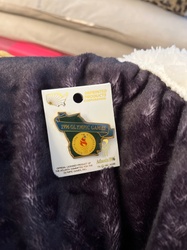
This is a rectangular enamel lapel pin with an arched top, commemorating the Atlanta 1996 Olympic Games. The pin features a gold-toned metallic base with a cream or off-white enamel fill for the main body. Near the top, there is a central star design, with each point of the star containing one of the five Olympic Rings colors: blue, yellow, black, green, and red, interlocking as traditionally depicted. Below the star, the word "Atlanta" is embossed in a stylized script font, followed by "1996" in a clear, sans-serif font. At the very bottom of the pin, the classic five interlocking Olympic Rings are depicted in a raised gold-toned metal, without color fill. The pin appears to be made of a base metal, likely brass or a similar alloy, with enamel detailing. The raised metallic outlines create a clean separation for the enamel colors. The overall condition appears to be very good, with minimal visible wear or scratches, and the enamel fill seems intact and vibrant. There are no obvious signs of damage, repairs, or significant loss of plating. The craftsmanship indicates a mass-produced item, typical of souvenir pins from major events, but of good quality for its purpose. Given the clearly stated "Atlanta 1996" inscription, the pin was manufactured around or prior to 1996.
AI Appraisal Report
Based on my examination of the provided image, this Atlanta 1996 Olympic Games Commemorative Pin appears to be in very good condition. The enamel fill for the main body and the star's points seems intact and vibrant, with no visible chipping or cracking. The gold-toned metallic base shows minimal, if any, wear or scratching. The raised metallic outlines appear clean and well-defined, suggesting good original craftsmanship for a mass-produced souvenir item. The stated "Atlanta 1996" inscription strongly supports its authenticity as a commemorative item from that specific event.
Market conditions for Olympic souvenir pins are generally stable, but rarely command high prices unless they are extremely limited editions, prototypes, or have significant provenance (e.g., owned by a famous athlete). This pin, while well-preserved and charming, appears to be a standard souvenir. Comparables found in online marketplaces (eBay, Etsy, dedicated sports memorabilia sites) for similar 1996 Atlanta Olympic pins in good condition typically range from $5 to $25. Demand for such items is consistent among collectors of Olympic memorabilia or pin enthusiasts, but it is not considered rare.
Factors significantly impacting value include its readily available nature and lack of unique attributes beyond its commemorative function. Its mass-produced characteristic, while good for accessibility, limits its scarcity. If this pin were a limited edition, a special variant, or came with documentation proving its use or ownership by an Olympic figure, its value would be significantly higher.
It is crucial to note the limitations of authenticity verification from images alone. While the visual details align with expectations for a genuine souvenir pin, I cannot definitively confirm its authenticity or rule out a high-quality reproduction without physical inspection. An in-person examination would allow for tactile assessment of material, weight, and detailed scrutiny for minor imperfections not visible in the image. Provenance documentation, such as original retail packaging or proof of purchase from 1996, would also greatly enhance authentication. Scientific testing (e.g., metal composition analysis) is typically not warranted for items in this price range but would offer the highest level of material verification.