AI estimate as of September 27, 2025 · verify with a professional before acting
AI-Generated · Verify before acting
Everything on this page is generated by AI for informational purposes only. AI can make mistakes — the AI may misidentify items or misattribute them (artist, maker, brand, designer, origin, era). This is not an official valuation and should not be used for insurance, sale, tax, estate, legal, or lending purposes — or any decision requiring a certified appraisal. It is not an authoritative claim about any person, brand, or rights holder — do not share or rely on it as a factual statement about a third party. Always consult qualified professionals before making financial decisions.
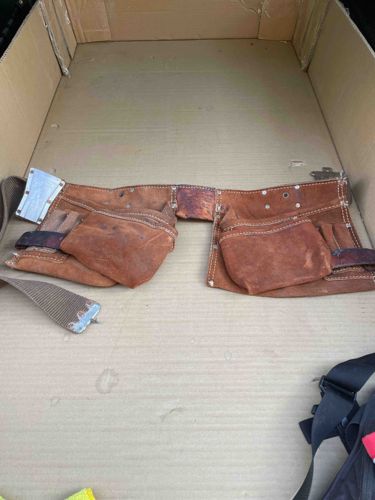
This is a well-used leather tool belt, likely for construction, carpentry, or similar trades. It is primarily constructed from a thick, reddish-brown leather, showing significant signs of wear and age. The belt features multiple pouches and pockets, characteristic of professional-grade tool belts designed for organizing and carrying various tools. There are at least two large main pockets on each side, with smaller ancillary pockets and loops visible, suggesting dedicated spaces for specific tools like hammers, pencils, or measuring tapes. The leather exhibits extensive scuffing, discoloration, and a well-developed patina, indicating prolonged use in a working environment. Some areas of the leather appear darker and more worn, suggesting friction points or exposure to moisture and dirt. The stitching, where visible, appears to be heavy-duty, likely reinforced for durability, though some threads might show fraying or wear given the overall condition. Metal rivets are observable at stress points, such as where pockets attach to the main belt structure, providing additional reinforcement. One side of the belt shows what appears to be a light-colored, possibly aluminum or steel, accessory clip or holder. The strapping for the belt itself is visible on the left, appearing to be a thick, possibly nylon or canvas, webbing in a muted brown or khaki color, which contrasts with the leather. The end of this strap shows some fraying and potential adhesive residue. The overall construction points to a utilitarian design focused on function and durability rather than aesthetics. This item is estimated to be from the mid-to-late 20th century or early 21st century, given the materials and common design of such belts. No discernible manufacturer's marks or signatures are visible in the provided image.
AI Appraisal Report
Upon visual examination of this well-used leather tool belt, I assess its authenticity as a genuine workwear item. The thick, reddish-brown leather, robust stitching, and metal rivets are consistent with professional-grade tool belts from the mid-to-late 20th century or early 21st century. The extensive scuffing, discoloration, and well-developed patina are clear indicators of prolonged use in a working environment, not artificial aging. The inclusion of an accessory clip and the contrasting webbing strap further support its utilitarian design. However, without a manufacturer's mark or signature, definitive attribution to a specific brand is impossible. Limitations in authenticity verification from images alone include the inability to inspect the integrity of all stitching, the pliability and smell of the leather (which can indicate quality and age more precisely), and the true material composition of the webbing and metal components. Physical examination would permit a thorough assessment of any hidden repairs or structural weaknesses not visible in the image.
Market conditions for used, unbranded leather tool belts are generally low. Comparables typically sell for modest prices, driven primarily by their functional utility for hobbyists or for decorative/rustic purposes rather than collector value. Demand is limited to those specifically seeking a worn-in aesthetic or a very inexpensive functional option. Rarity is not a factor here; such belts were, and remain, mass-produced. Factors significantly impacting value downwards are the lack of brand identification, the heavily used condition, and the absence of any unique design or historical provenance. New, entry-level versions of similar belts can be purchased for $50-100, while premium brands fetch more. This used, unbranded example would primarily compete in the lower-end used market.