AI Appraisal Estimate

AI-generated estimates · not official valuations

From the user

What was submitted

Photo and notes provided by the user — not generated by AI

Submitted item photo
Submitted photo · July 3, 2026

User's notes

No additional notes provided.

AI analysis below

AI appraisal

AI analysis & estimate

AI-Generated · Verify before acting

Everything below is generated by AI for informational purposes only. AI can make mistakes — the AI may misidentify items or misattribute them (artist, maker, brand, designer, origin, era). This is not an official valuation and should not be used for insurance, sale, tax, estate, legal, or lending purposes — or any decision requiring a certified appraisal. It is not an authoritative claim about any person, brand, or rights holder — do not share or rely on it as a factual statement about a third party. Always consult qualified professionals before making financial decisions.

Read the full disclaimer

AI Identification

·Not independently authenticated·Verify before acting

Vintage Whisk Broom

Household Collectibles and Antiques

AI Estimated Value

·Not an official valuation·Verify before acting

$15.00 - $25.00

As of July 3, 2026

AI Item Analysis

·AI can make mistakes·Verify before acting
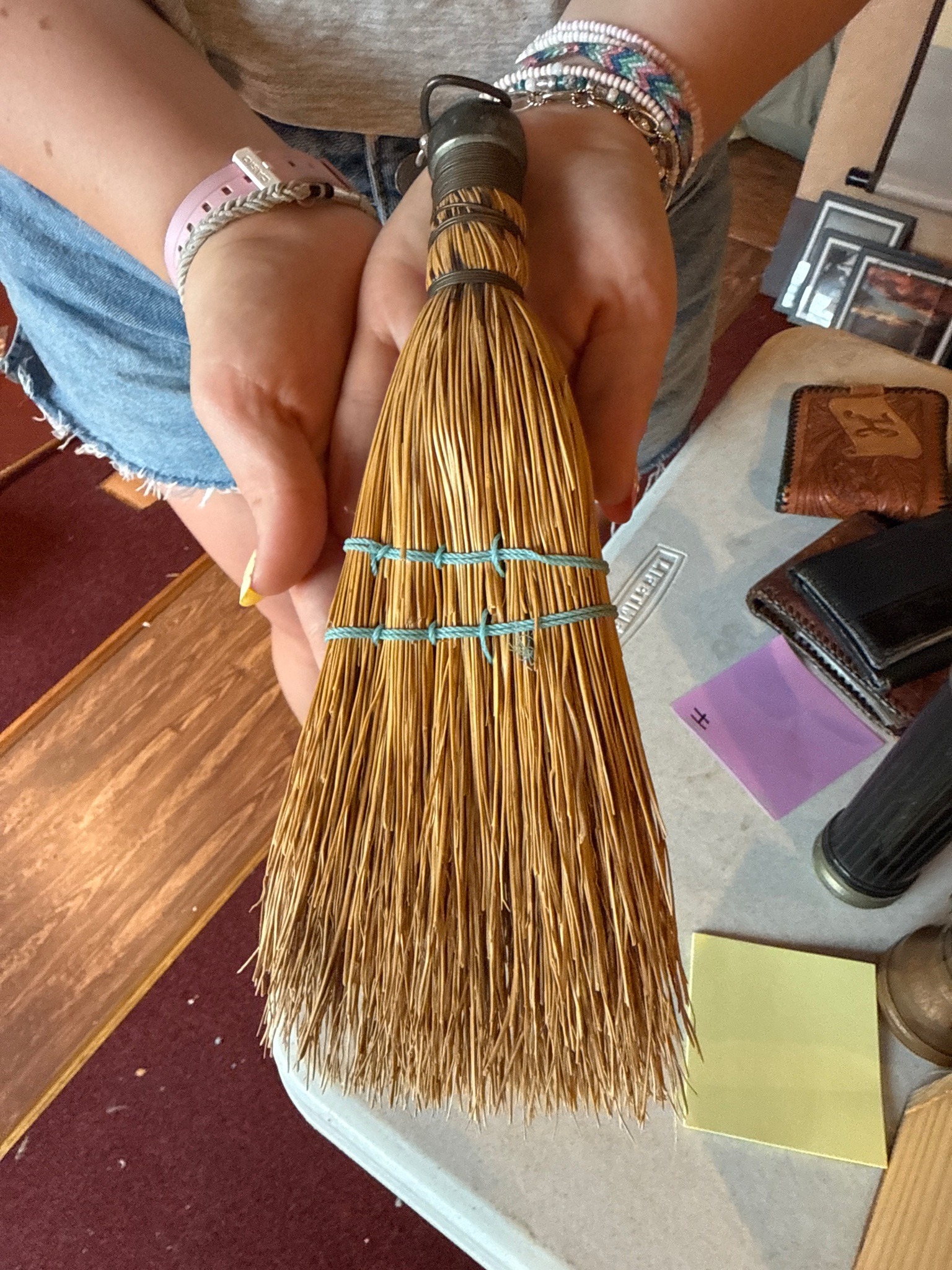
This is a vintage whisk broom, a handheld cleaning tool constructed from natural broomcorn fibers (sorghum bicolor). The item features a distinctive conical shape, flaring from a bound neck to a flat sweeping edge. The core materials consist of straw-colored dried plant fibers, which appear structurally sound but show slight fraying at the tips consistent with age and use. The broom is bound near the top with dark, wire-like cordage and features two horizontal rows of turquoise-colored twine stitching across the midsection, which serve to maintain its flat profile and structural integrity. A notable feature is the metallic hardware at the cap: a grey, oxidized metal ferrule (likely steel or tin) that secures the fiber bundle and incorporates a small hanging ring. The metal shows significant patina and surface oxidation, suggesting a mid-20th-century manufacture date. There are no clearly visible maker\'s marks in the image, but the quality of the stitching and the metal cap indicates a commercially produced domestic tool. The condition is fair to good, with visible dust accumulation and some loose fibers, but no structural failure or significant loss of material is present.
AI Appraisal Report

·AI can make mistakes·Verify before acting
I have examined the vintage whisk broom via the provided description and visual data. The item appears to be a mid-20th-century mass-produced domestic cleaning tool. The use of turquoise-colored twine stitching is a hallmark of utilitarian aesthetic choices from the 1940s through the 1960s. The oxidized metal ferrule and integrated hanging ring suggest durability but show surface wear consistent with age and storage in a non-climate-controlled environment. The structural integrity of the broomcorn fibers remains fair, though the fraying at the tips and visible dust accumulation suggest it was used for its intended purpose rather than kept as a showpiece. In the current market for 'primitive' or 'farmhouse' collectibles, specific interest lies in items with original hardware and distinct color accents like the turquoise stitching found here. However, because these were produced in the millions, they are categorized as common household antiques rather than rare artifacts. Comparable sales for similar wire-bound whisk brooms in fair condition typically fall within the $15 to $25 range. The lack of a manufacturer’s stamp (such as Fuller Brush Co. or a regional broom works) prevents a premium valuation. While the item appears authentic to the mid-century period, a full authentication would require an in-person physical inspection to check for fiber elasticity, the specific alloy of the metal cap, and any hidden maker's marks under the ferrule. Provenance documentation regarding its original purchase location could also enhance historical value. Scientific testing of the fibers could confirm the plant species and age, but such costs would exceed the market value of the object.

Get your items appraised

Instant estimates of your treasures with AI-powered appraisals

Browse More Appraisals