Lower Paleolithic Acheulean Chert Biface Hand Axe Scraper
Archeological Artifact

Lower Paleolithic Acheulean Chert Biface Hand Axe Scraper

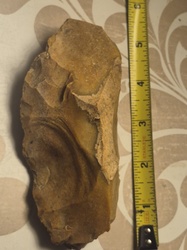
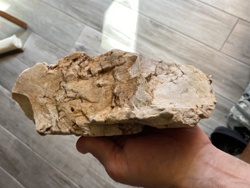
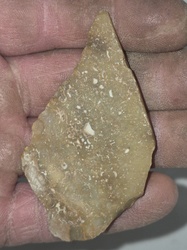
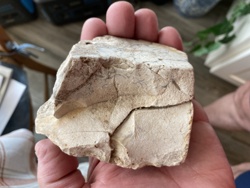
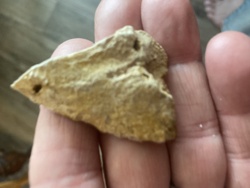
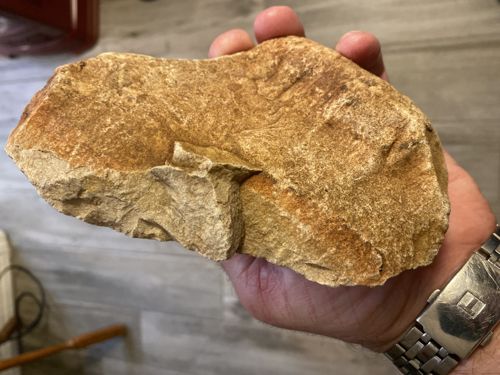
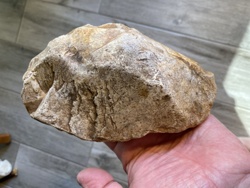
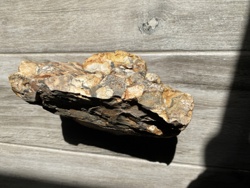
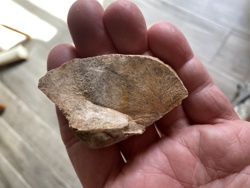
This is a significant prehistoric lithic artifact, identified as an Acheulean-style biface hand axe and scraper. Measuring approximately 6.5 inches by 5 inches, the tool is fashioned from a robust chert, exhibiting a characteristic yellowish-tan to ocherous brown coloration that suggests heavy mineralization and a long-developed patina. The construction features bifacial flaking, where material was removed from both sides to create a functional, sharp-edged periphery. The piece exhibits a heavy, somewhat asymmetrical form with a thick central cross-section, which is typical of Acheulean technology. Notable features include visible flake scars and a multi-purpose edge that appears suited for both chopping and scraping activities. The presence of a cortex on parts of the surface indicates the stone's origin from a larger nodule. This artifact displays a deep desert varnish and smoothing on the edges consistent with significant age and environmental exposure. While there are some modern abrasions or minor chips, the overall integrity of the tool's shape remains preserved, showcasing the durable craftsmanship typical of the Lower Paleolithic period. Tools of this style were traditionally associated with early human ancestors like Homo erectus, representing foundational stone-tool technology.
Estimated Value

$450 - $750

Basic Information

Category

Archeological Artifact

Appraised On

March 6, 2026

Estimated Value

$450 - $750

Additional Details Provided By Owner

User Provided Information

Lower Paleolithic Acheulean chert bi face hand axe scraper tool found in Gurhrie OK measuring 6.5" x 5"

Item Description

This is a significant prehistoric lithic artifact, identified as an Acheulean-style biface hand axe and scraper. Measuring approximately 6.5 inches by 5 inches, the tool is fashioned from a robust chert, exhibiting a characteristic yellowish-tan to ocherous brown coloration that suggests heavy mineralization and a long-developed patina. The construction features bifacial flaking, where material was removed from both sides to create a functional, sharp-edged periphery. The piece exhibits a heavy, somewhat asymmetrical form with a thick central cross-section, which is typical of Acheulean technology. Notable features include visible flake scars and a multi-purpose edge that appears suited for both chopping and scraping activities. The presence of a cortex on parts of the surface indicates the stone's origin from a larger nodule. This artifact displays a deep desert varnish and smoothing on the edges consistent with significant age and environmental exposure. While there are some modern abrasions or minor chips, the overall integrity of the tool's shape remains preserved, showcasing the durable craftsmanship typical of the Lower Paleolithic period. Tools of this style were traditionally associated with early human ancestors like Homo erectus, representing foundational stone-tool technology.
Get Your Items Appraised

Instant estimates of your treasures with AI-powered instant appraisals

Browse More Appraisals